


| IN A NUTSHELL |
|
The international scientific community has reached a significant milestone in the pursuit of sustainable energy, thanks to the ITER project’s latest achievement. Recently, ITER completed the sixth and final component of the reactor’s central solenoid. This magnet, powerful enough to levitate an aircraft carrier, marks a groundbreaking advancement in energy production technology. The achievement showcases both a technological triumph and a testament to international collaboration, as countries unite to tackle global challenges. As ITER moves closer to operational status, it offers a glimpse into a future where clean energy is abundant and accessible.
Understanding the Role of the Central Solenoid
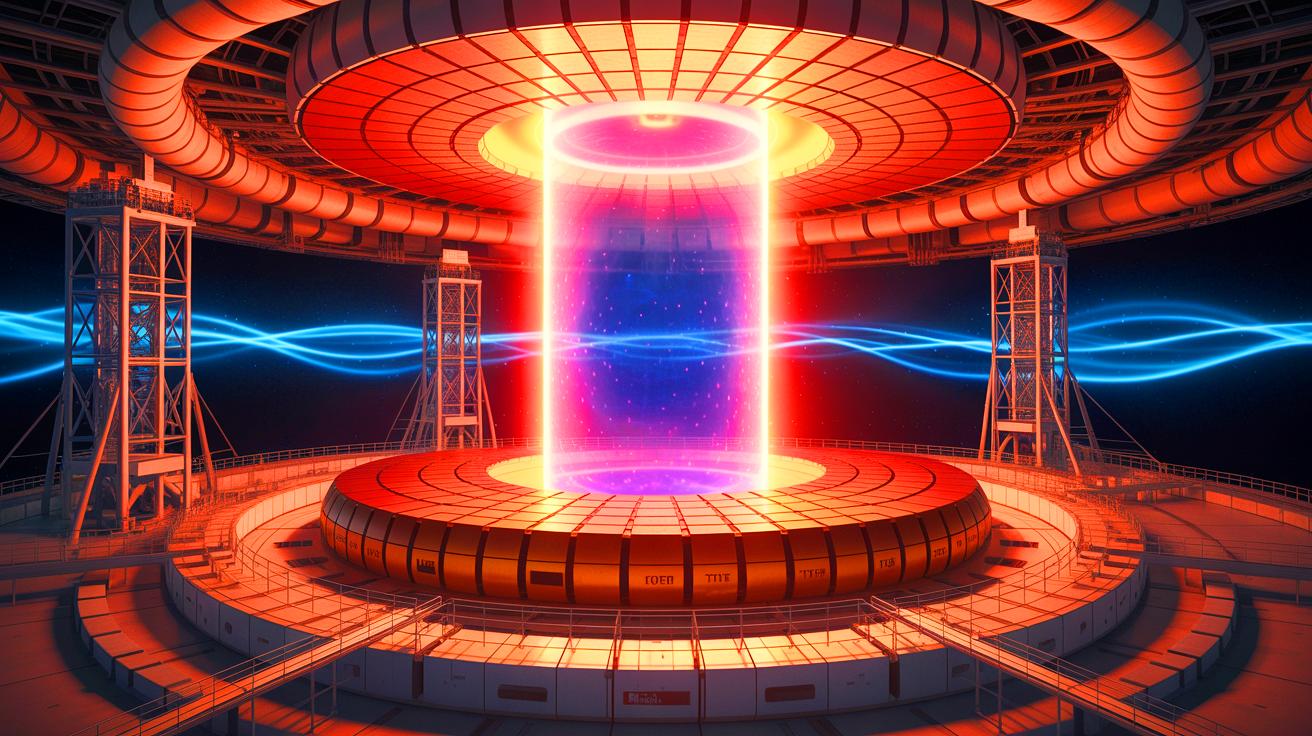
The central solenoid plays a vital role in the ITER Tokamak reactor, acting as the core that drives the fusion process. This superconducting magnet is essential for creating and maintaining the superheated plasma required for nuclear fusion. The plasma, formed from ionized hydrogen gas, reaches an astonishing 270 million degrees Fahrenheit—ten times hotter than the sun’s core. This extreme temperature enables atomic nuclei to fuse, releasing vast amounts of energy in a process known as nuclear fusion.
The solenoid, when fully assembled, will weigh nearly 6,600 pounds, standing at 42.6 feet tall and 13.1 feet wide. It collaborates with other magnetic systems to create a magnetic cage, confining the plasma and allowing engineers to control the fusion reaction. At peak performance, it will endure forces equivalent to 13.5 million pounds, illustrating the engineering marvel that makes this fusion breakthrough possible. This innovative system is crucial for the future of energy production and the success of nuclear fusion reactors.
The Significance of a Magnet That Can Levitate an Aircraft Carrier
The central solenoid’s ability to levitate an aircraft carrier underscores the extreme conditions necessary for nuclear fusion. Inside the reactor, the temperatures are so high that no material container could withstand them. As a result, magnetic fields are essential to suspend the plasma in mid-air, preventing any physical contact with the reactor walls. The central solenoid is integral to this process, providing the magnetic force needed to suspend the plasma for 300-500 seconds.
This capability to levitate an aircraft carrier is not just a measure of power but a fundamental requirement for achieving the desired fusion reaction. The magnetic energy stored in the solenoid, approximately 6.4 gigajoules, highlights its capability. With this technology, ITER aims to produce 500 megawatts of power with an input of only 50 megawatts, demonstrating the potential for a future dominated by clean, abundant energy. This advancement could revolutionize the energy sector and reduce reliance on fossil fuels.
International Collaboration and Its Impact
The ITER project exemplifies the strength of international cooperation. Europe covers 45% of the costs, with six other countries contributing 9% each, making ITER a global endeavor to address energy needs. The project’s success demonstrates that nations can set aside differences to address existential challenges like climate change and energy security.
Pietro Barabaschi, ITER’s Director-General, emphasizes the importance of the project’s technical complexity and international framework for its success. Despite varying political landscapes, this collaboration has remained strong, proving that humanity can unite for the greater good. As the project progresses, the world watches in anticipation of the transformative potential that nuclear fusion holds for the future. This collaborative effort sets a precedent for tackling other global issues through cooperative action.
Challenges Ahead and the Road to Completion
Despite its achievements, ITER faces significant challenges before the reactor becomes fully operational. After starting in 2007, the team now projects the first operation by 2035, reflecting the project’s intricate nature. Precise engineering and coordination among international partners are essential to achieving this goal.
As the reactor assembly progresses, challenges such as integrating complex systems and ensuring safety standards remain. However, the advancements made so far inspire hope that the final goal is within reach. The successful operation of ITER could mark a new era in energy production, impacting industries and societies worldwide. This journey highlights the commitment to overcoming obstacles for the betterment of future generations.
The completion of the central solenoid is a significant step forward in harnessing fusion energy. As the ITER project advances, it symbolizes the power of human ingenuity and cooperation. Could this fusion breakthrough pave the way for a sustainable energy future, transforming how we power our lives and explore the cosmos?

This is incredible! A magnet that can levitate an aircraft carrier? 😮 What will they think of next?
Wow, levitating aircraft carriers? That’s some serious power! 🚢
Why do we need such extreme temperatures for fusion? Can’t we just use something cooler? 🤔
How long will it take for this technology to be commercially available?
I’m amazed by the international collaboration on this project. It’s truly inspiring. 🌍
Levitating aircraft carriers sounds like something out of a sci-fi movie! Can’t wait to see this tech in action. 🚀
The future of energy is here, and it’s hotter than the sun! ☀️
How much did this all cost? I hope it’s worth the investment!
Are there any environmental risks associated with this type of fusion reactor?
Does anyone else think this sounds like a supervillain’s weapon? 😂
270 million degrees Fahrenheit? That’s hotter than my oven on Thanksgiving. 😅
This sounds like science fiction. Are we sure it’s real? 🤔
This is an engineering marvel! Hats off to the team behind this. 🎩
Thank you for this amazing article! It’s inspiring to see such international cooperation.
Wait, does this mean we can finally have flying cars?
I’m skeptical about the 2035 timeline. Do we really believe it will be operational by then?
I’m curious, what challenges remain before this reactor becomes operational?
How does this magnet compare to those used in MRI machines?
Thank you for breaking down such a complex topic. This is fascinating!
So, when can we expect lower electricity bills? Asking for a friend. 😜
Does this mean we are closer to Iron Man suits? 🤖
What happens if the magnetic field fails? Sounds dangerous! 😬
I can’t believe the forces this solenoid can endure. Truly mind-blowing!
Levitating aircraft carriers? What’s next, invisible jets? 🛩️
Energy independence through fusion sounds promising, but the road ahead seems long.
So, what actually levitates—just the aircraft carrier or the whole ship? 🤷♂️
It’s amazing how countries can come together for such a monumental project. Big win for humanity!
Are there any environmental risks associated with this technology?
Can we expect this technology to be used in commercial spaces anytime soon?
How much power will this reactor actually produce once it’s operational?
I wonder if this tech will pave the way for new forms of transportation.
This is the kind of innovation we need to combat climate change. Kudos to the team! 🌱
How do they handle the safety measures with such high temperatures and forces?
Is it possible to tour the ITER facility? I’d love to see this in person!
What are the major hurdles left before this becomes fully operational?
I’m impressed by the scale of this project. Truly a testament to human ingenuity.
How do they maintain the plasma temperature without any material containment?
It sounds like we’re on the cusp of a new energy era. Exciting times ahead!
Can this tech be adapted for space travel? Imagine the possibilities! 🚀
I hope the project stays on track. We need clean energy solutions urgently!
How does this compare to other fusion projects around the world?
I wonder if we’ll see more international projects like this in the future.
Can we apply this technology to improve existing nuclear reactors?
I’m curious about the magnetic cage concept. Can someone explain it in simpler terms?