


| IN A NUTSHELL |
|
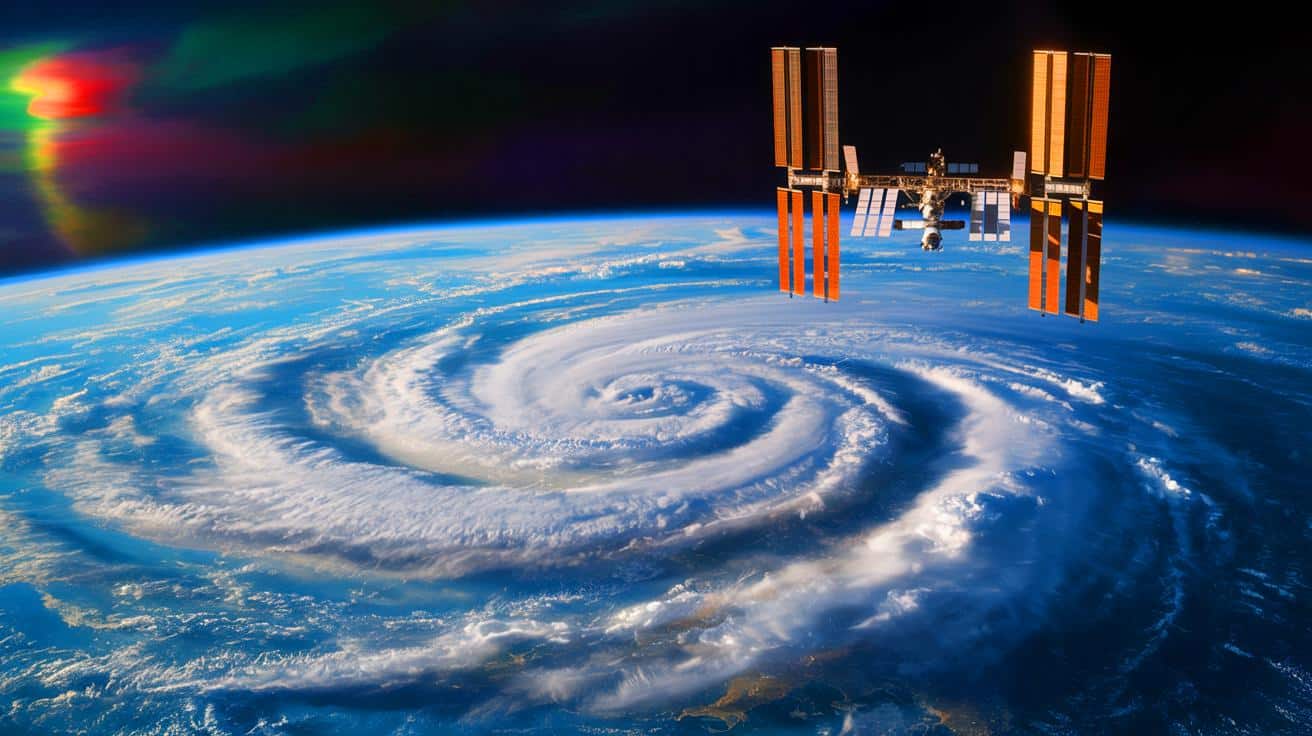
In the midst of Hurricane Helene’s chaos on the ground, NASA’s International Space Station (ISS) made a groundbreaking discovery in the skies above. This discovery came in the form of unseen atmospheric waves in the mesosphere, an often-overlooked layer of Earth’s atmosphere. These waves, detected at an altitude of 55 miles, offer new insights into the interactions between terrestrial weather events and the upper atmosphere. This revelation suggests a far more integrated connection between Earth’s surface and space than previously understood. As scientists delve deeper into these phenomena, new questions arise about the broader implications for space weather and satellite operations.
Hurricane Helene’s Unseen Aftermath in the Upper Atmosphere
As Hurricane Helene approached the Florida coast in late September 2024, its destructive power was not limited to the surface. High above, in the mesosphere, NASA’s ISS observed a series of atmospheric waves never before documented. This layer, situated between 31 and 55 miles above Earth, is typically characterized by its cold, sparse air. However, during Helene’s landfall, the mesosphere became a stage for dynamic atmospheric activity.
These waves, invisible from the ground, were strong enough to disrupt the mesosphere’s normally stable conditions. The discovery of these waves represents a significant milestone in atmospheric science. It establishes a tangible link between the dynamics of hurricanes and the conditions in the upper atmosphere. The implications of this connection extend beyond our current understanding of weather systems, highlighting the complexity of atmospheric interactions.
The Atmospheric Wave Experiment: Seeing the Invisible
Installed in 2023, NASA’s Atmospheric Wave Experiment (AWE) on the ISS is tasked with observing faint airglow in the mesosphere. During Hurricane Helene, AWE detected ripples emanating from the storm’s impact zone. These disturbances stretched westward, illustrating the far-reaching effects of Helene’s energy.
According to Michael Taylor, a leading NASA scientist, this observation challenges the traditional view of atmospheric impacts:
“It gives a new dimension to the way we think about how storms affect even the thin air at tremendous altitudes.”
The ability to document these wave patterns from space opens up new avenues for understanding how energy from hurricanes propagates far beyond the immediate storm environment.
Advanced Instruments Uncover Ripple Patterns Above the Storm
The Advanced Mesospheric Temperature Mapper (AMTM) plays a crucial role in detecting these atmospheric waves. Operating in infrared, AMTM is capable of identifying subtle temperature changes in the mesosphere. This capability allows it to map the shape and movement of waves with precision, even in the extreme cold of –150°F.
During Hurricane Helene, AMTM confirmed the presence of waves moving westward from the storm’s center. This detection provided clear evidence that Helene’s impact extended well beyond the surface, affecting atmospheric flow at higher altitudes. The ability to track these waves offers valuable insights into the mechanisms of energy transfer between Earth and the upper atmosphere.
Tiny Waves, Big Risks: Satellites and Orbital Drift
The mesosphere’s behavior, while seemingly distant, has direct implications for space technology. Variations in air density caused by atmospheric waves can affect satellite orbits. Even slight changes can lead to issues for satellite operators.
The AWE mission provides critical data that helps scientists predict potential orbital drag. This data enables proactive measures to protect satellites from functional degradation. As we rely increasingly on satellite technology, understanding these atmospheric interactions becomes essential for maintaining satellite integrity and functionality.
Decoding the Mesosphere’s Secret Life
Long considered one of Earth’s most mysterious atmospheric layers, the mesosphere sits between the stratosphere and the thermosphere. Its high altitude and thin air have made it challenging to study. However, advancements like AWE and AMTM now allow scientists to gather real-time data on this elusive region.
These observations challenge previous assumptions about the limits of hurricane effects. Instead of being confined to the lower atmosphere, storms like Helene have the potential to create waves that reach the edge of space. This discovery opens up new discussions about the interconnectedness of Earth’s atmospheric systems.
The revelations from NASA’s ISS underscore a complex relationship between Earth’s weather and space. Hurricanes, once thought to impact only the lower atmosphere, are now known to generate disturbances that extend far beyond. This newfound connection prompts further exploration of the invisible interactions between our planet and the cosmos. As we expand our understanding of these phenomena, how might they influence our approach to weather prediction and satellite technology in the future?



Wow, waves 55 miles up? Next thing we know, we’ll find out hurricanes make the moon wobble! 🌕
Wow, this is mind-blowing! Who knew hurricanes could affect space? 🌪️🚀
Can someone explain how these atmospheric waves were “invisible” before? 🤔
Does this mean all hurricanes have the potential to impact the mesosphere, or was Helene unique? 🤔
Fascinating discovery! This could really change how we predict weather and manage satellites.
Great article! Thanks for keeping us updated on the latest space discoveries. 😊
What exactly are “atmospheric waves”? Are they like the ocean waves but in the sky? 🌊
How reliable are these instruments? Can we trust the data from AWE and AMTM?
Great article! Thanks for making science so accessible. 😊
Wait, so now hurricanes are messing with our satellites too? Just great! 🙄
I’m skeptical. How do we know these waves aren’t just a fluke observation?
Can these atmospheric waves be connected to climate change in any way?
Does this mean hurricanes have an even bigger impact on climate than we thought?
Interesting read, but I wish there was more detail on how AWE and AMTM work.
Are these waves dangerous for satellites? Should we be worried about more orbital debris? 🛰️
Mind-blowing stuff! I never knew hurricanes could reach so high up. 😮
So, are we saying storms could potentially affect weather on Mars? 😜
How often do these atmospheric waves occur? Is it just during hurricanes?
The mesosphere sounds a bit like the wild west of the atmosphere, doesn’t it? 🤠
Thank you for sharing this discovery. It’s amazing how much we still have to learn!
Why didn’t we detect these waves before 2023? Was it a technology limitation?
Fantastic article! Makes me wonder what other secrets the mesosphere holds. 🌌
Is the impact of these waves on satellite orbits really that significant?
I always thought space was quiet and still. Guess not! 😅
Can we predict these wave patterns in advance, like we do with hurricanes?
I’m curious if this will change how we build satellites in the future. 🤔
My mind is blown! Science just keeps getting cooler. 🚀
Is this a common finding with all hurricanes or just Helene?
This is a game-changer for atmospheric science! Can’t wait to see more research. 📚
How do these atmospheric waves affect space weather predictions?
I’m a bit confused. Are these waves harmful or just interesting?
Thank you NASA and your amazing scientists for unveiling the mysteries of our planet! 🌍
Could these waves impact communication systems on Earth? 📡
Does this discovery have implications for climate change research?
How do we know these waves are directly linked to Hurricane Helene?
Feels like we’re just scratching the surface of what’s out there! 🌌
This article makes me want to study atmospheric science. So fascinating!
Are there any known ways to mitigate the effects of these waves on satellites?
Why are hurricanes causing waves in space and not just on Earth?