




| IN A NUTSHELL |
|
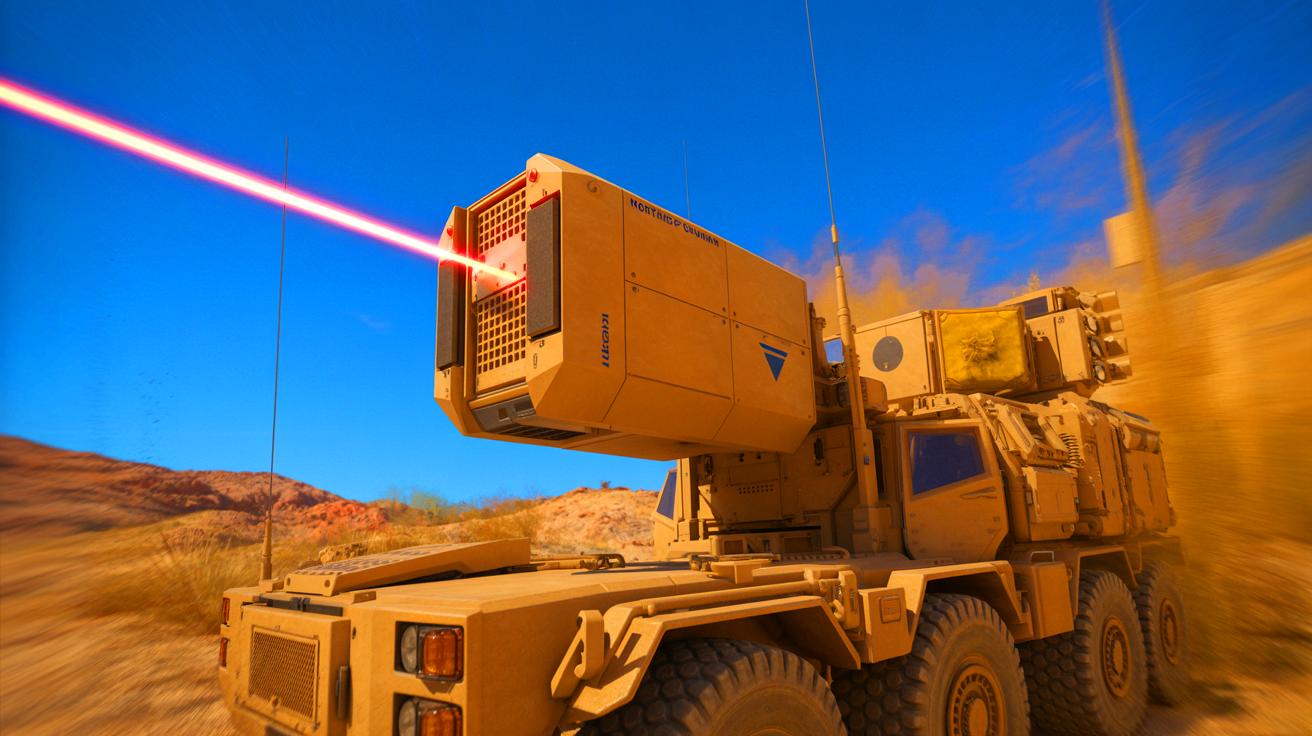
The introduction of Northrop Grumman’s Phantom laser to the U.S. military arsenal marks a significant step forward in modern warfare capabilities. Compact and powerful, this new high-energy beam weapon is designed to meet the demands of rapid deployment in tactical environments. Measuring just 12 cubic feet and weighing less than 200 pounds, the Phantom is engineered to withstand extreme conditions while offering unprecedented mobility and ease of use. As military technology continues to evolve, the Phantom laser represents a pivotal advancement in directed energy weapons, potentially reshaping combat strategies and defense systems.
Breakthrough in Laser Technology
The Phantom laser exemplifies a breakthrough in laser technology, focusing on the production of coherent light. Unlike traditional light sources, lasers emit photons with identical frequencies and phases, resulting in a highly controlled beam. This precision allows for targeted applications in combat scenarios, providing significant advantages over conventional weapons. The compact design of the Phantom means it can be deployed in challenging environments, a crucial factor in modern warfare.
Historically, laser technology has faced numerous hurdles, particularly regarding size, power consumption, and cost. The U.S. military’s attempt to integrate lasers into combat situations dates back to the Vietnam War. Over the years, these challenges have persisted, limiting the widespread use of lasers in the field. However, the development of the Phantom laser by Northrop Grumman addresses many of these issues, offering a practical solution that balances power with portability.
Financial Investments and Development Challenges
The Pentagon’s investment in directed energy weapons reflects the strategic importance of this technology. According to the U.S. Government Accountability Office (GAO), nearly $1 billion is spent annually on these initiatives. The goal is to enhance defense capabilities against threats such as unmanned aerial vehicles (UAVs) and projectiles. Despite these investments, the transition from laboratory research to field deployment has been fraught with difficulties.
A notable challenge identified by the GAO is the integration of laser technologies into existing military missions. Only the U.S. Army has developed a comprehensive plan to transition laser weapons from development to operational use. This plan outlines the necessary scheduling and stakeholder roles required to advance laser technology deployment. As Northrop Grumman continues to innovate, the Phantom laser could play a key role in overcoming these challenges, offering a blueprint for future military applications.
Northrop Grumman’s Legacy of Innovation
Northrop Grumman has a long history of pioneering advancements in directed energy weapons. The company has developed some of the most sophisticated high-energy lasers currently utilized by the U.S. armed forces. Previous innovations include the Strategic Illuminator Laser (SILL) and the 300kW High Energy Laser Weapon System (HELWS), designed to counter fast-moving threats such as UAVs.
The Phantom laser builds on this legacy, combining cutting-edge technology with practical design. Its small size and lightweight nature make it an attractive option for tactical operations, allowing for quick deployment and adaptability. Northrop Grumman’s commitment to miniaturizing advanced capabilities is evident in the Phantom, which aims to expand the reach of high-energy lasers and solidify the company’s leadership in this field.
Implications for Military Strategy
The introduction of the Phantom laser has significant implications for military strategy and defense systems. Its ability to deliver high-energy beams in a compact form factor offers new opportunities for tactical operations. The ease of transport and installation means that the Phantom can be deployed quickly in response to emerging threats, providing a strategic advantage in combat situations.
As directed energy weapons become more integral to military arsenals, the Phantom laser’s compact design and efficiency could serve as a model for future developments. The potential applications of this technology extend beyond traditional combat scenarios, influencing broader defense strategies and security measures. As the military continues to explore the capabilities of directed energy weapons, the Phantom laser stands at the forefront of this technological evolution.
As Northrop Grumman continues to push the boundaries of laser technology, the Phantom laser represents a crucial advancement in military capabilities. Its compact, powerful design offers a glimpse into the future of warfare, where directed energy weapons play a central role. How will the integration of such technologies shape the strategies and tactics of tomorrow’s military operations?




Wow, a laser in a box! Are we living in a sci-fi movie now? 🔫
How does the Phantom laser compare to other high-energy weapons in terms of power output?
Great article, but I’m curious about the environmental impact of deploying such lasers. 🤔
Will this laser fit in my backpack? Asking for a friend. 😜
Northrop Grumman seems to have outdone themselves again. Kudos to the team! 🎉
What’s the expected lifespan of the Phantom laser in the field?
How do they ensure the laser’s precision in adverse weather conditions?
I’m worried about the cost. Will these lasers be affordable for widespread use in the military?
Thank you for the detailed explanation of the Phantom’s capabilities!
Is it true that the Phantom can take down drones in seconds? That’s insane!
Does the development of such weapons escalate the arms race? 😟
Interesting piece, but how do they prevent friendly fire with this technology?
This article reads like a sci-fi novel. What’s next, lightsabers? 😂
Will the Phantom be used by other countries, or is it exclusive to the U.S. military?
How long before these lasers become a standard issue for soldiers?
I’m curious about the maintenance requirements of such advanced technology.
Love the innovation, but hope it doesn’t end up in the wrong hands. 😬
How do they ensure the laser’s power source is reliable in combat situations?
Is this a sign that traditional weapons might become obsolete soon?
Will the Phantom laser be compatible with existing military vehicles and equipment?
So, is this the future of warfare, compact and powerful technology? 🚀
It’s amazing how far laser technology has come since the Vietnam War era!
Just a thought, but could this tech be adapted for non-military uses?
Is there any way civilians can see this tech in action? 🙌
The article mentions a $1 billion investment. Is that the annual budget for laser development?
I’m excited to see how this changes military tactics, but a bit scared too. 😅