




| IN A NUTSHELL |
|
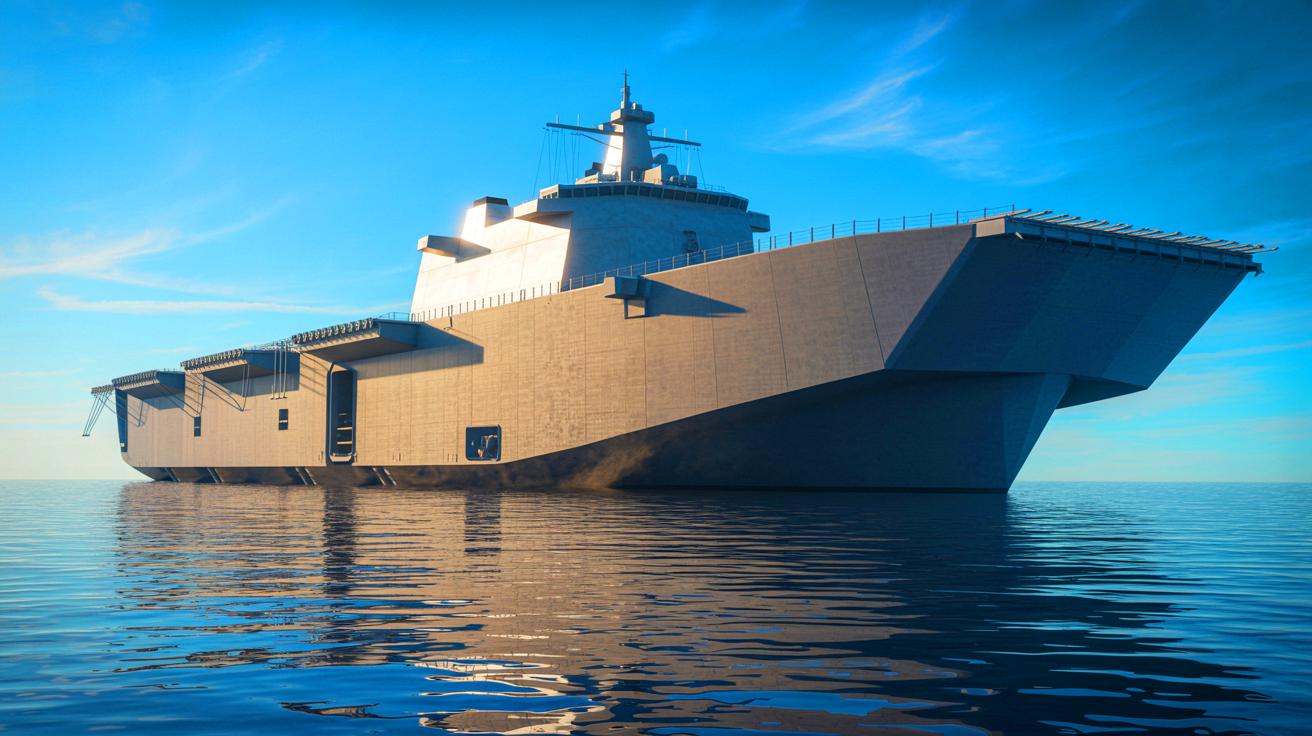
The U.S. Navy’s latest venture into modernizing its fleet comes with the unveiling of a colossal new assault ship, capable of carrying a payload of over 1.2 million pounds. This remarkable feat, which dwarfs the Air Force’s C-17 Globemaster’s capacity, marks a significant advancement in naval technology. Built by Austal USA, the first Landing Craft Utility (LCU) vessel represents a major shift in the company’s approach, moving into steel shipbuilding. Launched on August 22 from Mobile, Alabama, the LCU 1710 is the first of twelve vessels under a $91.5 million contract with the Navy. As the Navy aims to phase out its aging fleet, the new LCU is designed to enhance operational efficiency and readiness.
The Role of Heavy-Lift Connectors
The introduction of the new LCU 1710 marks a pivotal moment in the Navy’s expeditionary operations. As Austal USA President Michelle Kruger stated, the development of these vessels is “critical in supporting expeditionary operations for the Navy and Marine Corps.” These ships are designed to be carried aboard amphibious assault ships, deployed to shore, and tasked with delivering vehicles, cargo, and personnel. The LCU 1710 can carry two M1A1 Abrams main battle tanks or up to 350 fully equipped troops, providing a substantial upgrade from its predecessors.
The design of the LCU 1700 series represents a significant improvement over the older LCU-1610, which has been in use since the 1950s. With a length of 139 feet, the new vessel offers enhanced endurance, boasting a top speed of 11 knots and a range of 1,200 nautical miles (approximately 1,400 miles) at cruising speed. Its increased payload capacity and modern design are set to replace the Cold War-era fleet, ensuring the Navy remains equipped to meet current and future challenges.
Expanding Shipbuilding Capacity
Austal USA’s entry into steel shipbuilding has positioned it as a key player in the Navy’s modernization efforts. The 2023 contract, which made Austal a secondary source for new landing craft, underscores the company’s growing role in the maritime industrial base. Prior to Austal’s involvement, Swiftship in Louisiana had been the primary developer of these vessels since 2018. The Navy’s original plan called for the production of 31 heavy landing craft, though this is contingent on congressional funding and shifting requirements.
Beyond the LCU program, Austal is involved in constructing three Navajo-Towing, Salvage and Rescue ships (T-ATS) for the Navy and two Heritage-Offshore Patrol Cutters (OPC) for the Coast Guard. This diversification into steel shipbuilding allows the company to pursue a wider array of contracts, including the design of the Navy’s future T-AGOS(X) ocean surveillance ship. Austal’s recent $144.6 million contract for two Navajo-rescue ships further illustrates its capability and readiness to meet the Navy’s evolving needs.
A Modernizing Fleet
The launch of LCU 1710 is a significant step forward in the Navy’s efforts to update its landing craft fleet, which has faced delays in recent years. The transition from aluminum to steel shipbuilding at Austal has broadened the company’s capabilities, enabling it to compete for a diverse range of contracts. The modernization of the fleet is crucial for maintaining operational readiness and ensuring the Navy can effectively respond to global threats.
With the LCU program and other shipbuilding efforts underway, Austal’s progress reflects a strategic investment in the future of naval operations. The company’s achievements bolster the maritime industrial base, contributing to the overall strength and success of the U.S. Navy. As the Navy continues to invest in auxiliary vessels and support craft, the role of companies like Austal becomes increasingly important in shaping the future of naval warfare.
Future Prospects
The Navy’s ongoing investment in modernizing its fleet through projects like the LCU program demonstrates a commitment to maintaining strategic superiority. The introduction of the LCU 1710 and its successors will bolster the Navy’s expeditionary capabilities, ensuring the force is equipped to handle a range of operational demands. As Austal USA continues to expand its shipbuilding capacity, the company remains poised to play a critical role in future naval operations.
The evolving nature of global threats necessitates a robust and adaptable naval fleet. As new technologies and strategies emerge, the Navy’s partnership with shipbuilders like Austal will be essential in navigating the challenges ahead. How will these advancements shape the future of naval warfare and the strategic landscape in which the U.S. Navy operates?




Wow, 1.2 million pounds of equipment! That’s like carrying the weight of my grocery shopping for a year! 🛒😂
Wow, 1.2 million pounds! That’s heavier than my last Thanksgiving dinner! 😄
What are the defensive capabilities of this ship?
Looks like the Navy is gearing up for something big. 🤔
1.2 milion pounds? That’s a lot of donuts! 🍩
How long did it take to build this vessel?
Nice to see innovation in shipbuilding, but I hope this doesn’t escalate global tensions.
How does this ship’s speed and range compare to others in its class?
Why is steel shipbuilding considered such a leap for Austal USA?
Seems like a massive investment. Hope it’s worth it!
Always proud to see advancements in our naval capabilities. Go Navy! 🇺🇸
Are there any plans to use these ships for international cooperation missions?
What’s the crew size for operating this new assault vessel?
Wow, 350 troops! That’s like a floating small town. 🏘️
Is this new vessel nuclear-powered, or does it rely on conventional fuel?
What sort of technologies are incorporated into the new LCU series?
This must be a logistical nightmare to coordinate.
What are the future prospects for Austal USA in the shipbuilding industry?
Is there any information on how the LCU 1710 will perform in various weather conditions?
I hope this doesn’t mean increased military spending at the expense of other areas.
Does anyone know how this compares to vessels from other countries?
How will this addition affect the Navy’s overall strategy?
Are there any plans to make such vessels autonomous in the future?
Seems impressive, but I’d like to know more about the cost-effectiveness.
Whoa, Austal USA is really diversifying. Good for them! 🚢
This sounds like it’s straight out of a sci-fi movie! 🚀
Seems like Austal USA is really stepping up its game. Kudos to them! 👏
Austal USA is really making waves with this project. Pun intended. 🌊
How does the payload capacity compare to other naval vessels in the fleet?
How does this new vessel compare in terms of speed and range to the older models?
Why did the Navy decide to replace the LCU-1610 series now?
Thank you for the detailed article! Really informative and well-written. 👍
I’m curious about the environmental impact of these new vessels. Any info on that?
The shift to steel shipbuilding seems like a big deal. What are the main advantages?
Can it carry more than just military equipment, like humanitarian supplies?