



| IN A NUTSHELL |
|
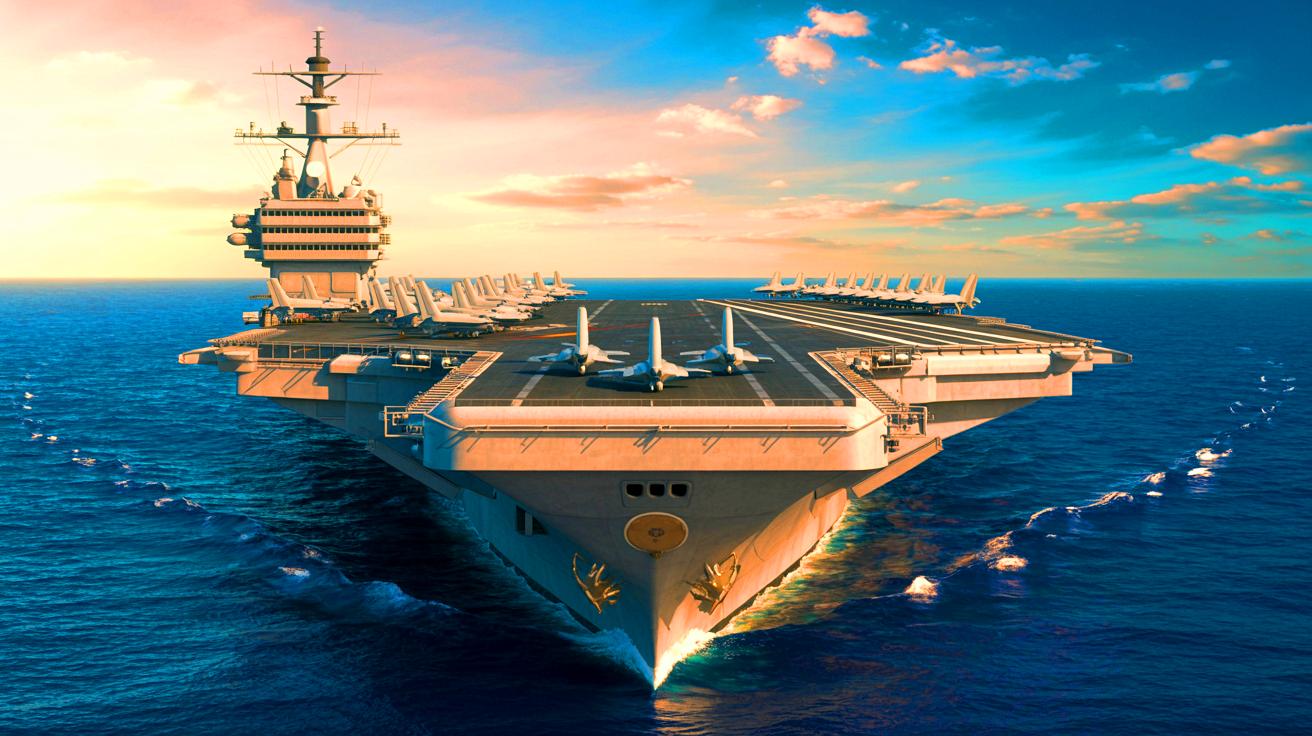
The USS Gerald R. Ford stands as a testament to the pinnacle of modern naval engineering. As the largest and most advanced aircraft carrier in the world, it represents the forefront of the United States Navy’s strategic capabilities. Commissioned in 2017, this monumental vessel has become an essential pillar of naval operations, playing a critical role in shaping global maritime strategy. With its significant investment in cutting-edge technologies, the USS Gerald R. Ford continues to set new standards for future naval warfare, despite the numerous challenges encountered during its development and deployment.
The Technological Marvel of USS Gerald R. Ford
At the heart of the USS Gerald R. Ford’s capabilities is its impressive technological suite. Measuring approximately 1,106 feet in length with a flight deck spanning 256 feet, this aircraft carrier is a true behemoth. It displaces 100,000 tons and is powered by two nuclear reactors, allowing it to achieve speeds exceeding 30 knots. This power enables the carrier to project U.S. military presence effectively across global waters.
The carrier’s innovative Electromagnetic Aircraft Launch System (EMALS) is a significant advancement over the steam-powered catapults used in previous carriers. EMALS allows for a higher sortie rate, handling up to 160 launches per day, while reducing stress on aircraft frames. This improvement enhances the overall operational efficiency of the carrier. Additionally, the advanced arresting gear further streamlines recovery operations, and the state-of-the-art weapons elevators ensure rapid and efficient transport of ordnance to the flight deck.
The carrier’s power generation capabilities are equally remarkable. It produces three times the electrical power of its predecessors, supporting a wide array of onboard systems. These include sophisticated radar and defense systems like the SLQ-32(V)6 electronic warfare system and the Evolved Sea Sparrow Missile (ESSM) Block 1.
Strategic Importance and Global Impact
The USS Gerald R. Ford holds a strategic position in U.S. naval operations, serving as the centerpiece of the Carrier Strike Group. This powerful group typically includes cruisers, destroyers, and supply ships, forming a formidable force capable of sustaining prolonged operations at sea. The carrier supports air wing missions that span combat, reconnaissance, and deterrence, strengthening U.S. military presence on a global scale.
Deployments to key strategic locations, such as the Mediterranean, underscore the carrier’s role in regional deterrence and influence. Its presence serves as a powerful deterrent to potential adversaries, emphasizing the U.S.’s commitment to maintaining global stability and peace. The carrier’s participation in naval exercises showcases its capabilities and strengthens alliances with other nations.
Beyond its military utility, the USS Gerald R. Ford symbolizes American technological prowess and national pride. As the most expensive warship ever constructed, costing approximately $13.3 billion, it represents a significant investment in the future of naval warfare and security.
Challenges and Controversies
The development of the USS Gerald R. Ford was not without its challenges. The construction process faced numerous delays and budget overruns, primarily due to the integration of new technologies. Issues with the certification of weapon elevators, EMALS, and radar systems contributed to these setbacks.
These challenges highlight the complexities of pioneering new technologies on such a large scale. The budget overruns, which exceeded initial estimates by 30%, sparked debates over defense spending priorities. Critics argue that the resources allocated to the carrier could have been directed towards other defense needs or social programs.
Additionally, the carrier’s automation systems, designed to reduce the crew size by 700, have sparked discussions about the impact on personnel and the future of naval employment. While automation reduces operational costs and improves crew quality of life, it raises concerns about job security and the role of humans in military operations.
Future Prospects and Adaptability
The USS Gerald R. Ford is built with future adaptability in mind. Its advanced systems allow for the integration of emerging technologies, such as advanced drones, ensuring its continued relevance in the dynamic landscape of naval warfare. As threats and technologies evolve, the carrier can be upgraded to maintain its strategic advantage.
This adaptability is crucial for addressing new challenges and maintaining the U.S. Navy’s superiority. The ability to incorporate innovative technologies ensures that the USS Gerald R. Ford remains a vital asset for decades to come, capable of responding to unforeseen threats and opportunities.
As the flagship of the Ford-class carriers, it sets a benchmark for future vessels, influencing the design and development of subsequent ships. The lessons learned from its construction and deployment will shape the future of naval engineering and strategy.
The USS Gerald R. Ford encapsulates the intersection of tradition and innovation, highlighting the enduring strength of the U.S. Navy. As it navigates the world’s oceans, the question remains: how will emerging technologies and geopolitical shifts shape the future role of such monumental vessels in global security?




Wow, 100-foot guns? That’s some serious firepower! 💥
Isn’t the cost of $13.3 billion a bit too steep for a single ship?
Thanks for the informative article! It’s amazing to see how advanced naval technology has become.
I’m curious, how does the electromagnetic aircraft launch system actually work?
Why does the U.S. Navy need such a large warship? 🤔
Great read, but I wish there were more details on the crew’s life onboard.
Isn’t there a risk of these powerful weapons escalating global tensions?
Did you know that the USS Gerald R. Ford has its own Starbucks? ☕
How does it compare to other countries’ aircraft carriers in terms of technology and capability?
The automation reducing crew size sounds like a double-edged sword. 🤖
What guarantees are there that the new systems won’t fail in critical situations?
Interesting article, but I’m skeptical about the reported efficiency gains.
With all the automation, will there be enough jobs for sailors in the future?
Can this ship withstand cyber attacks? Seems like a crucial point.
Is it true the carrier can launch 160 flights a day? That’s insane! 🚀
The adaptability for future tech sounds promising! What’s next?
Why does the article link to unrelated energy stories?
How do other countries view this ship’s deployment? Potential for conflict?
Is this carrier involved in any current military operations?
Love the emojis in the article. Makes it more engaging! 🎉
How does the crew manage the stress of being on such a massive ship?
What environmental impacts do these massive carriers have?
The electromagnetic launch system sounds like sci-fi tech! 🚀
I’m concerned about the potential for accidents with such powerful weapons on board.
Does the carrier have any stealth capabilities?
Sounds like an engineering marvel, but at what cost to global peace?
Can someone explain how this ship contributes to “global stability”? 🤷♂️
This is a great example of American engineering prowess! 🇺🇸
How does this ship compare in size to historical battleships?
With the cost overruns, is it worth it?
Does the USS Gerald R. Ford participate in humanitarian missions?
These advancements in naval tech are mind-blowing! 💡
I hope the crew is well taken care of, given the automation changes.
How do allies and adversaries perceive the deployment of such a vessel?
Is the ship involved in any current conflict zones?
The tech on this ship sets a high bar for future naval vessels.
How does the ship handle rough seas? Must be a challenge! 🌊