


| IN A NUTSHELL |
|
The international scientific community has recently achieved a major milestone in the quest for sustainable energy, marked by the completion of the central solenoid of the ITER project. This magnet, powerful enough to levitate an aircraft carrier, represents a significant advancement in fusion technology, poised to transform energy production and even space travel. Beyond the technological achievement, the project exemplifies the power of international collaboration in addressing global challenges, setting a precedent for future scientific endeavors.
Understanding the Role of the Central Solenoid
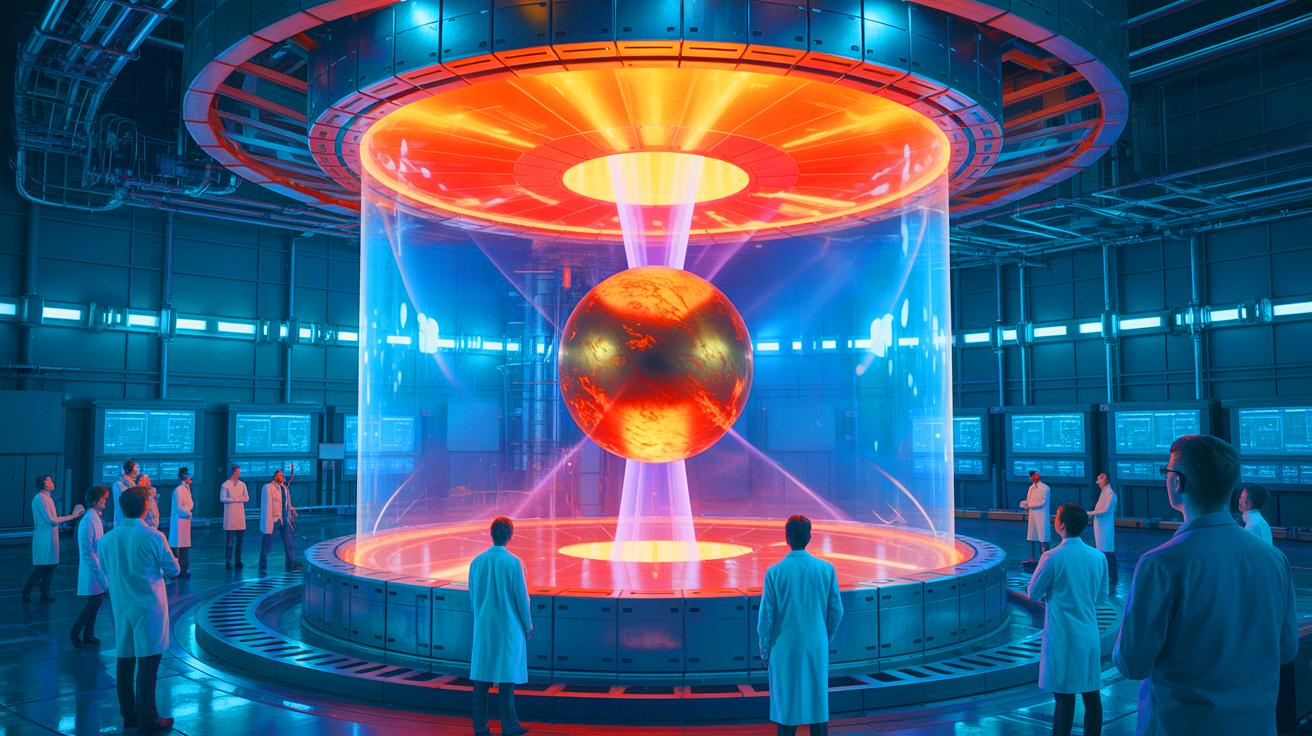
The central solenoid is a critical component of the ITER Tokamak reactor, acting as the driving force behind the fusion process. This superconducting magnet plays an essential role in creating and maintaining the superheated plasma necessary for nuclear fusion. The plasma core, composed of ionized hydrogen gas, must reach temperatures of around 270 million degrees Fahrenheit—ten times hotter than the sun’s core. This extreme heat facilitates the fusion of atomic nuclei, releasing immense energy in the form of a fusion reaction.
When fully assembled, the central solenoid will weigh nearly 6 million pounds and stand at about 42.6 feet tall, with a width of 13.1 feet. It functions alongside other magnetic systems to form a magnetic cage, containing the plasma and allowing for precise control of the fusion reaction. At its peak, the solenoid will endure forces equivalent to 13.5 million pounds, showcasing the engineering marvel that enables this fusion breakthrough.
The Significance of a Magnet That Can Levitate an Aircraft Carrier
The ability of the central solenoid to levitate an aircraft carrier underscores the extreme conditions necessary for nuclear fusion. Inside the reactor, the temperatures are so high that no material container could survive them. Therefore, magnetic fields are utilized to suspend the plasma, preventing contact with the reactor walls. The central solenoid is vital in this process, providing the magnetic force required to suspend the plasma for extended periods.
This capability is not just a display of power but a requisite for achieving a successful fusion reaction. The solenoid’s magnetic energy, totaling 6.4 gigajoules, highlights its tremendous capability. With this technology, ITER aims to generate 500 megawatts of power while using only 50 megawatts of input, indicating a promising future of clean, abundant energy.
International Collaboration and Its Impact
The ITER project stands as a beacon of international cooperation, with Europe funding 45% of the costs and six other countries contributing 9% each. This global initiative addresses pressing energy needs and demonstrates the potential for nations to unite in overcoming existential challenges like climate change and energy security.
Pietro Barabaschi, ITER’s Director-General, emphasizes the project’s technical complexity and international framework as key factors in its success. Despite varied political landscapes, the collaboration has remained strong, proving that humanity can come together for the greater good. As the project advances, it holds the promise of transforming the world’s energy landscape through nuclear fusion.
Challenges Ahead and the Road to Completion
Despite its remarkable achievements, the ITER project faces significant challenges before the reactor becomes fully operational. Initiated in 2007, the project is now targeting its first operation in 2035. This timeline reflects the intricate nature of the endeavor, requiring precise engineering and coordination among international partners.
As assembly continues, integrating complex systems and adhering to safety standards remain critical challenges. However, the progress achieved thus far inspires optimism that the final goal is attainable. The successful operation of ITER could herald a new era in energy production, with wide-ranging implications for industries and societies worldwide.
The completion of the central solenoid marks a pivotal step in the journey toward harnessing fusion energy. As the ITER project continues, it exemplifies human ingenuity and the power of collaboration. Could this fusion breakthrough be the key to a sustainable energy future, transforming not only how we power our lives but also how we explore the cosmos?




Wow, a magnet that can lift a warship! Can it help me lift my Monday mood too? 😂
This is a significant breakthrough! Thank you to all the scientists involved. 🌟
When can we expect to see this tech being used in everyday life?
With all the international collaboration, how do they handle intellectual property rights?
Isn’t 2035 a bit too optimistic? Considering all the delays in such projects.
I wonder how much this project is costing us taxpayers. 🤔
I hope this doesn’t turn into another expensive science experiment with no practical use.
That’s one strong magnet! Can it pick up all the broken promises from past energy projects? 😜
Great job, ITER team! This is a leap forward for sustainable energy.
What are the potential risks involved with this kind of technology?
As if the disaster of a nuclear reactor incident like Chernobyl isn’t bad enough. What happens when one of these puppies blow/malfunction.
In that case, I sure hope I’m a space inhabitant by then.
BEAM ME UP SCOTTY!!!
Why does it take so long to make these reactors operational?
This is really exciting! Can’t wait to see what comes next! 🚀
How does this compare to renewable energy sources like wind and solar?
Can someone explain why it takes so long to complete the reactor?
I’ve read about the costs and delays. Are they really worth it?
The power of international collaboration is truly remarkable. Kudos to all involved!
Will this be able to solve all our energy problems once operational?
Hope this magnet isn’t just a flashy showpiece. Let’s see some real results!
Are there any environmental concerns with nuclear fusion?
Can we expect a faster timeline with more funding and support?
Sounds like science fiction but it’s real! Amazing work! 🔥
Why do we need a magnet strong enough to lift a warship? Just curious.
The engineering behind this is mind-blowing. Hats off to the team!
Is there any contingency plan if the project faces further delays?
Do we have examples of similar projects succeeding in the past?
Any chance this technology will be used for space travel? 🌌
I’m skeptical about the completion date. History suggests it might take longer.
ITER’s progress is inspiring. Thank you for sharing this update!
What will happen to the project if one of the major countries pulls out?
This sounds promising, but how will it affect the global energy market?
How does this project align with global climate goals? 🌍
I’m all for clean energy, but let’s hope the costs don’t spiral out of control.
STOP THIS AI DRIVEL! THE COMMENTS ARE INSANELY BASED UNDER EVERY ARTICLE… At last tone it down so people that want to comment don’t drown in rubbish. You’re otherwise doing a great job!
STOP THAT AI DRIVEL! THE COMMENTS ARE INSANELY BASED UNDER EVERY ARTICLE… At last tone it down so people that want to comment don’t drown in rubbish. You’re otherwise doing a great job!
A wasteful effort. I’m sitting in the glow of the perfect fusion reactor right now, having tea. It cost us nothing to build, and will deliver its energy to us for free for the next billion years.