




| IN A NUTSHELL |
|
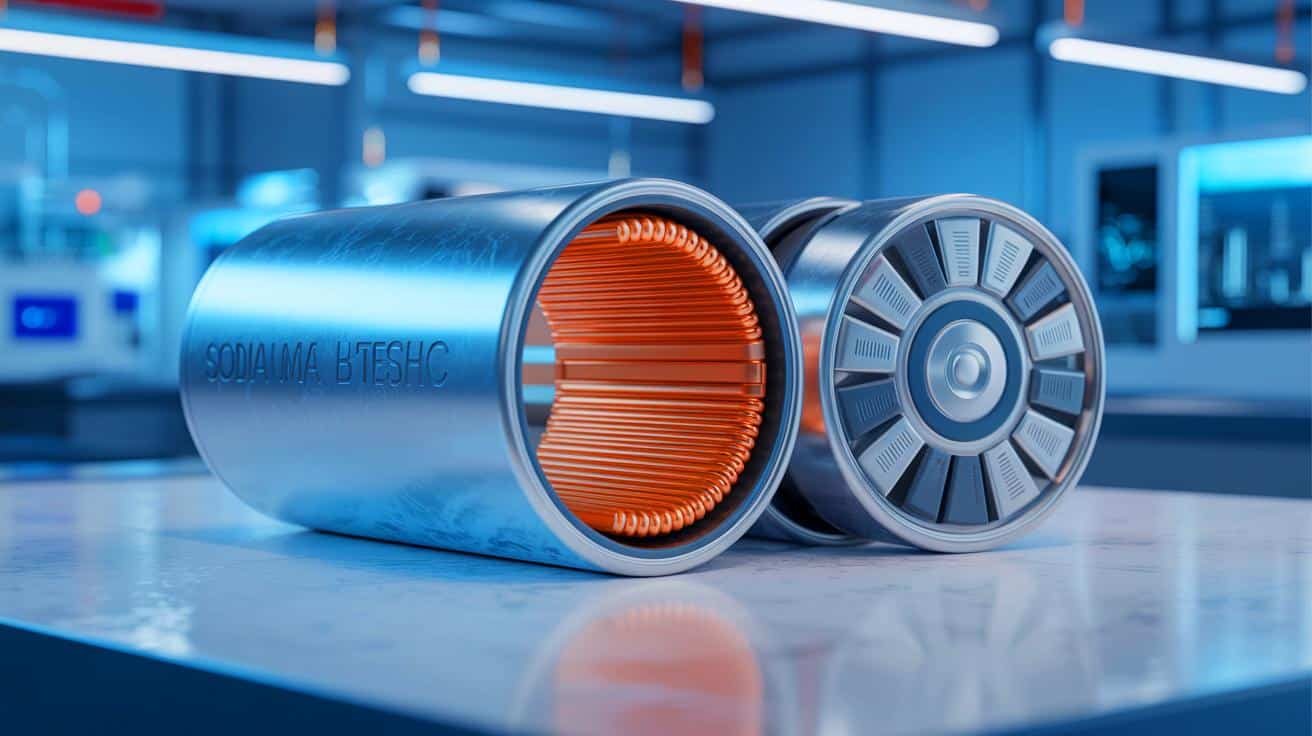
Researchers at the University of Queensland’s Australian Institute for Bioengineering and Nanotechnology (AIBN) have made significant strides in battery technology. They’ve developed a new solid electrolyte that could play a crucial role in advancing grid-scale energy storage. This innovative material has been tested in sodium metal batteries (SMBs), showing promising results. The battery operated for over 5,000 hours at high temperatures and maintained over 91% of its capacity after 1,000 charge cycles. Such performance is pivotal for the potential use of SMBs in renewable energy storage, highlighting its promise as a safer and more efficient alternative to conventional lithium-ion batteries.
Addressing a Known Safety Issue
Sodium metal batteries are gaining attention as a potential alternative to lithium-ion batteries, primarily due to the low cost and abundance of sodium. However, safety concerns have limited their widespread adoption. The primary issue lies with the battery’s electrolyte, the medium that facilitates ion movement. Conventional batteries often use liquid electrolytes, which are flammable and can overheat, leading to fires.
Dr. Cheng Zhang of AIBN explained, “These liquids are flammable and can overheat, causing fires like in electric vehicles and e-scooter batteries.” Such fires often originate from the formation of dendrites—sharp metal spikes that can grow inside the battery and cause short circuits. Dr. Zhang further noted, “This kind of growth usually happens when the electrolyte becomes unstable after repeated charge cycles, making the battery unsafe and unreliable.”
To mitigate these safety issues, Dr. Zhang and PhD student Zhou Chen developed a new solid electrolyte. This fluorinated block copolymer, named P(Na3-EO7)-PFPE, resembles plastic and is non-flammable. It is specifically designed to prevent dendrite growth, offering a safer alternative to liquid electrolytes.
Engineering Material’s Internal Structure
The innovative solid electrolyte is engineered with a body-centered cubic formation. This internal structure creates microscopic tunnels that facilitate the efficient movement of sodium ions. Zhou Chen elaborated, “By adjusting the layout to form what’s known as a body-centered cubic structure, we enhanced the material’s naturally forming tunnels.” This design allows sodium ions to move smoothly, akin to their movement in lithium batteries, while also minimizing the risk of dendrite formation.
The successful testing at high temperatures marks a significant milestone. However, the research team is now focused on achieving similar performance at room temperature. This next phase of research aims to broaden the applicability of sodium metal batteries, making them a viable option for everyday use.
Steps for Commercialization
Globally, researchers are intensifying efforts to commercialize sodium-state batteries. Recent developments suggest that sodium-based solid-state batteries can perform at room and even subzero temperatures. This work sets new benchmarks for sodium batteries, a technology that has historically struggled in real-world conditions.
A recent paper demonstrated thick sodium cathodes that operate efficiently from room temperature down to freezing. Additionally, research from the Tokyo University of Science showed that doping a sodium-ion battery cathode with scandium enhances its cycling stability. During tests, a modified cathode in a coin-type full cell retained 60% of its capacity after 300 charge-discharge cycles.
These advancements underscore the growing interest and potential of sodium-state batteries. As researchers continue to overcome existing challenges, the path to commercialization becomes increasingly viable.
Potential Impact on Energy Storage
The development of a safer, more efficient solid electrolyte for sodium metal batteries could have a profound impact on energy storage solutions. Grid-scale energy storage is essential for balancing supply and demand in renewable energy systems. The new material's ability to retain significant capacity over extended periods makes it a strong candidate for this application.
Moreover, the abundance and low cost of sodium compared to lithium make these batteries an economically attractive option. As the world seeks sustainable energy solutions, the advancements in sodium metal battery technology present a promising avenue. These developments could lead to safer, more accessible, and cost-effective energy storage systems, paving the way for broader adoption of renewable energy sources.
As researchers continue to refine and test these technologies, the question remains: how soon will we see large-scale implementation of sodium metal batteries in our energy infrastructure?


Wow, this could really shake up the energy storage industry! 🚀
Wow, this is amazing! Could this mean cheaper electric cars in the future? 🚗🔋
Is the lithium industry really “terrified,” or is that just sensationalism? 🤔
How long before these batteries hit the market?
Thank you for this insightful article! It’s exciting to see advancements in energy storage. 😊
Finally, a battery that doesn’t turn into a fire hazard! 🔥
How do these sodium batteries compare to lithium ones in terms of energy density?
I’m skeptical. Sodium might be cheap, but is it really as effective as lithium?
Great job to the researchers at the University of Queensland! 🎉
Great job to the researchers! This is a game-changer. 🎉
So, does this mean no more battery fires? I’m all for that! 🔥🙅♂️
Will this make electric vehicles more affordable?
What are the environmental impacts of sodium extraction compared to lithium?
Impressive results, but what about performance at lower temperatures?
Does this mean cheaper smartphones in the future? 😄
I’m curious, how does this new battery tech compare to Tesla’s advancements?
Thank you for sharing this amazing breakthrough!
This could be the end of lithium’s monopoly in the battery market.
How sustainable is the production of these sodium metal batteries?
Finally, something that doesn’t explode when you drop your phone! 😂
Would love to see more research on this. Keep it up!
Interesting, but how will this affect lithium mining industries?
Why hasn’t this been done before? Seems like a no-brainer.
The future of renewable energy looks bright with this innovation. ☀️
What are the environmental impacts of producing these batteries?
Hope this becomes commercially available soon! 🌍
Is this really the end of lithium dominance, or just hype?
Can’t wait to see how this changes the tech landscape. 💡
How do these batteries fare in extreme weather conditions?
Just when you thought battery tech couldn’t get any better… 💥
Will this lead to new job opportunities in the energy sector?
Is there any possibility of these batteries being used in space technology?
I’m all for safer batteries, but what about the cost? 🤔
How recyclable are these new sodium batteries?
Awesome news! Hope it lives up to the hype.
Is there a reason why this took so long to develop?
Will this tech make its way into smart home devices?
Could this help reduce the carbon footprint of battery production?
I’d like to see a side-by-side comparison with lithium batteries.
Thank you, University of Queensland, for leading the way! 💪
Can this tech be adapted for other uses beyond energy storage?