



| IN A NUTSHELL |
|
The rapid expansion of artificial intelligence (AI) technology is pushing the limits of our aging power grid in ways that were once unimaginable. As AI labs construct multi-gigawatt-scale data centers, the stress on the power infrastructure has reached unprecedented levels. The unique load profile of AI training workloads—characterized by sudden and massive fluctuations—poses a significant risk to the stability of the power grid. This could potentially lead to blackouts affecting millions of Americans.
Understanding Power Quality and Its Importance
Power quality is a crucial aspect of the electrical grid that often goes unnoticed by the general public. The reliability of our electricity supply hinges on maintaining a delicate balance between energy generation and consumption. This balance is managed on a scale of fractions of a second, ensuring that voltage and frequency remain stable. In the United States, the grid operates at a frequency of 60 Hz, and any deviation from this can lead to significant disruptions.
When supply and demand are not in sync, both voltage and frequency can drift, causing various issues. An excess supply leads to higher voltage and frequency, while a shortfall results in lower values. A mere 10% deviation can damage motors, trip breakers, and crash electronics. The winter storm in Texas in 2021 highlighted the grid’s vulnerability, as extreme cold increased electricity demand while several gas plants went offline, leading to a near blackout situation.
The stability of the grid relies heavily on predictable household demand and stable industrial loads. However, the rise of AI technology is introducing new challenges. AI training workloads, unlike traditional ones, create significant fluctuations in power consumption, which are difficult for the grid to manage.
The Unique Load Profile of AI Training
AI training systems operate in a synchronous manner, with hundreds of thousands of GPUs working in tandem. This synchronous operation results in a load profile that is vastly different from traditional computing systems. For instance, cloud computing involves multiple virtual machines with varying workloads, leading to a more predictable and stable power demand.
In contrast, AI training workloads can cause significant fluctuations in power consumption. During training, power spikes can occur due to intensive computations, while dips happen during data transfers or synchronization activities. These fluctuations can be drastic, with power consumption jumping from nearly zero to full capacity in milliseconds.
Such dynamic loads pose a challenge for the power grid, which is not designed to handle rapid and large-scale changes in demand. As AI data centers grow in size and number, the grid will need to adapt to manage these fluctuations effectively.
Impact on the Power Grid
The scale of AI data centers is staggering, with some reaching up to gigawatt-scale capacities. This rapid growth is catching the attention of grid operators and regulators. For example, the Electric Reliability Council of Texas (ERCOT), which oversees the Texas power grid, is closely monitoring the situation as AI data centers continue to expand.
The integration of such massive loads into the grid is challenging. The potential for cascading blackouts is a significant concern. When a large data center suddenly disconnects from the grid due to power fluctuations, it can cause a ripple effect, destabilizing the entire grid. This scenario is not hypothetical; a similar incident occurred in 2024 when a transmission line fault led to the disconnection of several data centers in Virginia.
The risk of cascading failures is exacerbated by the increasing reliance on renewable energy sources, which, while beneficial, do not provide the same level of grid stability as traditional power plants.
Potential Solutions and the Role of Battery Energy Storage Systems
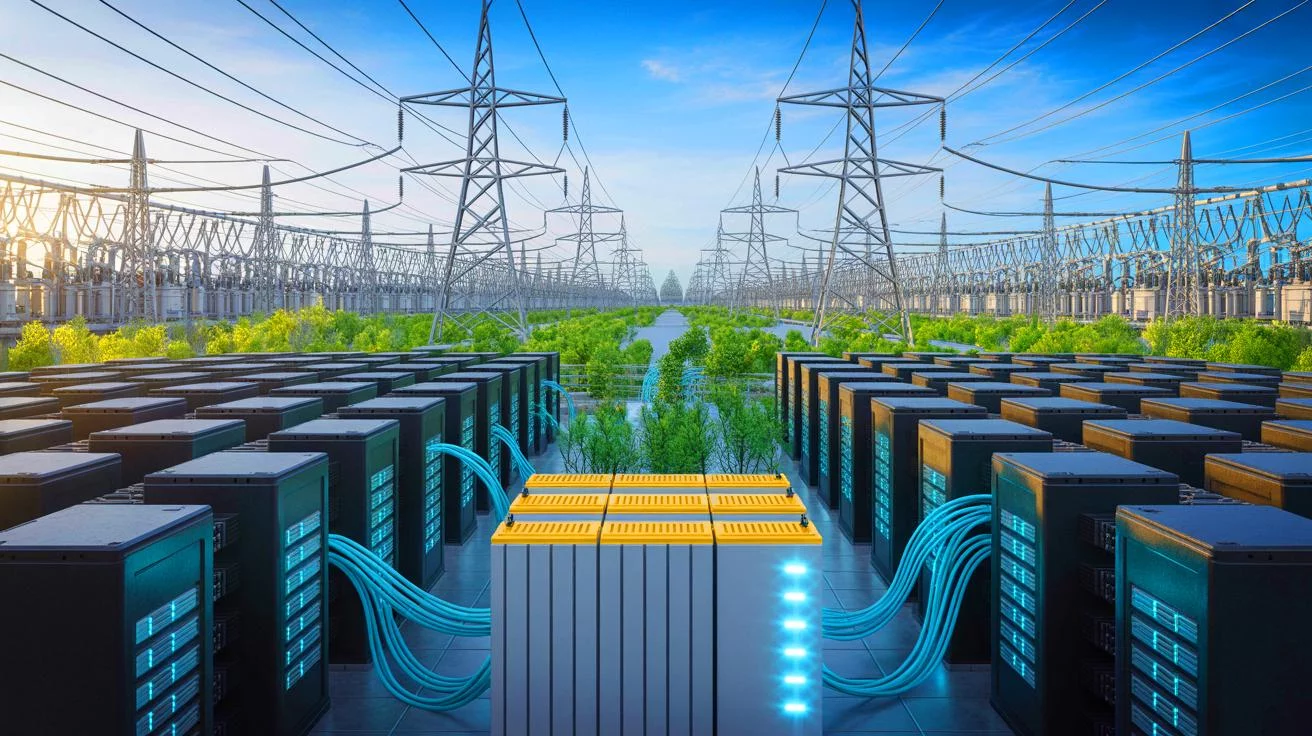
To address the challenges posed by AI training load fluctuations, several solutions are being explored. One promising approach is the use of Battery Energy Storage Systems (BESS). These systems can rapidly charge and discharge, providing the flexibility needed to manage sudden changes in power demand.
Tesla, a leader in the BESS market, is actively promoting its Megapack system for data centers. These batteries can help stabilize the grid by smoothing out power fluctuations and providing backup power during low voltage events. Additionally, BESS can participate in demand response programs, helping to alleviate grid stress during peak demand periods.
However, the implementation of BESS comes with its own set of challenges. The cost of these systems is substantial, and integrating them into existing infrastructure requires careful planning and coordination.
The rapid growth of AI technology presents both opportunities and challenges for the power grid. As AI data centers continue to expand, the need for innovative solutions to manage power fluctuations becomes increasingly urgent. Will the power industry be able to adapt to these demands and ensure a stable electricity supply for the future?


Wow, AI tech is growing so fast! Are power grids even ready for this? 🤔
Can we really rely on Battery Energy Storage Systems to solve all these issues?
Sounds like a disaster waiting to happen. What can individuals do to help?
Interesting article! What other solutions besides BESS are being explored?
Is there a timeline for when AI data centers might cause significant grid issues?
How are other countries dealing with AI’s impact on their power grids? 🤨
Thanks for the article! Very informative. AI and power grid issues are complex!