




| IN A NUTSHELL |
|
The recent breakthrough at Los Alamos National Laboratory (LANL) has achieved a significant milestone in the field of fusion science. This experiment, performed in partnership with Lawrence Livermore National Laboratory (LLNL) at the National Ignition Facility (NIF), utilized the novel Thinned Hohlraum Optimization for Radflow (THOR) window system. By achieving a self-sustaining “burning plasma,” the experiment produced a fusion energy yield of 2.4 megajoules. Such achievements demonstrate the potential of fusion energy to address both scientific and practical challenges, opening new avenues for future advancements in energy production.
First Operational Test of THOR
The recent experiment marks the first operational test of the THOR window system by LANL. This system is designed to provide high-flux X-rays and is primarily used to study material responses in extreme radiation environments. According to LANL physicist Joseph Smidt, the experiment is significant because it demonstrates the ability of their designs to create fusion ignition conditions crucial for stockpile stewardship.
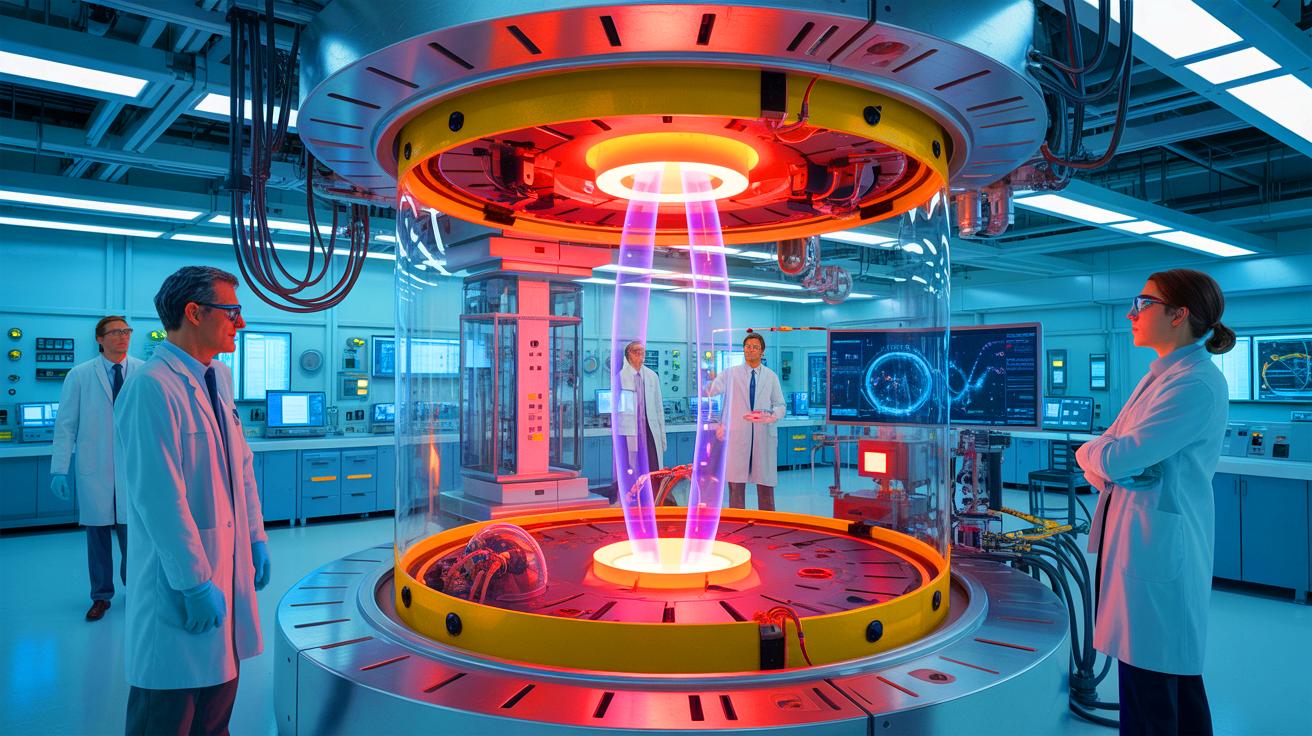
In a standard NIF experiment, lasers are directed into a hohlraum, a gold-coated cylinder containing a capsule filled with deuterium and tritium fuel. These lasers generate X-rays, causing the fuel capsule to implode symmetrically, leading to fusion. This experiment represents a critical advancement in fusion science, expanding its potential applications.
Modifying the Standard Hohlraum
The THOR design innovates by modifying the traditional hohlraum to include windows that allow some X-rays to escape. These escaping X-rays are used to irradiate test materials, helping scientists study radiation flow and energy absorption. One of the main challenges in designing the THOR hohlraum was to manage energy loss and maintain symmetry.
The process of achieving fusion ignition is highly sensitive to the energy balance of implosion. The introduction of windows could potentially disrupt the uniformity required for fuel capsule compression by creating an exit path for X-ray energy. LANL physicist Brian Haines underlined the sensitivity of capsule implosions to energy loss and noted the success of the experiment in validating the computer simulations used to design this innovative platform.
Expanding Applications of Ignition Platform
Although LLNL first achieved ignition in 2022, this experiment represents a crucial step in broadening the applications of the ignition platform. Lab physicist Ryan Lester highlighted that the experiment validates high-fidelity simulations and demonstrates ignition-scale performance even with modifications to the THOR platform. With the THOR concept’s viability now confirmed, researchers are planning further development.
Future efforts will focus on refining the windows to increase transparency and designing experimental packages that attach to the hohlraum. This will facilitate the collection of data on material properties under plasma conditions, data that was previously unattainable in laboratory settings. These advancements are expected to extend the reach of fusion research and its practical applications.
The Implications of Fusion Ignition
The successful use of the THOR window system in achieving fusion ignition opens new research and development avenues. By proving that ignition-scale performance can be achieved with modifications, this experiment challenges existing paradigms in fusion science. The ability to control and harness fusion energy has broad implications, from energy production to scientific exploration.
Fusion energy holds the promise of providing a clean and virtually limitless energy source. The advancements made in this experiment contribute to a deeper understanding of the complex processes involved in achieving and sustaining fusion. As researchers continue to explore these possibilities, the potential for transformative changes in energy production and scientific research becomes increasingly tangible.
The recent success in achieving fusion ignition with the THOR window system marks a pivotal moment in fusion research. This breakthrough underscores the potential of fusion energy to revolutionize energy production and scientific exploration. As researchers build on this success, the question remains: how will the advancements in fusion technology shape the future of energy and science?




Wow, “Plasma Gods Awaken”? Sounds like a sci-fi movie! Is this breakthrough really that epic? 🎬👀
These scientific terms are too complex for me. Could you simplify it a bit?
Plasma = Hot, magnetic field = strong basic principle…
Impressive achievement by the researchers! What are the next steps in this research?
Is it safe to say we’re on the brink of an energy revolution? ⚡
Typo in the article: “ignition-scale performance” should be “ignition scale performance”.
Why is this called the “THOR” experiment? Does it have anything to do with mythology? 🛡️⚡
How does this affect global warming and climate change efforts?
Can fusion energy be scaled up easily for widespread use?
What are the environmental impacts of using fusion energy?
This is incredible! How soon can we expect to see practical applications of this technology?
Is this technology patented, or can other countries develop it too?
Incredible work by the scientists! How can the public support further research like this?
Can’t wait to see how this unfolds. Are there any potential downsides to this tech?
Finally, some progress in fusion energy! Thanks for the detailed explanation. 🙏
Are there any military applications for this technology? 🛡️
Why are energy giants terrified of this breakthrough?
Finally, a potential solution to our energy crisis! Keep up the fantastic work. 🌎💪
What exactly is meant by “self-sustaining burning plasma”?
Is there a chance that this technology could be weaponized? 🤯
Interesting read. How does this differ from past fusion experiments?
I hope this isn’t just another overhyped scientific claim. Show us the results!
How is this breakthrough going to be funded for further research and development?
What are the potential economic impacts if fusion energy becomes mainstream?
As an engineer, I find this fascinating! How can one get involved in such research?
Will this lead to cheaper electricity bills in the future? 💡💸
How long until we can expect fusion energy to be a commercial reality? 🚀
This sounds amazing, but what are the risks involved with this technology?
I’m skeptical. We’ve heard about fusion “breakthroughs” before. What’s different this time? 🤔
Great article! But how does this impact current energy giants like oil and gas industries?
Can someone explain what a “hohlraum” is in simple terms? 😅