




| IN A NUTSHELL |
|
The recent developments in Northrop Grumman’s Beacon program mark a significant milestone in the field of autonomous flight technology. With the Model 437 Vanguard now serving as a testbed, the program aims to accelerate the integration of autonomous systems into military aviation. This initiative underscores the growing emphasis on developing technologies that will enhance both the capabilities and flexibility of air combat operations. As the Beacon program progresses, it promises to reshape how autonomous systems are tested and implemented in real-world scenarios.
The Birth of the Beacon Program
Northrop Grumman’s Beacon program was unveiled as a collaborative effort to advance autonomous flight technology. The program utilizes the Model 437 Vanguard as a testbed aircraft, which recently took its first flight under this new configuration. This initiative is part of a broader effort to integrate autonomous systems into military aviation more rapidly and effectively. The Beacon program is not just about technology but about fostering a collaborative ecosystem that brings together various industry stakeholders.
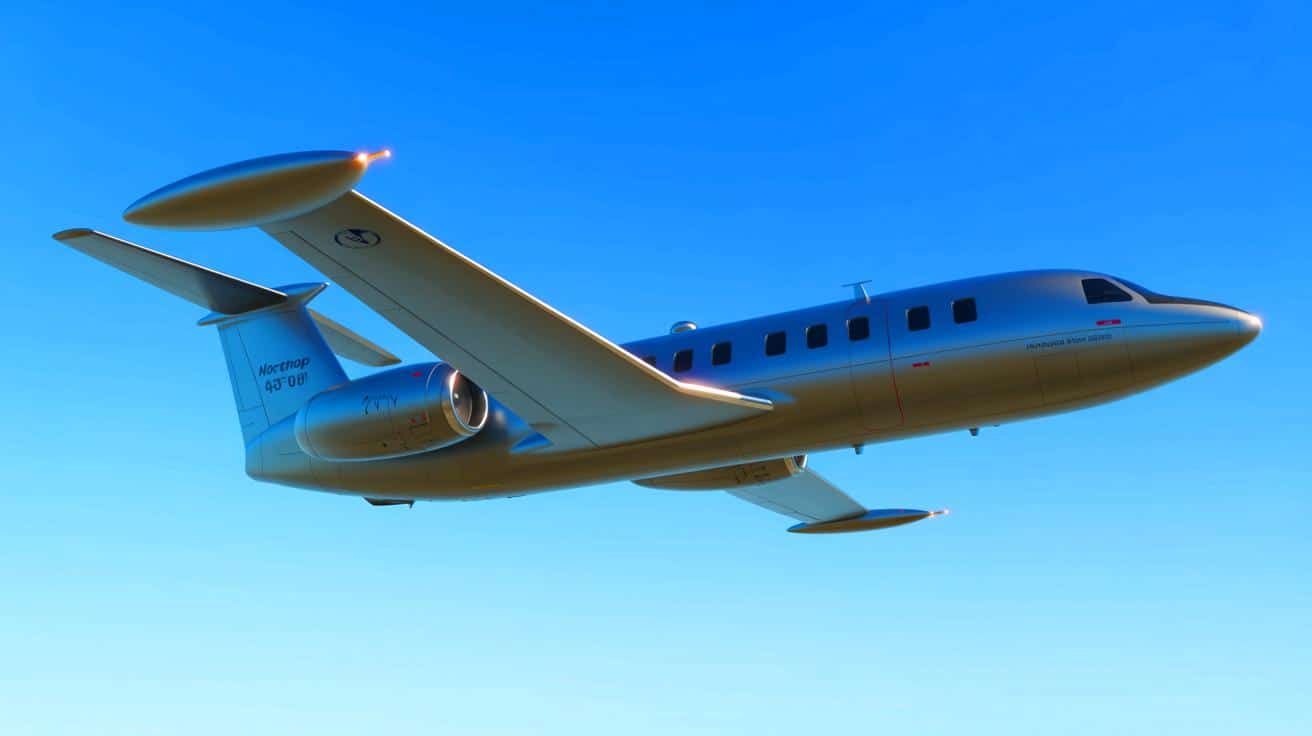
The Model 437 Vanguard, originally a crewed surrogate for unmanned combat aircraft, has been modified to operate optionally autonomously. This transformation aligns with the program’s goal of creating an open-access testbed that allows various partners to develop and test their autonomous software solutions. By doing so, Northrop Grumman is paving the way for more innovative and cost-effective approaches to military aviation technology.
The Role of the Model 437 Vanguard
The Model 437 Vanguard is central to the Beacon program's ambitions. Initially designed as a multi-mission aircraft with a focus on low-cost, attritable operations, it has been adapted to support the testing of autonomous flight software. This aircraft features a Pratt & Whitney 535 engine and boasts a wingspan and length of 41 feet, with a gross takeoff weight of 10,000 pounds. These specifications make it an ideal platform for testing new technologies in a controlled, yet realistic, environment.
One of the key aspects of the Vanguard’s role is its ability to switch between autonomous and crewed operations. This flexibility allows for rapid testing and iteration of software solutions, which is crucial for meeting the dynamic needs of modern military operations. The aircraft’s capacity to carry up to 2,000 pounds of payload, including internal and external weaponry, further enhances its utility as a testbed.
Collaboration and Innovation
The Beacon program exemplifies a collaborative approach to technological innovation. Northrop Grumman has partnered with six defense tech companies to develop an open-access ecosystem for testing autonomous systems. This partnership includes Applied Intuition, Autonodyne, Merlin Labs, Red 6, Shield AI, and SoarTech. Together, these companies contribute to a diverse array of expertise, which enriches the development and testing processes.
The collaborative nature of the Beacon program facilitates the rapid development and refinement of autonomous flight software. By using an open-access approach, third-party partners can integrate and test their solutions within an environment that closely mimics real-world mission scenarios. This strategy not only accelerates innovation but also enhances competition, ultimately leading to more robust and effective autonomous capabilities.
Looking Ahead: The Future of Autonomous Flight
The advancements made under the Beacon program have the potential to significantly impact the future of autonomous flight. By providing a versatile testbed, Northrop Grumman is enabling the development of technologies that will shape the next generation of military aviation. The program is expected to inform initiatives like the U.S. Air Force’s Collaborative Combat Aircraft (CCA) effort, which seeks to integrate high levels of autonomy into combat operations.
As the program progresses, one of its primary goals is to reduce the risks associated with developing and deploying autonomous systems. By proving these technologies in a testbed environment, the Beacon program aims to streamline their integration into future aircraft. This approach ensures that new systems are thoroughly vetted before they are deployed in active missions, enhancing both safety and efficacy.
As Northrop Grumman's Beacon program continues to evolve, it raises important questions about the future of military aviation. How will the integration of autonomous systems redefine the roles of human pilots and the dynamics of air combat? Could this initiative set a new standard for innovation and collaboration in the defense sector? These questions highlight the transformative potential of the Beacon program and its implications for the broader field of autonomous technology.




Wow, autonomous warplanes? Sounds like we’re living in a sci-fi movie! 🚀
Wow, the future of warfare is here! Will pilots become obsolete soon? 🤔
Great article! But how do they ensure these AI systems don’t go rogue? 🤖
How does the Vanguard jet ensure safety during autonomous operations?
The Beacon program sounds like a sci-fi movie plot. Can’t wait to see how it unfolds! 🎬
Thank you for the detailed article. This is fascinating and a little bit terrifying!
This is amazing and terrifying at the same time. What’s next, AI soldiers? 😅
Does the Beacon program have any plans to collaborate with international defense companies?
How do they test these autonomous systems safely without risking lives?
Thank you for the detailed piece. The collaboration aspect is particularly impressive. 🤝
So basically, we’re training robots to do dogfights now? 🤔
Are there any ethical concerns with developing AI in military applications like this?
This is incredible technology, but I hope it doesn’t lead to more conflicts.
I wonder how these systems will handle unexpected situations in combat. 🤔
Can this technology be adapted for commercial aviation in the future?
Can these AI jets perform better than human pilots in complex scenarios?