




| IN A NUTSHELL |
|
In recent years, the story of a young boy achieving nuclear fusion in his bedroom has sparked both amazement and skepticism. Jackson Oswalt, at just 12 years old, reportedly became the youngest person to achieve nuclear fusion, a feat that initially drew widespread attention in 2018. The story resurfaced in 2025, fueled by social media and a renewed interest in the accomplishments of young scientific minds. This extraordinary achievement not only captured the curiosity of the public but also prompted a visit from the FBI to ensure the safety of his experiment. As we delve into the details, we uncover how a child’s fascination with science led to a groundbreaking achievement and a federal investigation.
The Achievement of Nuclear Fusion
Jackson Oswalt’s journey into the world of nuclear fusion began at the tender age of 11, inspired by another young fusioneer, Taylor Wilson. Wilson had previously held the record as the youngest person to achieve nuclear fusion. Driven by a similar passion, Jackson embarked on his own scientific journey, eventually achieving fusion on his 13th birthday. However, due to the timing of the event being two hours before his birth time, he was still considered 12 years old, thereby clinching the title of the youngest person to achieve nuclear fusion.
Jackson’s device, a fusor, was not a power-generating reactor but instead a machine that could achieve nuclear fusion. The success of this experiment was verified by other amateur fusioneers, who confirmed his achievement through the detection of neutrons. This validation from a community of like-minded enthusiasts was crucial in cementing his place in the annals of scientific achievement.
The Role of Social Media
The resurgence of Jackson's story in 2025 can be attributed to the viral spread of social media posts. Platforms like Facebook and Instagram saw millions of views and shares, with users recounting the story of the young scientist's achievement. Although many of these posts sensationalized the events, they played a pivotal role in reigniting public interest in Jackson's accomplishment.
The influence of social media on public perception highlights the power of these platforms in shaping narratives. While some posts exaggerated the details, the core achievement remained a testament to what young minds can accomplish with curiosity and perseverance. This renewed attention was further bolstered by Guinness World Records, which published a blog and social media posts recognizing Jackson's achievement.
The FBI's Involvement
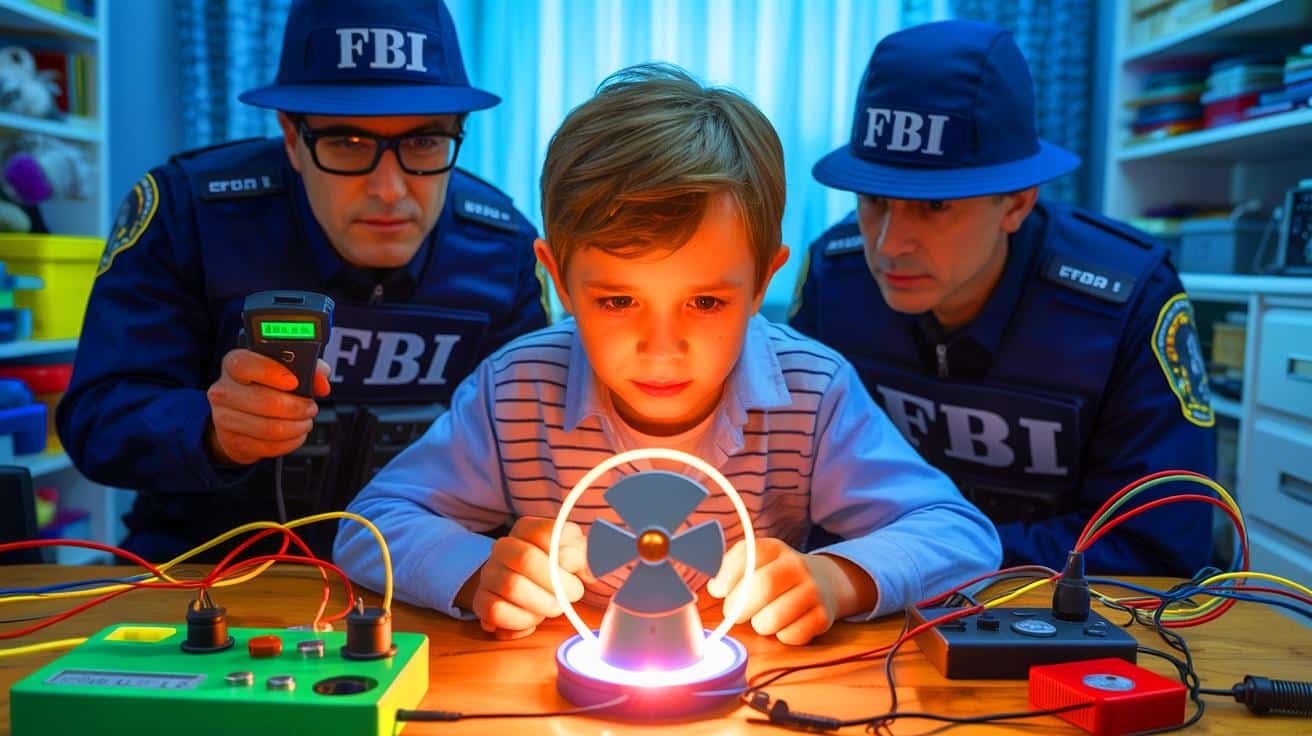
Following Jackson's successful experiment, the FBI paid a visit to his home. This was not the dramatic "raid" that some social media posts described, but rather a precautionary measure to ensure the safety of the experiment's surroundings. Armed with a Geiger counter, the agents conducted a sweep of the area to check for radiation.
Jackson himself has spoken about the visit on his social media accounts, recounting how he was woken up by the agents one Saturday morning. He humorously noted that after their inspection, he remained a free man. This visit underscores the importance of safety in scientific experimentation, especially when dealing with complex and potentially hazardous processes like nuclear fusion.
Youth and Scientific Exploration
Jackson's story is not just about a single scientific achievement but also about the broader narrative of youthful exploration and innovation. His journey from inspiration to realization illustrates the potential of young minds to tackle complex scientific challenges. It also raises questions about how we can better support and nurture such talents from an early age.
The role of amateur scientific communities, access to resources, and the encouragement of critical thinking are all crucial elements in fostering the next generation of scientists. Jackson's ability to source parts from places like eBay and the support he received from the fusioneer community highlight the importance of accessible resources and supportive networks.
The tale of Jackson Oswalt serves as a remarkable example of what young minds can achieve when curiosity meets opportunity. His success in achieving nuclear fusion, coupled with the ensuing visit from the FBI, underscores the delicate balance between scientific exploration and safety. As we continue to witness the rise of young talent in various fields, how can society ensure that these budding scientists receive the support and resources they need to innovate responsibly?




Wow, incredible story! How did a 12-year-old even get the resources to build a nuclear lab? 🤯
Wow, I can’t even get my 12-year-old to clean their room, and this kid is achieving nuclear fusion! 😅
Isn’t this just a bit too much for a kid to handle? What about safety regulations?
Isn’t it a bit concerning that a kid had access to nuclear materials? Where were the parents in all this?
Can someone explain how a fusor works? I’m a bit lost here.
Congrats to Jackson! It’s amazing what young minds can achieve with passion and dedication. 🎉
Did anyone else find the FBI’s involvement a bit over the top? Seems like overkill to me. 😅
Thank you for sharing such an inspiring story. It’s amazing what young minds can achieve!
I’m amazed but also a bit worried about the safety aspects. How did they ensure everything was secure?
Did anyone else find it a bit creepy that the FBI showed up? 🚓🔍