


Close Menu
  • Featured
    • News
    • Consumption
    • Environment
    • Industry
    • Opinion
    • Policy
    • Production
    • Storage
    • Transmission
  • About Us
  • Advertise
  • Contact Us

Subscribe to Our Newsletter

News, investigations, and analysis — our top stories every morning to start your day right.

Trending
The Key Benefits of Oil
CO2 Emissions: How Carbon Dioxide Affects the Environment and the Planet
Ocean Warming: A Growing Threat to Marine Ecosystems and the Global Environment
Facebook X (Twitter) LinkedIn YouTube TikTok
Energy Reporters
Facebook X (Twitter) RSS
Subscribe
  • Featured
  • News

    Researchers Discover That Diamonds Can Generate Electricity

    09/03/2026

    South Africa: Thousands of Dead Sardines Disrupt Koeberg Nuclear Power Plant

    08/28/2026
    Illustration of Abu Dhabi National Oil Company's $11 billion financing deal for future gas production projects.

    ADNOC Secures $11 Billion for Gas Expansion, Transforming Energy Future and Boosting Local Economies

    12/19/2025
    Illustration of Energy Transfer LP's Lake Charles LNG project suspension and strategic shift to pipeline infrastructure.

    Energy Transfer Suspends Lake Charles LNG Project, Sparking Concerns Over Job Losses and Future Energy Solutions

    12/19/2025
    Illustration of a U.S. judge blocking Michigan's attempt to shut down Enbridge's Line 5 pipeline.

    Judge Blocks Michigan’s Effort to Shut Down Enbridge’s Line 5 Pipeline, Sparking Environmental and Economic Debate

    12/18/2025
  • Use

    How energy subsidies affect the market and consumers

    08/11/2026

    Steps to make your business more energy efficient

    06/16/2026

    How to conduct an energy audit for your home

    05/19/2026

    The impact of energy consumption on climate change

    05/12/2026

    Tips for choosing the best energy provider

    05/05/2026
  • Climate

    CO2 Emissions: How Carbon Dioxide Affects the Environment and the Planet

    10/14/2026

    Ocean Warming: A Growing Threat to Marine Ecosystems and the Global Environment

    10/09/2026
    renewable energy industry

    The Benefits of Renewable Energy for the Climate

    09/15/2026

    How to evaluate the carbon footprint of your energy use

    07/21/2026

    The connection between energy use and water resources

    07/07/2026
  • Industry

    How France Produces Its Electricity: Nuclear Power at the Heart of a Changing Energy Mix

    10/02/2026

    The Importance of Oil in Logistics

    09/10/2026
    A bunch of black and white objects with a green arrow above them

    The Ongoing Bribery Case Against Hithium’s Chairman Wu Zuyu Highlights the Stakes for Battery Investors

    02/22/2026
    Illustration of Ford's strategic shift from electric vehicles to gas and hybrid models.

    Ford Reveals $19.5 Billion Charge as EV Strategy Unravels, Impacting Jobs and Future Mobility Choices

    12/17/2025

    US Drillers Cut Oil and Gas Rigs Again, Exposing Potential Economic and Environmental Impacts on Local Communities

    12/13/2025
  • Opinion
    lighted city skyline at night

    Korean Companies Are Losing Ground to China: Why Governance Failures at Conglomerates Like Young Poong Group Matter More Than Ever

    03/22/2026

    Pulling back the curtain on Turkey’s natural gas strategy

    09/01/2020

    How West Africa can expand power supply and meet climate goals

    06/15/2020

    Review: Oil and the Great Powers: Britain and Germany, 1914 to 1945

    06/09/2020

    Eastern Mediterranean gas: testing the field

    05/27/2020
  • Policy

    Understanding dynamic pricing in electricity markets

    06/23/2026

    The influence of artificial intelligence on energy management

    06/02/2026
    renewable energy industry

    How government policies are shaping the energy sector

    04/14/2026

    What you need to know about smart energy management

    02/24/2026

    Trump Administration Faces Delays in Finalizing 2026 Biofuel Quotas, Raising Questions About Future Energy Policies

    12/14/2025
  • Output

    The Key Benefits of Oil

    10/20/2026

    How France Produces Its Electricity: Nuclear Power at the Heart of a Changing Energy Mix

    10/02/2026

    The Importance of Oil in Logistics

    09/10/2026

    Researchers Discover That Diamonds Can Generate Electricity

    09/03/2026

    South Africa: Thousands of Dead Sardines Disrupt Koeberg Nuclear Power Plant

    08/28/2026
  • Storage
    renewable energy industry

    How energy storage can stabilize renewable sources

    06/30/2026

    Innovations in battery technology for energy storage

    03/17/2026
    Illustration of Venezuela's oil storage facilities nearing maximum capacity amid U.S. sanctions.

    Venezuela Faces Oil Storage Crisis as Tanker Restrictions Expose Vulnerabilities in Energy Infrastructure and Economy

    12/18/2025
    time lapse photography of square containers at night

    ‘Mega Batteries’ are Powering the Future of Energy Consumption

    10/23/2025
    Illustration of a gravity-based energy storage system integrated into a skyscraper, utilizing renewable energy sources.

    Gravity Battery Innovation Transforms Skyscrapers into Renewable Energy Storage, Revealing New Possibilities for Urban Sustainability

    10/18/2025
  • Grid

    Understanding energy grids and their modernization

    04/28/2026
    Illustration of Ovintiv and Pembina's collaboration on LNG export from the Cedar LNG facility.

    Ovintiv Agreement for Cedar LNG Capacity Sparks New Era in North American Energy Collaboration and Innovation

    12/16/2025
    Illustration of Star Catcher Industries' power beaming technology at NASA's Kennedy Space Center.

    Star Catcher Achieves Breakthrough, Sets New 1.1-kW Power Beaming Record, Transforming Future Energy Solutions

    11/25/2025
    Illustration of U.S. LNG exports navigating global market challenges and expanding into Asian regions amidst rising competition.

    US LNG Export Dominance Faces Challenge as Sellers Explore New Markets Beyond Europe’s Energy Demand

    11/23/2025
    Illustration of the race to develop new pipelines in response to California refinery closures and rising fuel prices.

    California Refinery Closures Drive Urgent Pipeline Race, Transforming Energy Supply Dynamics on the West Coast

    11/19/2025
Energy Reporters

Icelandic company proposes way to manage carbon emissions

Eirwen WilliamsEirwen Williams01/16/20190
Share Twitter Facebook LinkedIn Telegram WhatsApp Email Copy Link
Follow Us
Google News
Share
Twitter Facebook LinkedIn WhatsApp Email Copy Link

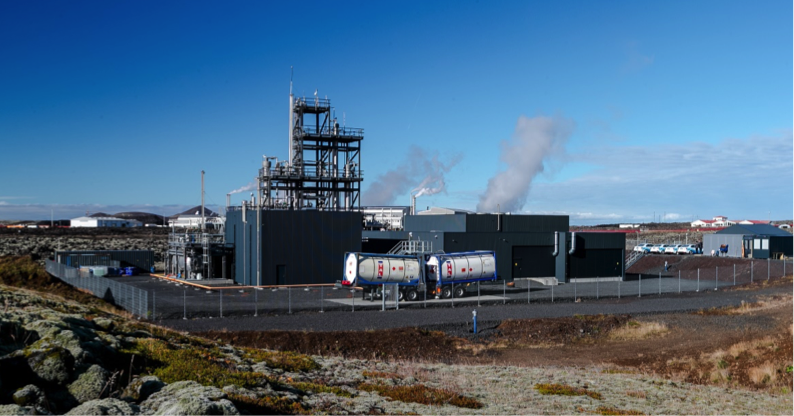
The George Olah Renewable Methanol plant.

Climate change is undoubtedly among today’s biggest challenges. The international community has reached a consensus to coordinate efforts to mitigate climate change by reducing the emission of carbon dioxide and other harmful gases. Yet, despite promises by politicians, the outlook for the near future is bleak. Carbon emissions continue to set annual records, rising 2.7% in 2018 to a total of 37.1 billion tons. Meanwhile, the UN’s Intergovernmental Panel on Climate Change (IPCC) concluded in October that emissions must fall by 50% by 2030 to keep global temperatures from rising more than 1.5 degrees Celsius. It is therefore more than past time to revisit our approaches to combatting mankind‘s single greatest threat, which has to include better managing our carbon waste.

Embrace the hierarchy

Managing waste requires a holistic methodology and clear framework. The waste hierarchy is a tool that does just that. It establishes a preferred set of priorities based on sustainability, outlining four approaches and methods to managing waste.
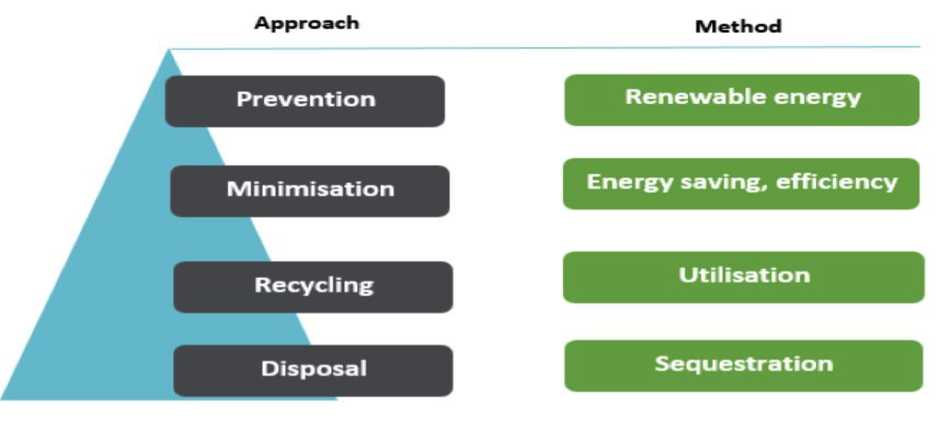
The first and most effective approach to manage waste is to prevent it from coming into existence in the first place. The second is reducing the quantity of waste through either minimising consumption or enhancing efficiency. The third step is to recycle or re-use waste and finally, the fourth, is to remove it in a manner that is least harmful to the environment.

By applying the same framework to carbon emission management, we can identify the methods available to us. The most effective approach, and the most frequently applied, is to prevent emissions from coming into existence to begin with by replacing fossil fuels with renewable energies. Recent technological advances in harnessing wind and solar energy have facilitated a development towards this end. At the beginning of 2018, renewable energies accounted for 30% of the electricity produced within the European Union, compared to 12% at the turn of the century.

Another pivotal approach is to enhance energy efficiency in both the industrial and domestic context. Within that category, the EU has recently introduced innovative energy saving solutions. Along with the swift alteration of consumer behaviour, energy efficiency has significantly reduced emissions.

Recycling and sequestrating carbon

Despite these positive undertakings, renewables and energy efficiency still will not suffice to reverse the trend of climate change. Emphasis also needs to be placed on alternative approaches that have not yet been fully developed, including the capture and utilisation or sequestration of industrial carbon emissions.

In many industrial processes, it is impossible to prevent the formation of carbon emissions, for example in manufacturing aluminium, steel, and carbon fibre. Yet releasing them into the atmosphere is by no means inevitable. A range of technologies exist that capture waste emissions from industrial sources, or even the atmosphere, and recycle them as feedstock for the production of fuel or synthetic materials or to permanently sequester them underground.

Among the technologies that are recycling and disposing of carbon emissions is that of Icelandic technology company Carbon Recycling International (CRI) – for whom I work, in full disclosure. CRI’s pioneering Emissions-to-Liquids (ETL) technology solution enables the efficient production of renewable methanol in a one-step catalytic reaction of carbon dioxide and hydrogen. Renewable methanol is a clean burning fuel that can also be used for gasoline bleeding or wastewater treatment processes or to produce biofuels or synthetic materials, and thus offsets the use of fossil fuels in these sectors.

CRI‘s production facility in Iceland is the world’s first industrial scale production of a liquid fuel sourced from CO2, currently converting 5,500 metric tons (mt) of carbon dioxide emissions from a geothermal power plant into 4,000 mt of renewable methanol per year. The company plans to build 30 such plants adjacent to industrial manufacturing sites that have proven hard to decarbonize, including cement, chemicals, steel and other metals. By 2030, CRI intends to have recycled roughly 9 million mt of carbon dioxide emissions from various industrial sources or power generating facilities into liquid fuel, which offsets the use of fossil fuels.

Not easy to clean up

The opportunities associated with the utilisation of carbon emissions do not eliminate the necessity of developing sequestration technologies as well. Sequestration entails injecting carbon dioxide into an aquifer, where hydrodynamic sequestration results in the carbon dioxide dissolving with salts and forming carbonates over an extended period of time. Sequestration, however, has many challenges due to the sheer quantity of industrial emissions that cannot be utilised in this way.

There are also challenges with carbon capture and utilisation more broadly. The low price of carbon, and the high level of energy intensity required for the process all inhibit its growth for now. Another factor is the cost competitiveness of the offtake, which in CRI’s case is methanol. How this product compares with gasoline or other alternative fuels will shape the viability of carbon capture and utilisation. Lastly, there is need for a concrete regulatory framework for carbon capture and utilisation across market areas.

Promises made in political settings that address the threat of climate change must be followed with real actions. Public policy, moreover, must facilitate advances within each category of the waste hierarchy and industry leaders and must inspire others to follow in their footsteps by demonstrating what can be achieved in mankind‘s battle against climate change. With the waste hierarchy framework and innovative minds at our disposal, a bleak outlook today may very well turn into a bright tomorrow.

Subscribe to Our Newsletter

News, investigations, and analysis — our top stories every morning to start your day right.

carbon capture carbon waste management emissions-to-liquids Iceland methanol
Follow on Google News Follow on X (Twitter)
Share. Facebook Twitter LinkedIn Telegram WhatsApp Email Copy Link
Previous ArticleVolkswagen and Ford unveil EV strategy
Next Article Faroe agrees North Sea deal with Shell
Eirwen Williams
  • X (Twitter)

Eirwen Williams is a Brussels-based journalist at Energy Reporters, specializing in European energy policy, market trends, technological innovation, and energy security. Trained in journalism through a renowned program in New York, he examines how nations and industries are navigating the continent’s energy transition. With a focus on the forces driving change, his reporting highlights the interplay between regulation, infrastructure, and new technologies shaping Europe’s energy future. Contact: eirwen.williams@energy-reporters.com

Keep Reading

CO2 Emissions: How Carbon Dioxide Affects the Environment and the Planet

Ocean Warming: A Growing Threat to Marine Ecosystems and the Global Environment

renewable energy industry

The Benefits of Renewable Energy for the Climate

Add A Comment
Leave A Reply Cancel Reply

Subscribe to Our Newsletter

News, investigations, and analysis — our top stories every morning to start your day right.

Trending
The Key Benefits of Oil
CO2 Emissions: How Carbon Dioxide Affects the Environment and the Planet
Ocean Warming: A Growing Threat to Marine Ecosystems and the Global Environment
News by category
  • Featured
  • News
  • Use
  • Climate
  • Industry
  • Opinion
  • Policy
  • Output
  • Storage
  • Grid
Information
  • About Us
  • Advertise
  • Meet the Team
  • Contact Us
  • Legal Notice
  • Privacy Policy

Subscribe to Our Newsletter

News, investigations, and analysis — our top stories every morning to start your day right.

Facebook X (Twitter) RSS
© Energy-Reporters.com. All rights reserved.

Type above and press Enter to search. Press Esc to cancel.