



| IN A NUTSHELL |
|
In recent years, human-made megastructures have not only transformed landscapes but also subtly influenced the very mechanics of our planet. According to NASA, large-scale constructions like the Three Gorges Dam in China have a minute yet measurable impact on Earth’s rotation. This revelation sheds light on the interconnectedness of human activities and natural systems, raising questions about potential global consequences. As humanity continues to push engineering boundaries, understanding these impacts becomes crucial. This article explores how these monumental structures affect our world and what it means for the future.
The Three Gorges Dam: A Modern Marvel
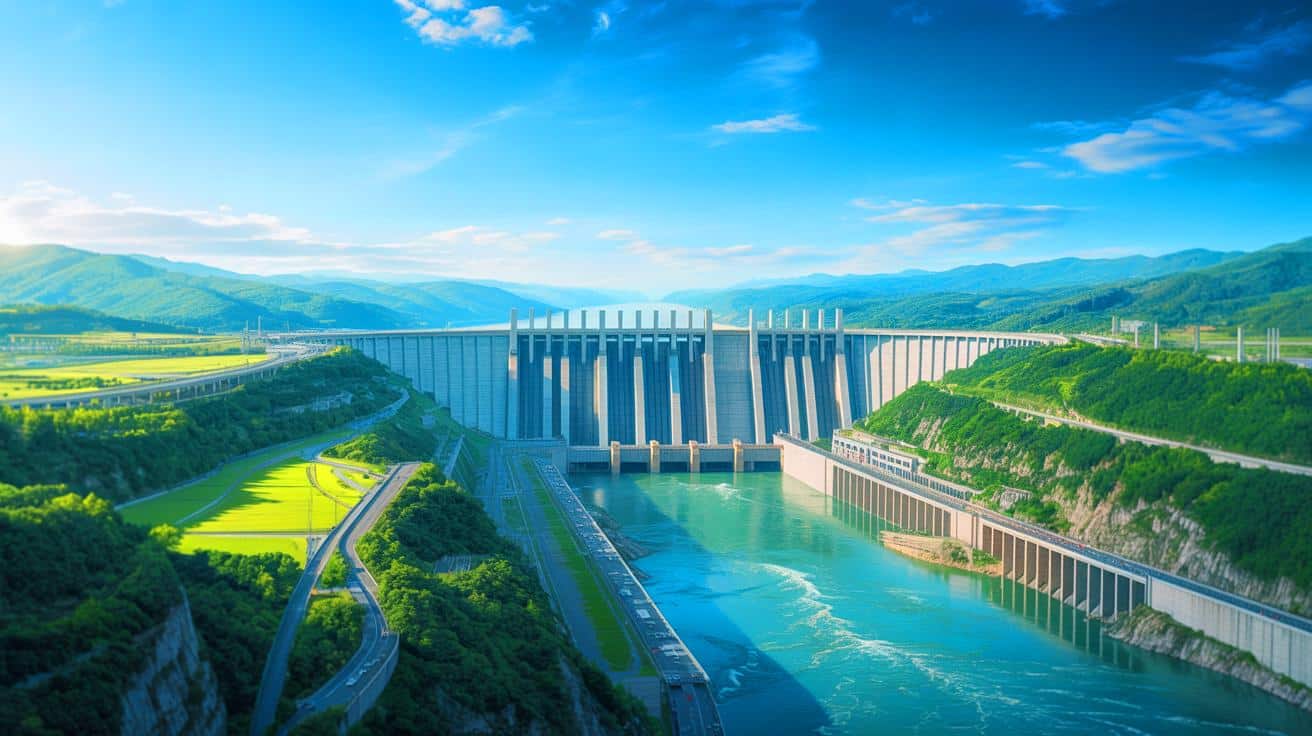
The Three Gorges Dam, located on the Yangtze River in Hubei Province, China, stands as a testament to human ingenuity and ambition. As the largest hydroelectric dam globally, it spans over 7,660 feet and rises to a height of 607 feet. Its construction began in 1994 and reached completion in 2012, marking nearly two decades of relentless work. The dam is designed to serve multiple purposes: generating hydroelectric power, controlling flooding, and facilitating improved river navigation.
Despite its grand scale and capabilities, the dam highlights the challenges of meeting national energy needs. Initially projected to fulfill 10% of China’s energy requirements, it currently provides only about 3%. This shortfall underscores the complexities involved in balancing energy production with demand in a rapidly industrializing nation. The Three Gorges Dam not only provides insights into energy management but also exemplifies the broader implications of human-made structures on a planetary scale.
Impact on Earth’s Rotation
The concept that human-made structures could influence Earth’s rotation may seem far-fetched, yet scientific evidence suggests otherwise. According to a NASA study, mass movements resulting from natural events and large infrastructures exert a subtle but measurable effect on the planet’s rotation. The Three Gorges Dam, with its massive reservoir capacity of approximately 10 trillion gallons, redistributes Earth’s mass, leading to a slight increase in the length of a day by 0.06 microseconds.
This phenomenon draws a parallel to an ice skater who spins faster by pulling in their arms. The redistribution of mass affects the planet’s rotational dynamics, albeit in a minuscule way. While these changes might seem insignificant, they highlight the intricate link between human developments and natural systems. The cumulative impact of such projects invites further scrutiny and research into their broader implications on a global scale.
Energy Production and Global Dynamics
China’s position as the world leader in hydroelectric power generation is significantly bolstered by the Three Gorges Dam. It represents an essential component of China’s strategy to harness renewable energy sources. However, the dam’s significance extends beyond energy production. It serves as a symbol of China’s technological prowess and its ability to execute large-scale projects that influence global dynamics.
The dam also plays a crucial role in flood control and water management along the Yangtze River. By regulating water flow, it mitigates the risks of seasonal flooding, thereby protecting millions of people living downstream. Additionally, the dam enhances river navigation, facilitating better trade and transportation routes. As China continues to develop such infrastructures, understanding their multifaceted impacts becomes increasingly important.
The Future of Human-Made Megastructures
As we look toward the future, the construction of human-made megastructures raises important questions about sustainability and environmental responsibility. While these projects offer immediate benefits, their long-term impacts on Earth’s natural systems require careful consideration. The potential effects on Earth’s rotation, climate patterns, and timekeeping demand ongoing research and monitoring.
Furthermore, the continued development of such infrastructures necessitates a balance between technological advancement and ecological preservation. As we strive to meet growing energy demands and address climate change, the lessons learned from the Three Gorges Dam and similar projects will be invaluable. Understanding the delicate interplay between human activity and the environment is essential as we navigate the challenges of the 21st century.
In a world where engineering marvels reshape the natural landscape, the implications of our endeavors are profound and far-reaching. The Three Gorges Dam serves as both a technological triumph and a reminder of the delicate balance between progress and preservation. As we continue to build and innovate, what other hidden effects might our creations have on the planet’s intricate systems?

Wait, so building dams can actually change time? 🤯 That’s mind-blowing!
Is it just me, or does this sound like the plot of a sci-fi movie? 🚀
This is a fascinating read. Thanks for shedding light on such an important issue!
How exactly does the redistribution of mass affect Earth’s rotation? Can someone explain? 🤔
I’m skeptical. How can a dam slow down the Earth’s rotation? Feels a bit exaggerated to me.
Does this mean we should be worried about other megastructures too? What’s next? 🤨
Great article! I never thought about the environmental consequences of engineering on this scale.
Wait a second, if a dam can do that, what about all the skyscrapers? 🤔
Wow, never knew our constructions could have such far-reaching effects. Thanks for the insight!
Can someone clarify how a microsecond change affects our daily lives? Seems negligible to me.
NASA confirms it? That’s enough for me to take this seriously. 🌍
If the Earth slows down, do we get longer weekends? 😆 Asking for a friend!
How can engineers mitigate these effects? Or is it inevitable with such large projects?
Thanks for writing this article. It’s crucial to understand the balance between progress and nature.
Does this mean the Three Gorges Dam is a bad idea? What are the benefits vs. the risks?
Interesting perspective! Makes me wonder how many other ways we unknowingly affect the planet.
Are there any other structures that have similar impacts on Earth’s rotation?
This is a bit scary. How do we ensure timekeeping doesn’t go chaotic? 😨
How much is 0.06 microseconds really? Is it even noticeable?
Thank you for bringing attention to this. It’s an angle I hadn’t considered before.
Is it possible to reverse these effects if the dam is dismantled? Or is it permanent? 🤔
I’d love to see more research on this! Are there any ongoing studies?
Timekeeping chaos sounds dramatic! How accurate is this claim?
Is this article a joke or for real? Because it sounds unreal! 😂
Such a fascinating topic! Would love to learn more about how scientists measure these changes.
This makes me wonder what else human activity is doing to our planet. 🌎
Can anyone provide more examples of how human-made structures affect the planet?
The concept is intriguing but how do we actually measure the Earth’s rotation changes? 📏
Is this an isolated case, or have other countries faced similar issues with large structures?
Whoa, does this mean we should be cautious about future mega-projects? 🤔
Thanks for the article. This is an important conversation about human impact on Earth.
Can the changes in Earth’s rotation affect climate patterns too?
I’m curious to know how this affects satellite operations. Anyone has insights? 🛰️
And here I thought time was constant! Shows how much I know. 😅
This is a wake-up call. Shouldn’t we reconsider how we build and expand? 🏗️
Has NASA suggested any solutions or recommendations to address this issue?
Love the article! It’s a good reminder of the interconnectedness of our actions and the planet.