




| IN A NUTSHELL |
|
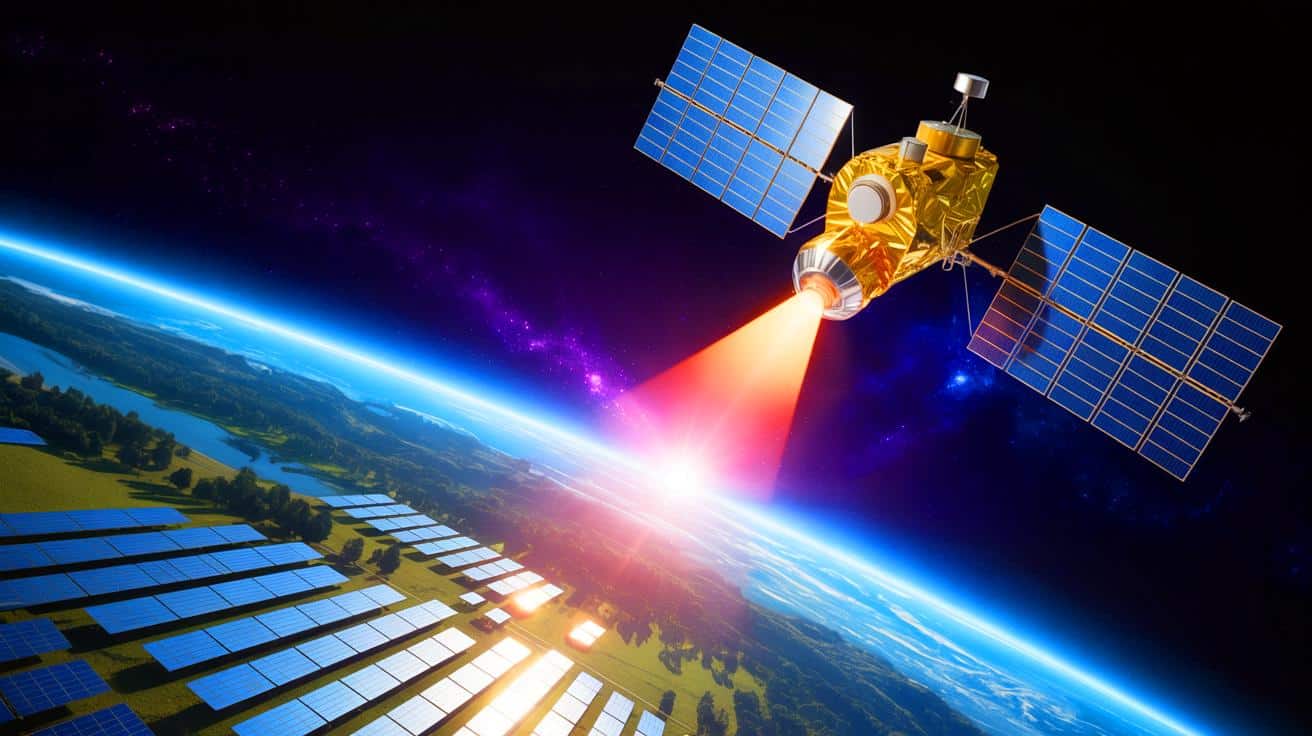
In an age where renewable energy solutions are in high demand, Reflect Orbital, a California-based startup, proposes a bold new initiative: deploying a constellation of satellites to beam “sunlight on demand” to Earth. The plan, which aims to extend the operating hours of solar farms, has sparked both interest and concern. While the project promises a novel approach to energy generation, it poses significant challenges to the fields of astronomy and environmental science. The potential impact on the night sky and ecosystems has experts questioning the feasibility and implications of such a venture.
Reflect Orbital’s Ambitious Plan
Reflect Orbital’s vision centers on using orbiting mirrors to reflect sunlight to specific locations on Earth. The satellites, equipped with Mylar mirrors, aim to capture sunlight and direct it to solar farms, allowing them to generate power even after sunset. The company has named its first test satellite Earendil-1, scheduled for launch in 2026. Reflect Orbital has applied for a launch license from the Federal Communications Commission, marking a significant step forward in their plans.
The initial test satellite will pave the way for a much larger constellation. Reports suggest that by 2030, the company aims to have approximately 4,000 satellites in orbit, with plans to expand this number to 250,000. These satellites will orbit about 388 miles above the Earth, reflecting light that is significantly dimmer than the midday sun but brighter than a full moon. The scale and ambition of the project have drawn significant attention from the scientific community.
A Looming Threat to Dark Skies
Astronomers are particularly concerned about the potential impact on the night sky. Unlike existing satellites that inadvertently cause light pollution, Reflect Orbital’s satellites are designed specifically to reflect sunlight. Experts warn that even the test satellite could appear brighter than the full moon, posing a severe threat to astronomical observations.
For ground-based telescopes, the brightness of these mirrors could be detrimental, nearly matching the sun’s surface and risking permanent eye damage. The constellation’s brightness could also obscure faint celestial objects, limiting scientific discoveries. Moreover, the constant illumination could disrupt nocturnal animals’ natural rhythms, affecting ecosystems globally. Despite the intention to target specific areas, the satellites’ movement could result in sweeping beams of light that are visible over vast regions, creating unexpected flashes in the night sky.
Feasibility Under Scrutiny
Beyond the environmental and astronomical concerns, the physics of reflecting sunlight from orbit presents significant challenges. Low-Earth orbit satellites pass over a location in just 3.5 minutes, necessitating thousands of satellites to maintain continuous illumination for even an hour. Reflect Orbital’s ambitious projection of 250,000 satellites still only achieves 20% of the midday sun’s intensity for limited regions simultaneously.
The company promises that the sunlight will be redirected in a “brief, predictable, and targeted” manner, and assures that satellite location data will be shared with observatories to minimize disruption. However, a survey by the American Astronomical Society indicates that most astronomers believe the proposed constellation will negatively affect their work. The increasing number of satellites in Earth’s orbit, driven by private companies like SpaceX and Amazon, further complicates the issue.
Global Concerns and Future Implications
Reflect Orbital’s project highlights a broader issue: the rapid proliferation of satellites in Earth’s orbit. In 2024 alone, nearly 2,700 satellites were launched, contributing to an increasingly crowded sky. This trend raises concerns about the sustainability of space exploration and the potential consequences for scientific research and the environment.
The conversation around Reflect Orbital’s plan serves as a microcosm of the broader debate over the balance between technological advancement and environmental stewardship. As the world seeks innovative solutions to energy challenges, the implications of such endeavors must be carefully considered. How can we harness new technologies without compromising the integrity of our natural world or the pursuit of scientific knowledge?
Reflect Orbital’s ambitious proposal has opened a dialogue about the future of space technology and its impact on Earth. As the company moves forward with its plans, it must navigate complex challenges and address the concerns of the scientific community. The debate underscores the need for thoughtful consideration of the ethical and environmental implications of new technologies. As we look to the future, how can we ensure that innovation aligns with the preservation of our planet and the pursuit of knowledge?


This is insane! How will astronomers ever be able to observe faint objects with all that light pollution? 🌌🔭
Isn’t this just going to turn the night into day? 🤔
What about the impact on nocturnal wildlife? 🌙
Why not just invest in better battery storage for solar farms instead of beaming sunlight? 🤔
This is both exciting and terrifying at the same time.
Thank you for highlighting the ecological impact. We need to protect nocturnal wildlife from constant light exposure.
250,000 satellites? That sounds like a lot of space junk waiting to happen. 🚀
Does Reflect Orbital really think they can get approval for 250,000 satellites? Sounds like sci-fi to me. 🚀
Has anyone asked the owls how they feel about this?
What about the cost? Who’s going to pay for launching and maintaining all these satellites?
Why do we need to beam sunlight when we have solar panels?
What a fascinating concept! I’m curious to see how it develops over the next few years.
Is this even technically feasible? I have my doubts.