

| IN A NUTSHELL |
|
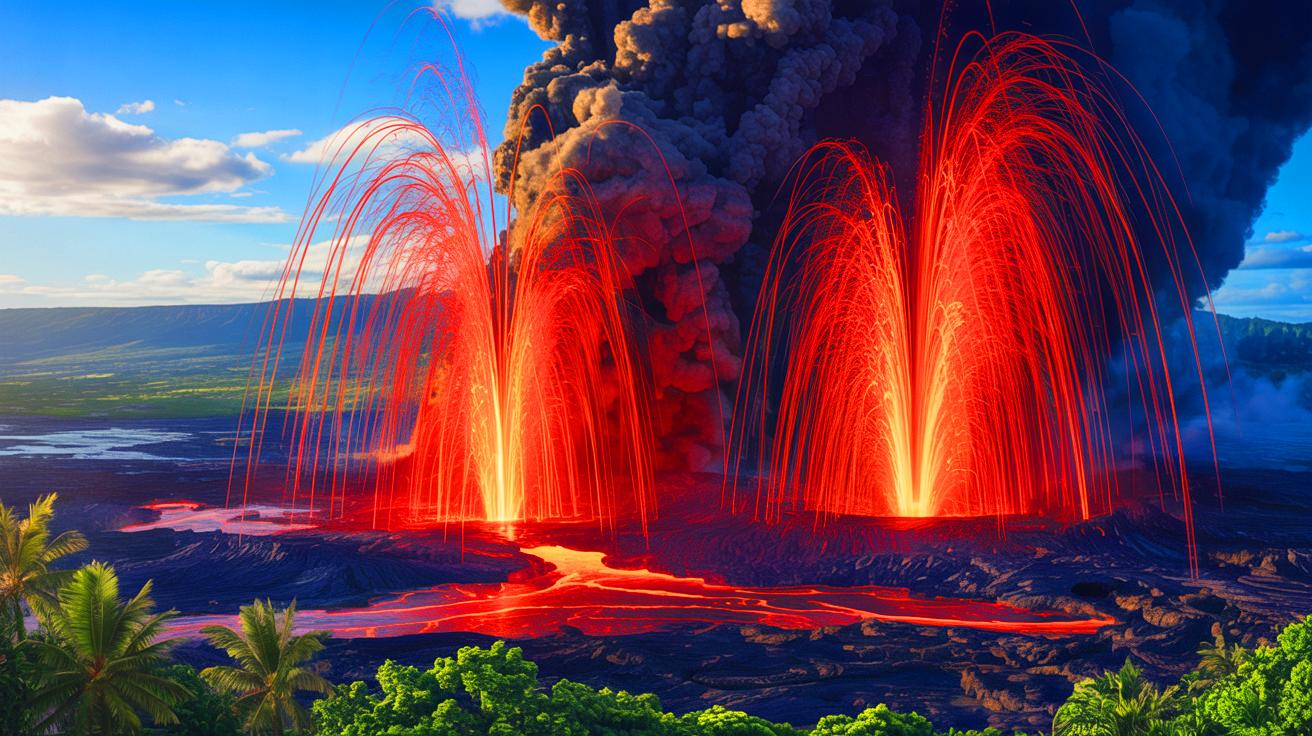
Hawaii’s Kilauea volcano has once again captivated the world with its latest eruption, marking the 31st event since December 2024. This eruption, which began on August 22, 2025, has sent lava fountains soaring 100 feet into the air, drawing attention from both scientists and tourists alike. While the eruption is a visually stunning event, it also raises questions about the unpredictable volcanic hazards it poses. As scientists continue to study Kilauea’s behavior, the eruption’s cultural and environmental impacts are also being closely examined. This article delves into the various facets of Kilauea’s recent activity, exploring its scientific significance, cultural resonance, and implications for public safety.
Kilauea’s Explosive Return
On August 22, 2025, Kilauea resumed its volcanic activity with a dramatic display of lava fountains, reaching heights of 100 feet from the summit crater. This eruption, although contained within the crater, has been a spectacle for onlookers. Hawaii Volcanoes National Park has become a focal point for visitors eager to witness the event, while others have engaged with the eruption through livestreams provided by the U.S. Geological Survey. Janice Wei, a volunteer at the park, likened the experience to watching “nature’s most extraordinary show,” capturing images and videos for educational use.
Kilauea’s activity has been consistent since December 2024, solidifying its status as one of the world’s most active volcanoes. The Hawaiian Volcano Observatory (HVO) remains vigilant, monitoring each eruption to understand the volcano’s behavior. These frequent eruptions provide valuable data, offering insights into Kilauea’s predictable yet dynamic nature. This continuous activity has made the volcano a critical subject for scientific study, contributing to the broader understanding of volcanic processes.
Understanding the Lava Fountains
The spectacular lava fountains observed during this eruption result from complex interactions within Kilauea’s magma chambers. Ken Hon, the scientist-in-charge at the HVO, explained that magma continuously fills the lower chamber beneath the Halemaumau Crater, creating pressure that forces magma through vents. This pressure results in the stunning lava fountains that have captivated audiences worldwide. Hon compared the challenge of predicting volcanic behavior to “being a bunch of ants crawling on an elephant trying to figure out how the elephant works.”
The fountains are partly due to rising gas pressure as magma ascends from deep within the Earth. This gas buildup causes rapid magma ascent, leading to the dramatic eruptions. Recent events suggest that future fountains may become wider rather than taller, a shift that could indicate a new phase in Kilauea’s eruption cycle. As Steve Lundblad from the University of Hawaii at Hilo noted, while the eruptions may change in form, their visual grandeur is unlikely to diminish.
The Cultural Significance of the Eruption
Beyond its scientific importance, Kilauea’s eruption holds deep cultural and spiritual significance for the local Hawaiian community. The volcano is revered as the home of Pele, the Hawaiian goddess of fire, adding a rich cultural dimension to the natural phenomenon. Huihui Kanahele-Mossman, executive director of the Edith Kanakaʻole Foundation, emphasized the importance of interpreting the eruption through the lens of Hawaiian traditions. She highlighted the role of mele, or songs, in preserving cultural narratives related to volcanic activity.
For many Hawaiians, the lava represents the creation of new land, a process that has shaped the islands for centuries. As the lava cools and solidifies, it forms new earth, continuing the cycle of destruction and rebirth that characterizes the volcanic landscape. This duality of nature and culture enriches the understanding of Kilauea’s eruptions, blending scientific observation with spiritual practices that have existed for generations.
The Impact on Tourism and Public Safety
The eruption has significantly impacted tourism in Hawaii Volcanoes National Park, with a notable increase in visitors eager to witness the event firsthand. In April 2025, park visitation surged by 49% compared to the same month in 2024. While the eruption offers a unique opportunity to experience one of the most active volcanic sites in the world, it also presents safety challenges. Park officials advise visitors to remain on marked trails and avoid unstable terrain, as volcanic gases and ash can pose serious risks.
Jessica Ferracane, a park spokesperson, emphasized the unpredictable nature of the eruption, noting that some lava fountains have lasted only 10 to 12 hours. Visitors are encouraged to stay informed through alerts from the U.S. Geological Survey and exercise caution, especially at night when hazards are less visible. The balance between tourism and safety remains a critical consideration as the eruption continues to unfold.
As Kilauea’s eruption continues to capture the world’s attention, scientists and cultural practitioners alike strive to deepen their understanding of this dynamic volcano. While the eruption offers a wealth of data and insight, it also raises questions about the future of Kilauea’s activity and its broader implications. How will Kilauea’s ongoing behavior shape our understanding of volcanic processes and cultural traditions in the years to come?


Wow, 31 times since December? That’s some serious volcanic activity! 🌋
Wow, 100-foot lava fountains? That’s hotter than my morning coffee! ☕️🔥
Is it safe to visit Hawaii Volcanoes National Park during these eruptions?
Is it safe for tourists to get that close to the volcano during an eruption?
I’m amazed by the beauty of these lava fountains. Nature is truly incredible! 😍
Why is Kilauea erupting so frequently? Is this normal?
This is incredible, but how is it affecting local wildlife in the area?
Thank you for the detailed insights into the cultural significance of Kilauea. Very enlightening!
31 eruptions since December? Is this normal for Kilauea?
How are scientists predicting future eruptions? Seems like a tough job!
This is a spectacular show, but how does it affect the local wildlife?
Thank you for covering the cultural aspect of the eruption. It’s important to remember its significance for Hawaiians.
Is there a way to watch the eruption live online? I’d love to see it from afar.