




| IN A NUTSHELL |
|
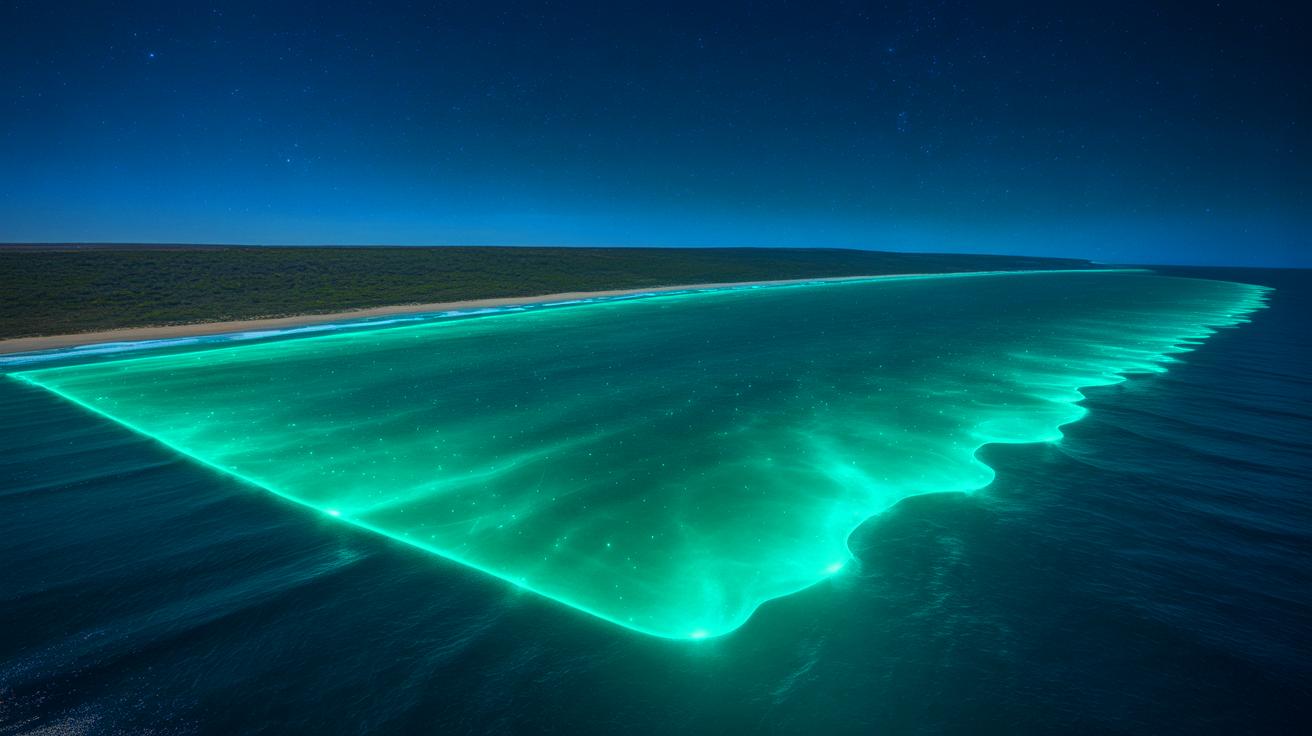
A recent phenomenon off the southern coast of Australia has captivated both scientists and the general public. NASA satellites have captured stunning imagery of a massive bioluminescent phytoplankton bloom in the Great Australian Bight. This breathtaking turquoise glow is not only a visual spectacle but also plays a crucial role in the marine ecosystem. The glow is attributed to high concentrations of chlorophyll-a in the phytoplankton, which flourish in nutrient-rich waters. These blooms sustain a diverse range of marine life, underscoring their ecological importance and offering insights into oceanic dynamics.
Phytoplankton Glow Captured From Space
The magnificent turquoise glow, visible from space, was first captured by NASA’s PACE spacecraft, equipped with the advanced Ocean Color Instrument (OCI). This region, known for its turbulent waters and deep channels, serves as a critical maritime corridor near Melbourne’s Port Phillip Bay. The data collected from these images have provided scientists with invaluable insights into the bloom’s scale and intensity.
Earlier satellite observations, including those from Suomi NPP and the Terra and Aqua satellites, documented similar phenomena in late 2023 and early 2024. The consistent occurrence of these blooms presents researchers with a unique opportunity to study the seasonal patterns and oceanographic dynamics of this area. This extensive data collection enhances our understanding of the natural processes regulating our oceans and their impact on global ecological systems.
Uncovering the Source of the Glow
The striking glow observed in these waters is primarily due to chlorophyll-a, a green pigment essential for photosynthesis in phytoplankton. In the ocean’s photic zone, where sunlight reaches, these microorganisms thrive on nutrients such as nitrogen and phosphorus from decaying marine life. Oceanographer Jochen Kaempf from Flinders University has extensively studied these blooms, noting how the green filaments visible from space indicate a bloom along the shelf break, approximately 500 feet deep.
Kaempf suggests that the surrounding blue hues could result from sediment disturbances in shallower areas or the presence of various phytoplankton species contributing to the glow. This dynamic interaction within the marine environment highlights the complexity and beauty of oceanic ecosystems, providing a glimpse into the intricate processes that sustain life beneath the waves.
Ecological Significance in the Bass Strait
Phytoplankton serve a fundamental role in the marine food web, acting as a primary food source for various marine organisms. On the Bonney Coast, these blooms attract a diverse array of species, including up to 80 blue whales annually. The whales are drawn by the abundance of krill and other small organisms that feed on the phytoplankton. Additionally, sardines, anchovies, tuna, crabs, and numerous fish species rely on these blooms for sustenance, making the region a vibrant hotspot of marine biodiversity.
Beyond their ecological role, phytoplankton are vital for global oxygen production and climate regulation. NASA scientists emphasize the importance of these blooms in understanding ocean circulation, nutrient cycling, and seasonal dynamics along the southern Australian coast. The visibility of bioluminescent phytoplankton from space showcases both the beauty and ecological significance of microscopic marine life, underscoring the ocean’s role in sustaining life on Earth.
Looking Ahead: What Next for Ocean Exploration?
As our understanding of the ocean deepens, phenomena like the bioluminescent phytoplankton bloom off Australia’s coast offer valuable insights into marine ecosystems. These events not only captivate our imagination but also underscore the importance of oceanographic research in addressing climate change and maintaining ecological balance. With advancements in satellite technology, our ability to monitor and study these events will continue to improve, opening new avenues for scientific discovery and environmental protection. What other hidden wonders lie beneath the ocean’s surface, waiting to be revealed by the watchful eyes of our satellites?
The ongoing exploration of our oceans holds the promise of unveiling countless mysteries, each discovery offering a deeper understanding of the vital processes that sustain our planet. In an era of rapid technological advancement, how can we leverage these tools to better protect and preserve the world’s oceans for future generations?


Wow, this discovery sounds absolutely fascinating! Who knew phytoplankton could glow so beautifully? 😍
What exactly is chlorophyll-a, and why is it so important for these blooms?
Are these bioluminescent blooms harmful to marine life or humans? 🤔
This is just mind-blowing. The ocean is full of surprises! 🌊
Can someone explain how satellite technology helps in studying these blooms?
Great article! Thanks for sharing such incredible insights. 👏
How often do these bioluminescent phytoplankton blooms occur off Australia’s coast?
I’m skeptical. How do we know the data from NASA satellites is accurate?
It’s amazing how much we can learn from space about our oceans! 🚀
Could this phenomenon have any impact on local fisheries?
What other areas of the world experience similar bioluminescent blooms?
Is this type of research being conducted elsewhere? Seems crucial for understanding climate change.
I’ve always wanted to see bioluminescent waters in person. This sounds magical!
Do these blooms have any effect on the local weather patterns?
Incredible discovery! How can we ensure these ecosystems are protected?
I’m curious, does this have any connection to the changing climate? 🌍
Nasa strikes again with another jaw-dropping discovery. Kudos! 🛰️
How long do these bioluminescent blooms last?
What role do blue whales play in the ecosystem influenced by these blooms?
Can these blooms be seen from the Australian coast, or only from space?
Does this mean we might find new marine species in these areas?
Fascinating read! I had no idea phytoplankton could have such a significant impact.
I wonder how this discovery will change our approach to ocean conservation.
This is cool and all, but are there any practical applications of this discovery?
So, is this bioluminescence different from what we see in jellyfish? 🦑
How does the glow of these phytoplankton affect nighttime marine navigation?
It’s just incredible how interconnected everything in nature is. 🤯
Are these blooms detectable by any other methods besides satellites?
What are the next steps for scientists studying this phenomenon?
How do these blooms contribute to global oxygen production?
It’s amazing to think about what else we might discover in the depths of the ocean.
Does this mean the ocean’s health is improving in some regions?
Thank you for such an enlightening article. Keep up the great work! 🙌
Could these blooms potentially be used as a renewable energy source?
It’s kinda scary how much we still don’t know about our own planet!
Does this discovery have any implications for marine tourism in Australia?
How can local communities benefit from this research?