


| IN A NUTSHELL |
|
China’s recent unveiling of a groundbreaking undersea cable-cutting device has stirred global attention, highlighting both the potential and the risks associated with such advanced technology. Capable of operating at depths of up to 13,000 feet, this device signals a significant leap in deep-sea engineering. While designed to bolster communication and resource extraction capabilities, its potential dual-use in military and strategic operations has raised concerns across international communities. As nations navigate the complexities introduced by this innovation, the balance between technological advancement and global security remains a pressing issue.
Breakthrough in Undersea Technology
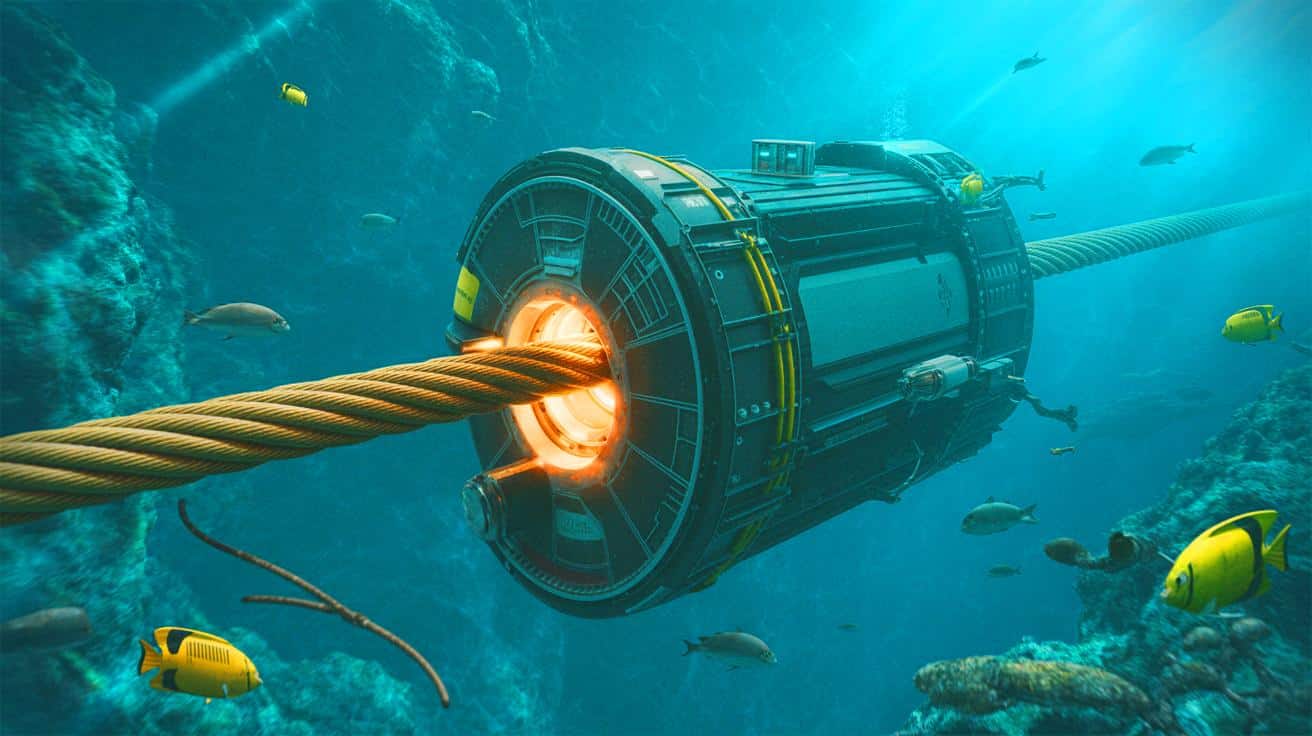
China’s introduction of a cable-cutting device capable of functioning at extreme ocean depths marks a monumental achievement in engineering. Developed by the China Ship Scientific Research Centre, the technology is intended for use with advanced submersibles like the Fendouzhe and Haidou series. These submersibles are crucial for maintaining and expanding global communication networks, which rely heavily on undersea cables. The cables, often armored with steel and polymers, carry the vast majority of the world’s communication data.
This device employs a diamond-coated grinding wheel rotating at 1,600 rpm, allowing it to cut through robust steel cables without disturbing surrounding sediments. Its titanium alloy construction and oil-compensated seals enable it to withstand intense underwater pressure. Controlled by robotic arms and advanced positioning systems, the device maintains precision even in low-visibility conditions. This innovation not only showcases China’s prowess in engineering but also prompts significant questions about its potential impact on global security.
Security Concerns and Communication Vulnerabilities
While the cable-cutting device was initially intended for civilian purposes such as salvage operations and seabed mining, its dual-use potential has raised alarms worldwide. The ability to disrupt cables in strategic locations like Guam could jeopardize global communication networks, highlighting existing vulnerabilities. The prospect of using this technology in military contexts could exacerbate geopolitical tensions, especially if deployed near critical defense zones.
The engineering team, led by Hu Haolong, has meticulously addressed challenges related to operating at great depths, where water pressure is formidable. The device’s 1-kilowatt motor, paired with an 8:1 gear reducer, balances power with efficiency, though careful regulation is essential to prevent overheating. These technical advancements have been documented in peer-reviewed studies, underscoring the device’s potential implications for global communication and security.
China’s Strategic Undersea Ambitions
China’s development of undersea technology reflects its broader strategic aims to enhance oceanic infrastructure and influence. Boasting the world’s largest fleet of submersibles, China is well-positioned to explore and exploit extensive oceanic regions. The new cable-cutting device, operable from unmanned platforms, offers the potential to disrupt strategic bottlenecks stealthily, providing China with substantial tactical advantages.
Chinese scientists claim the tool supports “marine resource development,” yet its military applications remain a focal point of concern. Trials have demonstrated its ability to sever 2.4-inch-thick cables, reinforcing its utility in resource extraction. However, the dual-use nature of this technology underscores the complex intersection of civilian and military applications, as recent incidents involving seabed natural gas pipelines have illustrated.
Shaping the Future of Global Communication
As China’s undersea technology advances, the global community must consider the broader implications for communication infrastructure and international security. The capacity to sever cables at unprecedented depths presents opportunities for technological progress but also risks significant disruption. Addressing these challenges necessitates international cooperation and dialogue to ensure that technological advancements contribute to global stability rather than conflict.
The introduction of this deep-sea cable cutter prompts critical questions about the future of undersea communication and security. As the international community navigates these issues, how can nations ensure that technological innovation is harmonized with the imperative for global cooperation and security?




Wow, this is like something out of a Bond movie! Should we be worried? 🤔
Really? A “colossal cable cutter”? Sounds like clickbait to me.
Thanks for the detailed information. This is both fascinating and a bit terrifying.
How does this device actually work underwater without disturbing the environment?
Are there any countermeasures in place to prevent misuse of this technology?
China’s engineering feats are impressive, but they come with global consequences.
This article should be on everyone’s radar. Appreciate the insightful read!
Why would anyone need to cut undersea cables? Seems a bit fishy. 🐠
Is this the beginning of a new kind of cyber warfare? 😨
Can we expect other countries to develop similar technologies?