




| IN A NUTSHELL |
|
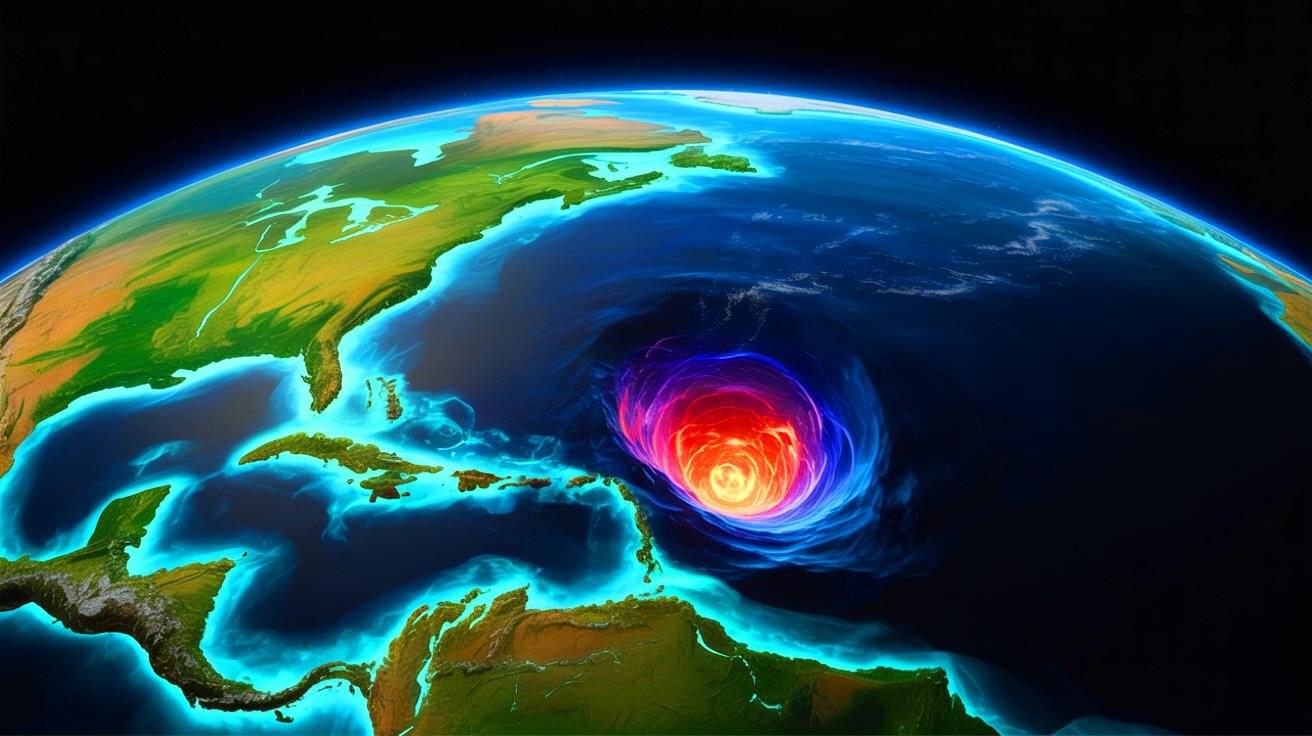
NASA’s recent identification of a magnetic anomaly in the South Atlantic Ocean is drawing increased scrutiny from the scientific community. Known as the South Atlantic Anomaly (SAA), this region is experiencing a growing distortion in Earth’s magnetic field. The implications for technology and space exploration are profound, as the anomaly poses potential risks to satellites and other technological systems. Scientists are racing to understand the anomaly’s origins and predict its future impact, while engineers work on developing protective measures to safeguard against its effects.
The Expansion of a Magnetic Disturbance
The South Atlantic Anomaly is characterized by a weakening of Earth’s magnetic field, which allows increased levels of cosmic radiation to penetrate the atmosphere. This is due to the inner Van Allen radiation belt coming closer to the planet’s surface in this region. The elevated radiation levels present significant risks to satellites and spacecraft passing through the area. Electronic devices on board can experience malfunctions, jeopardizing both missions and the safety of astronauts.
Understanding the anomaly is essential for crafting strategies to protect space vehicles. Engineers and scientists are focused on devising effective protection measures to mitigate the SAA’s impact on space exploration. This anomaly’s unique features make it a critical subject of study for ensuring the continuity and success of technological operations in space and on Earth.
Global Risks of the Anomaly’s Growth
Recent observations indicate that the South Atlantic Anomaly is not only persisting but also expanding and shifting, raising concerns about its effects on both space-based and terrestrial systems. The growing size of the SAA poses an increasing threat to satellites, potentially causing disruptions in communication systems and power grids. As the anomaly’s reach expands, the risk of technological failures grows.
This phenomenon is linked to a gradual weakening of Earth’s magnetic field, a trend observed over centuries. The situation demands increased research and monitoring to develop predictive models and mitigation strategies. Understanding the anomaly’s growth is crucial for preparing for its potential impact on global technological infrastructure.
Investigating the Anomaly’s Origins
To uncover the roots of the SAA, scientists are examining the dynamics of Earth’s core, where the planet’s magnetic field is generated. The movement of molten iron and nickel in the outer core generates electric currents that contribute to the magnetic field. Variations in these flows can lead to changes in the magnetic field’s strength and structure, resulting in anomalies such as the SAA.
One theory attributes the SAA to an indentation in the magnetic field caused by the African Large Low Shear Velocity Province, a massive rock formation beneath Africa. This geological feature affects the movement of molten materials in the outer core, contributing to the observed reduction in magnetic field strength in the SAA region. Ongoing research is vital to validate this theory and further unravel the anomaly’s fundamental mechanisms.
Anticipating Future Challenges
The weakening magnetic field associated with the SAA suggests that Earth may become more vulnerable to solar storms and other space weather events. Such incidents have the potential to disrupt power grids, navigation systems, and communication networks. It is crucial to study and monitor the SAA to develop accurate prediction models and protective infrastructure protocols.
NASA’s findings regarding the SAA’s growth highlight the ongoing transformation of Earth’s magnetic field. Continuous investigation and surveillance of the anomaly are necessary as it affects technological systems and space exploration. A deeper understanding of the SAA will guide the development of safety measures to protect technological equipment and advance scientific knowledge of Earth’s magnetic dynamics. How will society adapt to the challenges posed by this mysterious and evolving phenomenon?

Wow, this sounds like a plot from a sci-fi movie! 😮
Sounds like we need to invest more in space tech protection.
Shouldn’t this be a bigger news story? Feels like something out of a disaster movie.
What are the “unimaginable consequences” exactly? This is very vague.
Interesting read, but I think the article could have used more expert opinions.
Can this anomaly affect the Internet? 😱
Why do I feel like this is the start of some apocalypse? 😓
Is there any historical precedent for this kind of anomaly?
I’m skeptical about the consequences. Is this just fear-mongering?
Thank you for shedding light on this topic. Awareness is crucial. 🙏
Could this anomaly lead to power outages? How prepared are we?
Hope the scientists can come up with a solution soon!
What’s the timeline for this anomaly becoming a major threat?
How long has NASA been monitoring this anomaly?
Why does the article link to unrelated topics? Seems a bit off.
Are there any other similar anomalies around the world?
Is NASA collaborating with other countries on this issue?
I heard about the South Atlantic Anomaly before—it’s a real thing!
Great, just what we need, another global issue to worry about. 🙄
This sounds like something that should be in the news more often.
Thank you for the article, but I wish it had more visuals.
Does this anomaly have any impact on wildlife? 🦅
I’m just here for the comments. Interesting stuff, though! 😂
What measures are being taken to protect astronauts?
I’m not sure what to make of this. Should I be concerned?
Are there any documentaries about the South Atlantic Anomaly?
Why isn’t this headline news? Seems like a big deal to me.
Jeez, everything’s going wrong with the planet these days. 🤦♂️
Is this a new discovery or have scientists known about this for a while?
Is this going to affect my GPS? 😅
I’m curious about how this anomaly affects communication systems. Can someone explain?
Thanks for the detailed article! It’s both fascinating and a bit scary.
Wait, does this mean aliens are involved? 👽
I appreciate the focus on scientific research, but what about real-world impacts?
Is this related to climate change in any way?