




| IN A NUTSHELL |
|
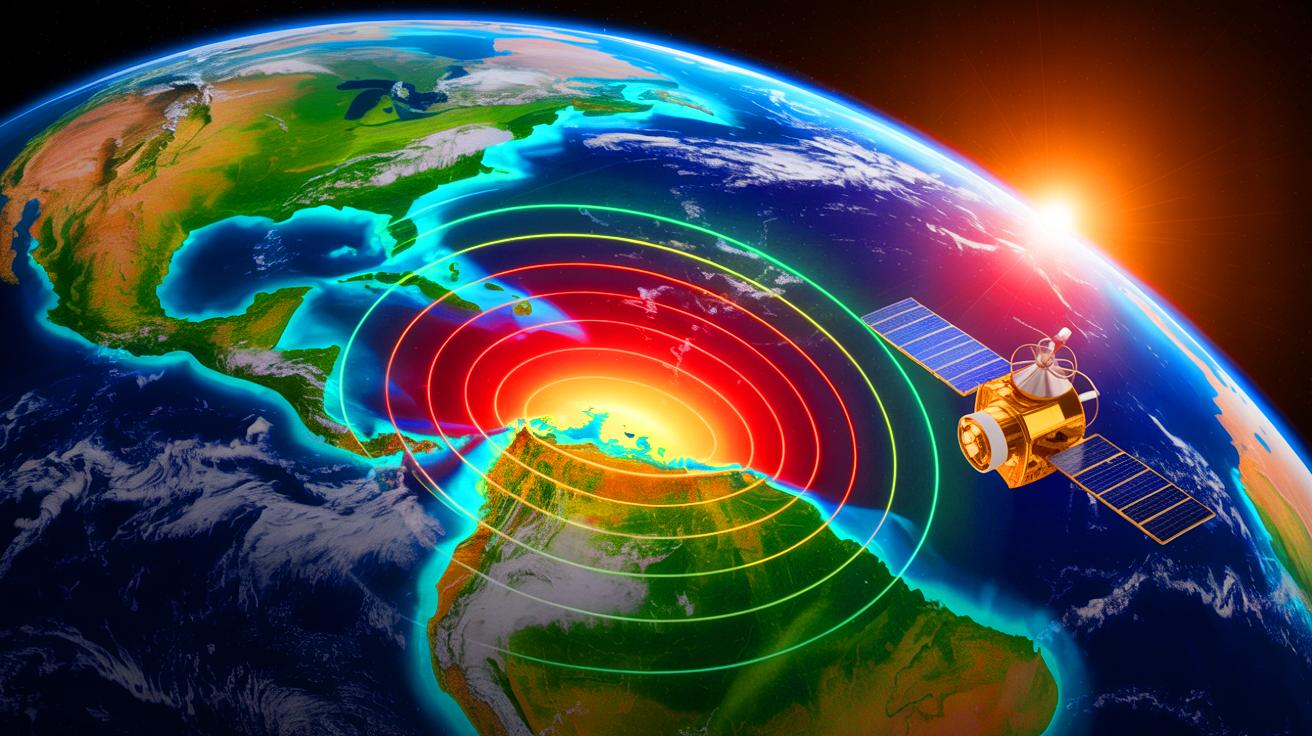
The South Atlantic Anomaly (SAA) has emerged as a significant point of focus for scientists and researchers worldwide. This region, characterized by a weakened magnetic field over South America and the South Atlantic Ocean, poses challenges to space technology and raises questions about Earth’s magnetic dynamics. As the anomaly evolves, it is crucial to understand its mechanisms and the potential threats it presents to technological infrastructure. This article delves into the origins, implications, and future considerations of the South Atlantic Anomaly, highlighting the ongoing efforts of scientists to unravel its mysteries and mitigate its impacts.
Understanding the Origins of the Anomaly
The South Atlantic Anomaly is a fascinating yet complex geomagnetic phenomenon. It is characterized by a significant reduction in magnetic intensity compared to the surrounding regions. This weakness in the magnetic field acts as a breach, allowing high-energy solar particles to approach Earth more closely than usual. The origins of the SAA are deeply rooted in the geodynamo, a process occurring in Earth’s outer core where the movement of molten iron and nickel generates our planet’s magnetic field.
Two primary factors contribute to the formation of the SAA: the tilt of Earth’s magnetic axis relative to its rotational axis and the presence of the African Large Low Shear Velocity Province, a massive structure located approximately 1,800 miles beneath the African continent. These factors disrupt the magnetic field generation in this region, leading to a local polarity reversal and a weakened dipole field intensity.
Implications for Space Technology
The weakened magnetic field of the South Atlantic Anomaly presents significant risks to space technology. Satellites traversing this region are exposed to high levels of energetic protons, leading to potential single event upsets (SEUs). These SEUs can cause temporary malfunctions, data corruption, and, in severe cases, permanent damage to satellite systems.
To mitigate these risks, satellite operators often shut down non-essential systems when passing through the anomaly. Even the International Space Station, which crosses the SAA on each orbit, takes precautions to protect its systems and instruments. While the ISS’s shielding effectively safeguards astronauts, external instruments remain vulnerable. As a result, missions like the Ionospheric Connection Explorer (ICON) closely monitor the SAA and adjust operations accordingly.
Ongoing Changes and Challenges
The South Atlantic Anomaly is not a static phenomenon. Recent data from the ESA’s Swarm constellation and historical measurements from NASA’s SAMPEX mission reveal several concerning trends. The anomaly is gradually drifting northwest, expanding in surface area, and, notably, beginning to split into two distinct lobes, each with a center of minimum magnetic intensity. This bifurcation increases the hazardous zones for spacecraft and complicates the development of predictive models of geomagnetic conditions.
Understanding the changing morphology of the SAA is crucial for the safety of current and future satellites. Continuous monitoring and adaptation in satellite operations are necessary to mitigate potential disruptions. These developments emphasize the importance of ongoing research and collaboration among scientists and space agencies worldwide.
Predicting Future Developments
To refine their understanding and predictions, NASA combines satellite data with simulations of Earth’s core dynamics. These inputs feed global models like the International Geomagnetic Reference Field (IGRF), which track the evolution of Earth’s magnetic field. While the current evolution of the SAA is unprecedented in the space era, geological records suggest similar anomalies have occurred over long timescales.
It is crucial to note that the current SAA is not an early indicator of a magnetic pole reversal, a natural but rare phenomenon that occurs over hundreds of thousands of years. Nevertheless, studying the SAA remains vital for protecting orbiting technologies and deepening our understanding of the forces driving our planet. As scientists continue their research, they aim to improve mission planning and safeguard space technology from the anomaly’s effects.
As we continue to explore and understand the South Atlantic Anomaly, its implications for space technology and Earth’s magnetic dynamics remain a topic of significant interest. The evolving nature of the anomaly poses questions about the future of our planet’s magnetic field and the potential challenges it may present. How will these changes influence our scientific and technological advancements in the coming decades?


Wow! Could this anomaly affect our GPS systems too? 🤔
Great article! I had no idea about the South Atlantic Anomaly before. Thanks for sharing!
I’m curious, how long has NASA been monitoring this anomaly?
Does this mean we should expect more satellite malfunctions in the future?
Is there any chance this could be linked to climate change?
This sounds like a plot from a sci-fi movie! 😄