



| IN A NUTSHELL |
|
As global temperatures continue to rise, the demand for air conditioning is surging, especially in developing countries. However, the widespread use of traditional air conditioners poses a significant problem for the environment. These devices are not only energy-intensive but also rely on harmful refrigerants that contribute to greenhouse gas emissions. In response to this pressing issue, scientists in the United Kingdom have developed a groundbreaking passive cooling system. This innovative approach utilizes solid-state organic plastic crystals, potentially revolutionizing how we cool our spaces while reducing environmental impact.
The Double-Edged Sword of Air Conditioning
Air conditioners have long been considered a necessity in combating heat, but their environmental footprint is substantial. These machines consume large amounts of energy, which in turn leads to increased emissions of greenhouse gases. Moreover, many air conditioners use hydrochlorofluorocarbons (HCFCs) as refrigerants. These substances are known for their harmful impact on the ozone layer. As temperatures rise globally, the demand for air conditioning is expected to grow, particularly in developing countries. Current estimates suggest that the number of air conditioning units could reach one billion by 2030.
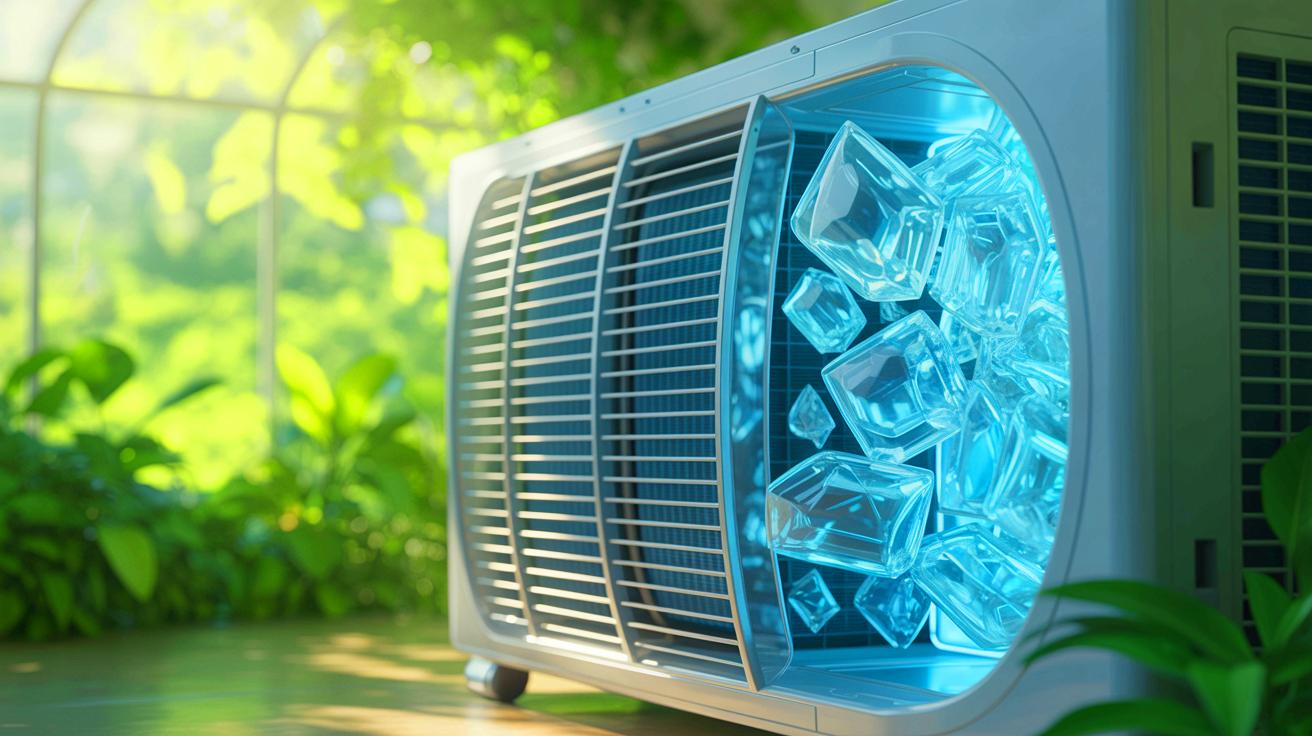
In response to this escalating demand, researchers are exploring alternatives to traditional cooling methods. A promising technology has emerged from the United Kingdom, where scientists have introduced a refrigerant-free cooling system called BarOcal. This approach aims to replace liquid refrigerants in air conditioners with a solid-state alternative. The technology leverages the barocaloric effect, a thermo-mechanical phenomenon that occurs under pressure. Applying pressure to a material raises its temperature, while releasing pressure leads to cooling. This novel method offers a glimpse into a future where cooling systems are both efficient and environmentally friendly.
Exploring the Barocaloric Effect
At the core of the BarOcal technology is the innovative use of organic plastic crystals. These materials exhibit unique thermo-mechanical properties that make them suitable for cooling applications. The research team is currently focused on identifying materials that maximize the barocaloric effect. While the technology is still in its early stages, a prototype has been developed to demonstrate its potential. This prototype is a significant step towards proving the concept’s viability.
Beyond selecting the ideal material, the researchers are also addressing practical challenges such as noise reduction. The hydraulic circuit used to apply and release pressure on the crystals generates noise, which must be minimized. Despite these challenges, the potential benefits of BarOcal are substantial. The technology could reduce greenhouse gas emissions from air conditioners by up to 75%. This reduction could have a profound impact if adopted globally. Additionally, the barocaloric system could be adapted for heating applications, with the potential to handle temperature variations exceeding 122 degrees Fahrenheit.
Realizing the Promise of BarOcal
While the BarOcal technology holds significant promise, it is still in the development phase. The path to commercialization is fraught with technical and logistical challenges. However, researchers are optimistic about the technology’s potential. Once fully developed, the initial focus will likely be on institutional applications. Schools, data centers, warehouses, and shopping malls are ideal candidates for early adoption. This strategic approach aims to build public confidence in the technology before expanding to residential markets.
The road to widespread adoption of BarOcal is long, but the potential environmental benefits are immense. If successful, this technology could revolutionize the cooling industry and play a crucial role in mitigating climate change. By reducing reliance on harmful refrigerants and decreasing energy consumption, BarOcal represents a significant step forward in sustainable cooling solutions.
Challenges and Future Prospects
The development of BarOcal is a testament to human ingenuity in the face of environmental challenges. However, the journey is not without obstacles. The researchers must overcome technical hurdles to refine the technology for mass production. Additionally, public acceptance and regulatory approvals will be critical to the technology’s success. Despite these challenges, the potential rewards are compelling. A successful implementation of BarOcal could significantly reduce the carbon footprint of cooling systems worldwide.
The future of cooling technology is at a crossroads. As global temperatures rise, the need for sustainable solutions becomes ever more urgent. The BarOcal project offers a glimpse into a future where cooling systems are both efficient and environmentally responsible. As researchers continue to refine this technology, one question remains: Will the world be ready to embrace such innovative solutions and transform the way we cool our spaces?

Wow, a 75% reduction in emissions! Is this tech already available for purchase? 🤔
Isn’t it ironic that cooling tech is heating up the planet? Hope BarOcal changes that!
How long until we see this in residential homes? Seems like a game-changer!
Solid-state organic plastic crystals – sounds like something out of a sci-fi movie! 🚀
What are the noise levels like on this new system compared to traditional ACs?
Finally, a way to stay cool without feeling guilty about the environment! 🌱
How do these organic crystals compare in cost to traditional refrigerants? 💸
I hope this tech isn’t just another headline and actually gets developed further.
Noise reduction is important. No one wants a loud AC, no matter how green it is!
This sounds promising, but what about the durability of these crystals?
Can BarOcal be integrated into existing AC systems, or is it a complete overhaul?