


| IN A NUTSHELL |
|
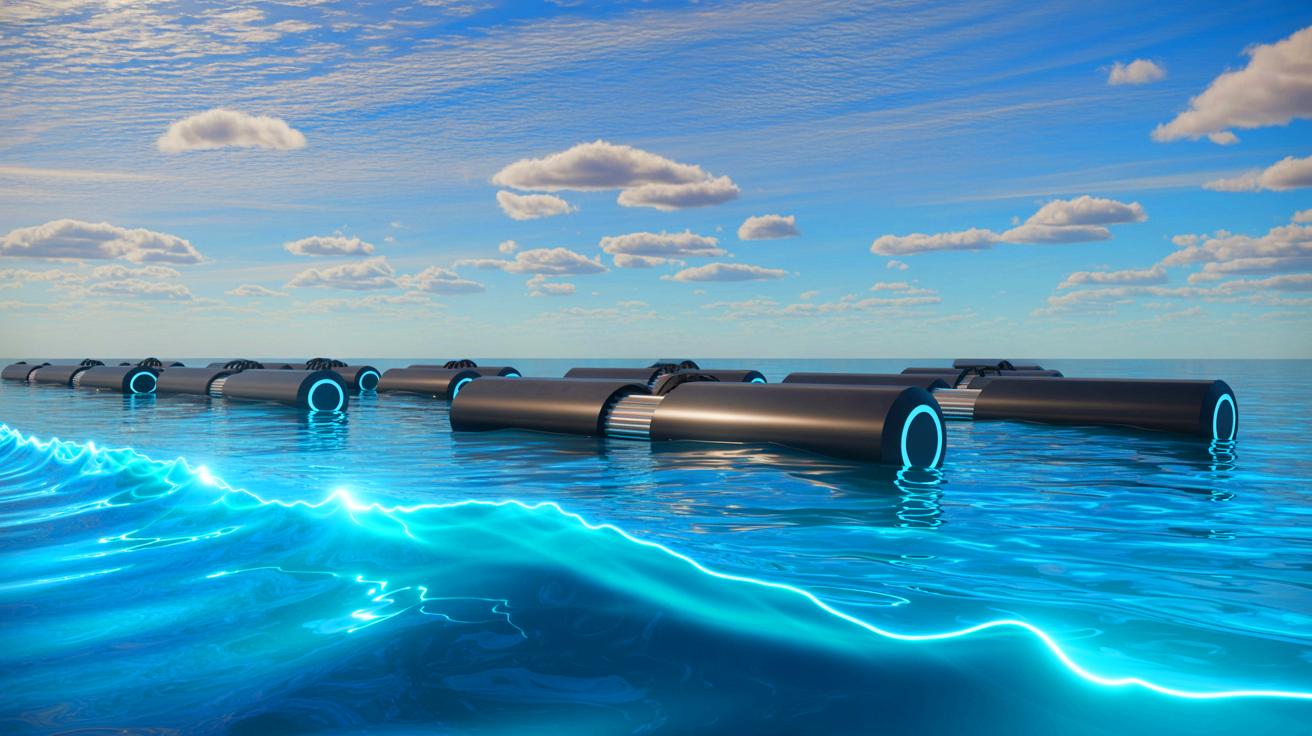
In recent years, the quest for sustainable and renewable energy sources has taken a significant turn towards the ocean. Researchers are exploring innovative ways to harness the power of ocean waves, a concept often referred to as “blue energy.” A groundbreaking study has highlighted the potential of triboelectric nanogenerators (TENGs) in converting low-frequency mechanical energy from ocean waves into electricity. This research, conducted by scientists from China, focuses on the development of next-generation TENGs that promise self-sustaining power solutions for marine environments. By pioneering advancements in TENG architectures, the study aims to transform the way we utilize marine energy.
Innovations in TENG Device Structures
The research team from the Beijing Institute of Nanoenergy and Nanosystems, in collaboration with Guangxi University, has introduced six innovative structural designs for TENGs. Their focus is on enhancing the internal output of these devices while ensuring adaptability to external marine environments. The study, published in Nano-Micro Letters, delves into the prevailing trends in device structure design as identified by the research community.
These designs prioritize solid-solid contact architectures, which have significant commercial potential for marine power generation. The researchers conducted a detailed comparison of the electrical performance of these devices under various conditions, including motorized, simulated wave, and real marine environments. This assessment also included evaluations of device durability and mechanical robustness, crucial factors for sustainable deployment in the ocean.
The review highlights the importance of structural optimization and hybrid systems. By maximizing energy conversion efficiency through purpose-optimized device structures, such as spherical, bionic, and hybrid configurations, TENGs have the potential to revolutionize marine energy harvesting. Additionally, integrating TENGs with other energy harvesting technologies, like electromagnetic generators (EMGs), can enhance performance and capture a wider range of energy.
Maximizing Space Utilization and Power Density
The research team has made significant strides in improving the functional design of TENGs to achieve high space utilization. By translating the chaotic motion of ocean waves into a deterministic electron flow, they have ushered in an era where the sea itself becomes a silent, self-replenishing power plant. This innovative approach allows for efficient energy capture from ocean swells, gusts, and sunlight.
Key to this advancement is the use of multilayer stacks, origami folds, and magnetic-levitation frames, which push volumetric power density beyond 600 watts per cubic meter. This is three orders of magnitude higher than first-generation prototypes, showcasing the immense potential of these next-generation TENGs. The high space utilization achieved through these designs is crucial for maximizing the energy output from marine environments.
Hybrid Systems for Efficient Energy Conversion
The integration of hybrid generator systems has emerged as a promising strategy for efficient and stable water wave energy conversion. These systems often combine TENGs with EMGs, piezoelectric generators (PENGs), and solar cells. By leveraging frequency-complementary couplings among these technologies, researchers have created full-spectrum harvesters that deliver an impressive 117 percent power-conversion efficiency in real waves.
“Desperate Gamble Sparks Chaos”: New $557M Deal Sets Stage for US-China Energy Battle
The team emphasizes the importance of spherical, dodecahedral, and tensegrity architectures, which can harvest six-degree-of-freedom motion, effectively eliminating orientational blind spots. This comprehensive approach to energy harvesting ensures that the maximum possible energy is captured from the dynamic and unpredictable marine environment.
Future Directions for TENG Technology
As the research community continues to explore the potential of TENG technology, several challenges and opportunities lie ahead. The study outlines future research avenues and discusses the obstacles encountered in the field. Researchers aim to provide valuable perspectives for ongoing research and to advance the progress and application of TENG technology.
One of the key areas for future exploration is the integration of TENGs with existing marine infrastructure, such as offshore wind and solar farms. By creating synergistic systems that combine multiple renewable energy sources, the potential for sustainable marine energy generation could be significantly enhanced. Furthermore, ongoing efforts to improve the durability and efficiency of TENGs will be critical for their widespread commercial deployment.
The advancements in TENG technology represent a promising step towards sustainable energy solutions from the ocean. As researchers continue to push the boundaries of what is possible, the potential for harnessing blue energy becomes increasingly viable. Could the ocean become the next frontier in our quest for renewable energy, providing sustainable power for future generations?

This sounds amazing! How soon can we expect these TENGs to be implemented on a large scale? 🌊
Wow, 117 percent efficiency? That’s pretty mind-blowing! 😮
Does anyone know how this tech compares to traditional wind or solar power?
600 watts per cube is impressive, but how does this compare to other renewable energy sources in terms of cost-effectiveness?
Can these TENGs withstand harsh ocean conditions over long periods?
I’m curious about the cost of implementing these systems on a large scale. 🤔
Thank you for the insight! This is an exciting development for sustainable energy. 😊
This is a game changer! Thanks for sharing such exciting news! 🌊⚡
How long before we see these TENGs being used commercially?
Okay, but what happens during a storm? Can these TENGs withstand harsh marine conditions?
Is it just me or does this sound too good to be true? 🤨
Sounds like science fiction! Are there any pilot projects already in place for these TENGs?
Finally, a sustainable solution that might actually work! Cheers to the scientists! 🥂
Why didn’t anyone think of this sooner? Seems like a no-brainer.
Isn’t 117% power-conversion efficiency a bit too good to be true? How does that even work?
Does this mean less reliance on fossil fuels in the future? Hope so! 🌍
600 watts per cube? That’s impressive! But how many cubes do you need to power a city? 🤔
Can this technology be combined with solar panels for even more efficiency?
How do these triboelectric nanogenerators work exactly? I need a layman’s explanation!
I’m skeptical. What about the environmental impact on marine life?
Great work, Chinese scientists! Keep pushing the boundaries! 🇨🇳
This could be a major breakthrough for renewable energy. Exciting times ahead!
I wonder how this tech will affect global energy markets.
Can this technology be scaled up for industrial use, or is it just for small applications? 🤔
Are there any downsides to using TENGs in oceans?
Finally, some good news about energy! Thanks for the article! 😊
What happens to these TENGs during a storm? Are they durable enough?
The future of energy is looking bright! 🌞🌊
How do these TENGs compare in efficiency to other marine energy solutions?
All this tech talk is making my head spin, but it’s still exciting!
Can these nanogenerators be used in other bodies of water like rivers or lakes?
Is this technology patented? Wondering who will control its implementation. 🤔
I’m all for renewable energy, but how feasible is this on a global scale?
Does anyone have more info on how these hybrid systems work?
Can TENGs be integrated with existing energy infrastructures easily?
Hope this doesn’t become another tech that never gets fully realized. 🤞
Incredible innovation! Kudos to the research team! 🎉
Is there a risk of pollution if these devices break down in the ocean?
How long do these TENGs last before they need replacing?
Just imagine the possibilities if this tech becomes the norm! 🌊🚀
Big question: How much does this cost compared to current renewable options?
This sounds like science fiction! But it’s real. Amazing! 🤩
I can’t wait to see how this changes the energy landscape! 🌍⚡
Are these TENGs environmentally friendly throughout their lifecycle?
Great article! Gives me hope for a sustainable future! 😊