


| IN A NUTSHELL |
|
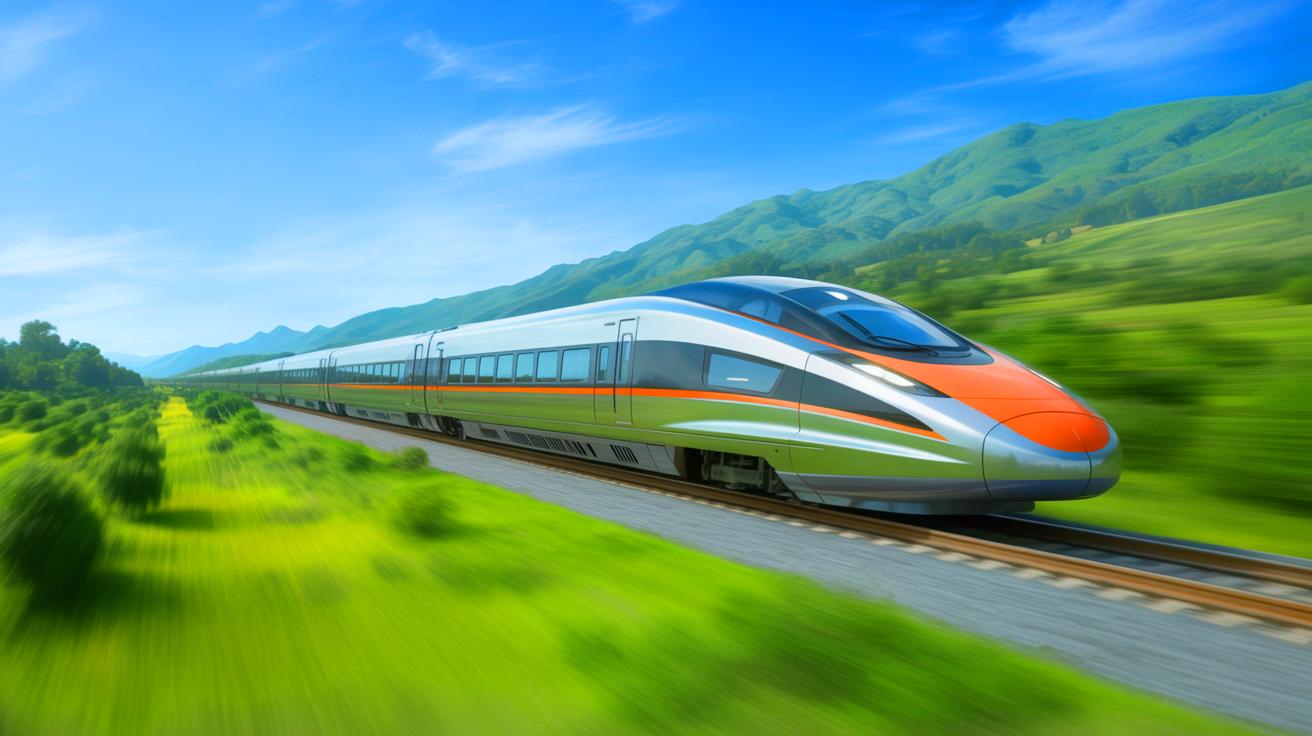
In the realm of high-speed rail transportation, China is once again pushing the boundaries of what is possible. Scientists from China have developed a new method to reduce aerodynamic drag in next-generation high-speed trains, potentially enabling more energy-efficient operations at speeds of up to 248.5 miles per hour. This development is significant, as most high-speed trains today operate at 217 miles per hour. The team’s innovative approach involves a comprehensive analysis of aerodynamic characteristics and proposes design optimizations that could transform the future of train travel.
Understanding Aerodynamic Drag in High-Speed Trains
The challenge of reducing aerodynamic drag is crucial for high-speed trains, particularly as they aim to reach speeds of over 248 miles per hour. At these velocities, the total drag increases by nearly 30 percent compared to trains operating at 217 miles per hour. Aerodynamic drag is a major factor in energy consumption, accounting for up to 30 percent of the traction energy used by trains. As speeds increase, so does energy consumption, making drag reduction vital for sustainable operations.
The team from China utilized numerical simulation methods to analyze the aerodynamic characteristics of trains moving at these higher speeds. Their studies revealed that a significant portion of drag is attributed to the train’s head, pantograph, and bogie. By focusing on these components, the researchers were able to devise drag reduction schemes that demonstrated a 22.11 percent reduction in aerodynamic drag compared to existing models.
Their findings represent one of the most substantial improvements in aerodynamic efficiency for high-speed trains in recent times.
https://www.energy-reporters.com/news/military-chiefs-fear-disaster-china-unveils-new-radar-turning-spy-aircraft-into-ghosts-as-rivals-warn-of-escalating-global-confrontation/
Innovative Design Approaches
The success of the drag reduction strategy lies in the coordinated optimization of multiple train components. Traditional methods often target individual elements, but the team found that simultaneous enhancements in various areas deliver better results. For instance, extending the streamlined nose to 49.2 feet and redesigning the pantograph with optimized geometry were crucial steps in achieving notable aerodynamic benefits.
Professor Wang Tiantian from Central South University emphasized the importance of this integrated approach. “While conventional approaches often focus on optimizing individual elements in isolation, we’ve found that simultaneously enhancing the train’s nose shape, pantograph design, and bogie fairings can deliver notable improvements,” Wang explained. These modifications not only improve efficiency but also set a new precedent for future high-speed train design.
Further studies are essential to refine these findings, but the initial results are promising. The proposed measures provide engineers with a roadmap to designing high-speed trains with superior aerodynamic profiles, leading to more efficient and faster trains.
The Global High-Speed Rail Context
China is not alone in its quest for high-speed rail supremacy. The country’s CR450 train has already been tested at a maximum speed of 281 miles per hour, while the Shanghai Maglev operates at speeds of 286 miles per hour. These advancements place China among the leaders in high-speed rail technology.
Globally, other nations are also pushing the limits of train speed. France’s modified Train à Grande Vitesse (TGV) achieved a speed of 357 miles per hour in tests, although its operational speeds are between 167 and 199 miles per hour. Japan’s superconducting Maglev train reached 375 miles per hour in tests and is planning a new series capable of reaching 314 miles per hour.
The ongoing advancements in high-speed rail technology underscore the competitive nature of this field. Each country is striving to develop faster and more efficient trains, and China’s latest breakthrough in drag reduction is a significant step forward.
Future Implications and Challenges
The implications of these advancements in aerodynamic efficiency are vast. Reduced drag not only means faster trains but also more sustainable operations with lower energy consumption. As the global demand for efficient and rapid transportation grows, these innovations will play a critical role in shaping the future of rail travel.
However, challenges remain. Implementing these design changes on a large scale requires significant investment and collaboration among engineers, scientists, and policymakers. Additionally, safety standards must be rigorously upheld as speeds increase. Despite these hurdles, the potential benefits of these technological advancements are undeniable.
As the world moves towards a future of faster and more efficient transportation, the question remains: how will these innovations influence the global landscape of high-speed rail?


Wow, 248 MPH! That’s faster than my internet speed. 🚀
Wow, a 22% reduction in drag is impressive! How long before these trains are operational? 🚄
How does this new design compare with Japan’s Shinkansen trains?
Does anyone else think 49-foot noses are a bit excessive? 😂
Interesting! Can these trains run on existing tracks or do they need new infrastructure?
22% reduction in drag sounds impressive. What does that mean for ticket prices?
Are these changes going to make tickets more expensive, or will the energy savings offset costs?
Is the 49-foot nose gonna make it harder to park these trains? 😄
It’s amazing to see such innovation in train technology. Keep up the great work, scientists! 🌟
How much energy does this save in terms of fuel or electricity?
Great to see advancements in train technology! Thanks for the update. 🚄
How do these advancements compare to what other countries are doing in high-speed rail?
Hope this tech can be implemented globally. The world needs greener transport solutions. 🌍
Did they face any challenges with the pantograph redesign?
Are there any safety concerns with trains moving at these high speeds?
I wonder if this tech can be adapted to freight trains.
How soon can we see these trains in action?
Can’t wait to see this in action. Thanks for sharing!
49 feet nose? That’s like a whole other train! 😂
Are there any environmental impacts of building these new trains?
Why are other countries not adopting similar tech?
China is leading the way again! Impressive. 🌟
Any plans for high-speed trains in the U.S.?
Does the longer nose affect the train’s turning ability?
How long did the research and development take for this project?
Hope this leads to more reliable train schedules. 🚆
Can this technology help reduce noise pollution too?
What’s the cost of these innovations compared to traditional trains?
Streamlined nose? Sounds like a dolphin-inspired train! 🐬
Are these trains more comfortable for passengers?
How does this affect the train’s acceleration and braking?
I’m skeptical… are there any downsides to this design?
Will this tech be shared with other countries?
How does this compare to Maglev technology?
Can’t wait to see future developments in rail technology! 🚄
This is amazing, but will it be affordable for everyone?
Does this mean we can have high-speed cargo trains too?
Any plans to improve the interior of these trains?
How long would it take to travel across China with these trains?
This is great, but how long will it take to implement?
Another step towards the future! Thanks for the article. 😊