

| IN A NUTSHELL |
|
The race for sustainable energy has taken a significant leap forward with the completion of the central solenoid within the ITER project. This massive magnet, capable of levitating an aircraft carrier, represents a groundbreaking advancement in fusion technology. The implications extend beyond energy production, potentially influencing areas such as space travel. This achievement highlights the importance of international collaboration in tackling global challenges, offering a model for future scientific projects. As the world grapples with climate change and energy demands, ITER’s progress brings hope for a cleaner, more sustainable future.
Understanding the Role of the Central Solenoid
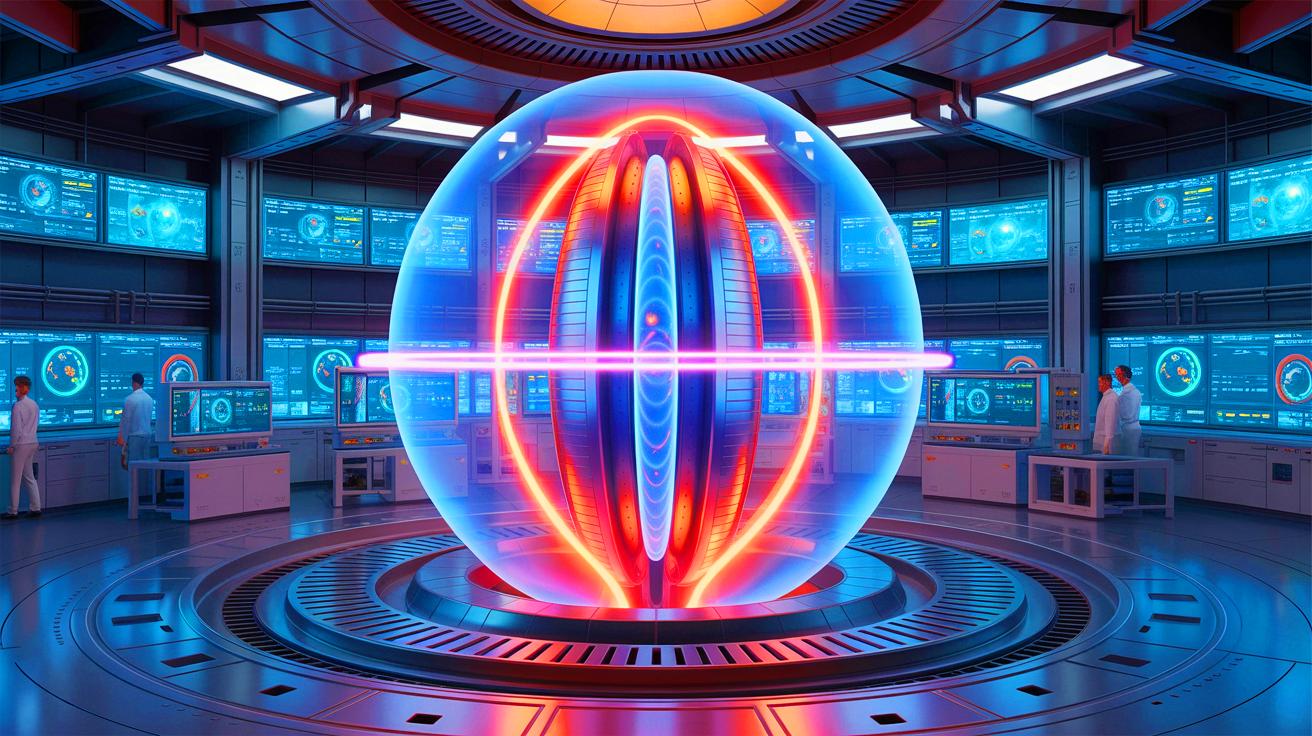
The central solenoid is at the heart of the ITER Tokamak reactor, crucial for sustaining nuclear fusion. It functions as a superconducting magnet, essential for creating and maintaining the superheated plasma necessary for the fusion process. This plasma, formed from ionized hydrogen gas, must reach a staggering 270 million degrees Fahrenheit, far exceeding the sun’s core temperature. At these extreme temperatures, atomic nuclei collide and fuse, releasing vast amounts of energy.
Upon completion, this engineering marvel will weigh nearly 6 million pounds and stand over 42 feet tall, with a width of 13 feet. Working in tandem with other magnetic systems, it forms a magnetic cage, containing the plasma and enabling precise control over the fusion reaction. The solenoid’s design allows it to withstand forces equivalent to 13.5 million pounds, showcasing the extraordinary engineering required for this breakthrough in fusion technology.
The Significance of a Magnet That Can Levitate an Aircraft Carrier
The central solenoid’s ability to levitate an aircraft carrier is a testament to the extreme conditions required for nuclear fusion. Inside the reactor, temperatures are so high that no known material could survive direct contact. Therefore, magnetic fields are used to suspend the plasma, preventing physical contact with the reactor walls. The central solenoid is crucial in this process, generating the magnetic force needed to keep the plasma stable for long durations.
This capability is not merely a demonstration of raw power but an essential component for achieving a successful fusion reaction. The central solenoid’s magnetic energy, which amounts to 6.4 gigajoules, exemplifies its immense potential. ITER aims to produce 500 megawatts of power from just 50 megawatts of input, signaling a promising future for clean and abundant energy.
International Collaboration and Its Impact
The ITER project is a shining example of international collaboration, with Europe covering 45% of the costs and six other countries contributing 9% each. This global initiative not only addresses urgent energy needs but also demonstrates the potential for nations to unite in overcoming existential threats like climate change and energy security.
Pietro Barabaschi, ITER’s Director-General, underscores the project’s technical complexity and international framework as vital to its success. Despite diverse political environments, the collaboration has remained strong, proving that humanity can unite for a common cause. As ITER progresses, it holds the promise of transforming the global energy landscape through nuclear fusion.
Challenges Ahead and the Road to Completion
Despite its notable achievements, the ITER project faces considerable challenges before becoming fully operational. Launched in 2007, the project now anticipates its first operation around 2035. This timeline reflects the intricate nature of the endeavor, necessitating precise engineering and coordination among international partners.
As assembly continues, integrating complex systems and meeting safety standards remain critical hurdles. However, the progress achieved thus far inspires confidence that the ultimate goal is within reach. The successful operation of ITER could usher in a new era of energy production, with far-reaching effects on industries and societies worldwide.
The completion of the central solenoid is a pivotal milestone on the path to harnessing fusion energy. As the ITER project advances, it exemplifies human ingenuity and the power of collaboration. Will this fusion breakthrough be the catalyst for a sustainable energy future, transforming how we power our lives and explore the universe?