


| IN A NUTSHELL |
|
The specter of nuclear war often conjures images of immediate destruction, yet its impact could extend far beyond the blast zones. A recent study sheds light on the catastrophic consequences a nuclear winter would have on global food production. Nuclear winter, a phenomenon triggered by massive nuclear explosions, results in soot and dust filling the atmosphere, blocking sunlight, and drastically reducing temperatures. This scenario could devastate agriculture worldwide, leading to a severe food crisis. Researchers from Pennsylvania State University have simulated the potential outcomes of such an event, providing a stark warning of the challenges humanity could face in the aftermath of nuclear conflict.
The Mechanics of Nuclear Winter
Nuclear winter is a theoretical consequence of large-scale nuclear conflict. When nuclear weapons detonate, they create firestorms that propel soot and dust into the upper atmosphere. This material can block sunlight, leading to a dramatic drop in temperatures on the Earth’s surface. Without sufficient sunlight, plant life struggles to survive, and this disruption extends throughout the food chain. The implications for agriculture are profound, as the chilled climate and reduced sunlight severely hinder crop growth.
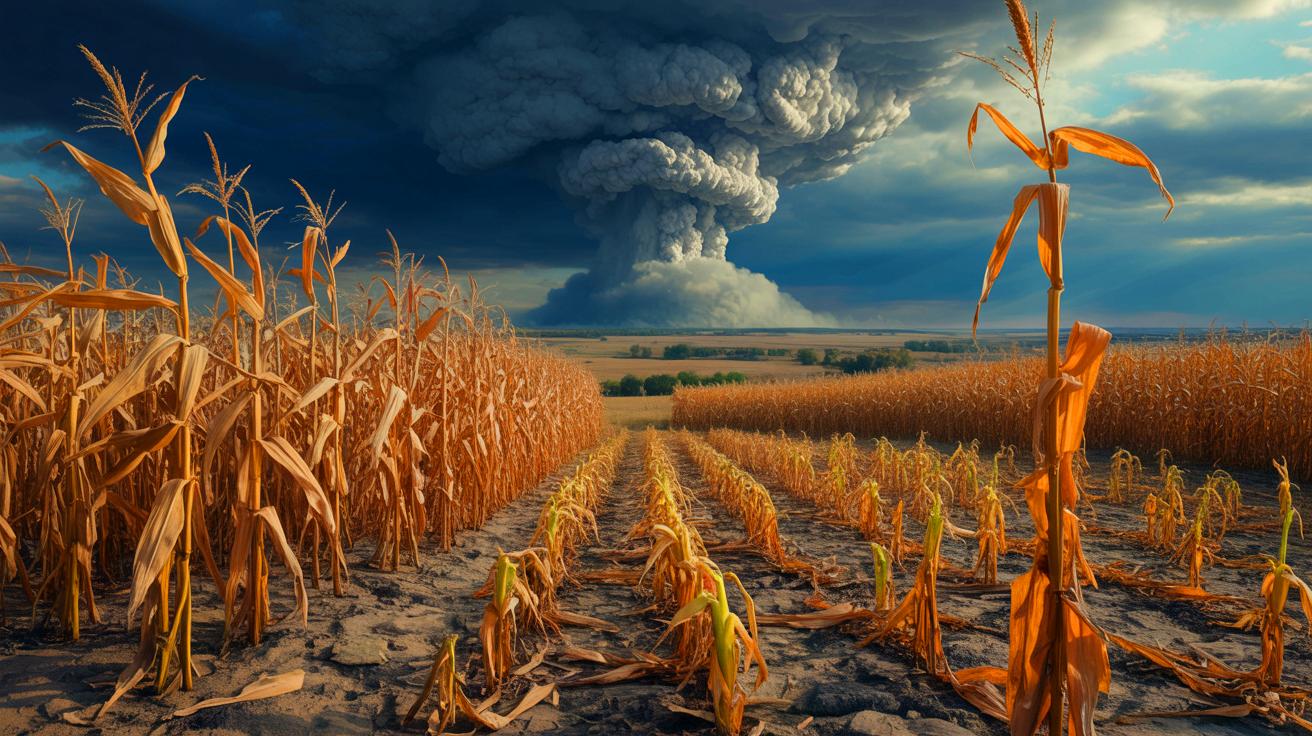
Scientists at Pennsylvania State University used corn as a benchmark to study the impact of nuclear winter on global food production. Corn was chosen due to its widespread cultivation and significance in the global food supply. The study simulated corn production at over 38,000 locations across various nuclear war scenarios. The findings paint a grim picture of potential agricultural collapse.
Simulating a Global Food Crisis
The study examined six nuclear war scenarios, each varying in severity based on the amount of soot injected into the atmosphere. In the least severe scenario, a localized conflict injecting 5.5 million tons of soot, global corn production could drop by 7%. In the most severe scenario, a global conflict releasing 165 million tons, corn production could plummet by 80%. Such a drastic reduction would lead to a worldwide food crisis, with catastrophic implications for food security.
Beyond the immediate impact of reduced sunlight, nuclear explosions produce nitrogen oxides, which can degrade the ozone layer. This degradation increases UV-B radiation at the Earth's surface, further damaging plant life and compounding the agricultural crisis. The study estimates that this additional damage could result in a total corn production drop of 87%, highlighting the interconnected nature of these environmental consequences.
Recovery and Adaptation Strategies
The recovery from a nuclear winter would be a long and arduous process. The simulations suggest that global corn production might take between 7 and 12 years to rebound, with the Southern Hemisphere recovering faster than the Northern. Regions closer to the equator would fare better than those near the poles. However, there are strategies that could potentially expedite recovery.
One approach involves adopting corn varieties better suited to cooler climates and shorter growing seasons. This adaptation could mitigate crop losses by up to 10%. Moreover, the researchers propose the development of "agricultural resilience kits." These kits would contain crop seeds selected for their suitability to the altered climate conditions, thus supporting food production during recovery periods. This concept could also be applied to other disasters, emphasizing the importance of resilience in the face of catastrophic events.
The Broader Implications
The study's findings underscore the far-reaching impacts of nuclear war beyond immediate destruction. While nuclear winter would not counteract global warming, it presents its own set of challenges that complicate global efforts for climate stability. The potential for such an event highlights the need for diplomatic solutions to reduce the threat of nuclear conflict.
As global tensions rise, the possibility of nuclear war becomes more concerning. It is imperative for international leaders to recognize the profound humanitarian and environmental consequences of nuclear conflict. The study serves as a sobering reminder of the importance of nuclear disarmament and peace-building efforts to prevent such a catastrophic scenario from becoming reality.
As the world grapples with ongoing geopolitical tensions, the threat of nuclear conflict looms large. The study from Pennsylvania State University provides a chilling glimpse into the potential aftermath of nuclear war. How can global leaders collaborate to ensure a peaceful future and prevent the devastating impact of nuclear winter on our planet?

Are there any regions that might not be affected by nuclear winter? 🤔
This study is truly eye-opening. Are there any plans for governments to act on these findings? 🌍
Thanks to Penn State for this critical research! It’s alarming but necessary to know. 🙏
Thank you for shedding light on such a critical issue. It’s eye-opening.
Is there any historical precedent for something like this, or is it all theoretical?
This sounds like something out of a sci-fi movie! 😮
Wow, 80% drop in corn production? That’s terrifying. 😱
How reliable are these simulations? Can we trust the data fully?
How reliable are these simulations? I mean, can we really predict this accurately?
Great article! Does the study suggest any immediate actions for individual preparedness?
Yikes! Time to start stockpiling canned goods? 😜
Nuclear winter sounds like a bad sci-fi movie plot, but it’s real! 🤯
Why isn’t this front-page news everywhere? This is huge!
Why was corn chosen as the benchmark in the study?
What about other crops? Is corn the most affected or just the most studied?
Would love to see more focus on prevention rather than just recovery strategies!
How do they calculate the amount of soot that would be released?