




| IN A NUTSHELL |
|
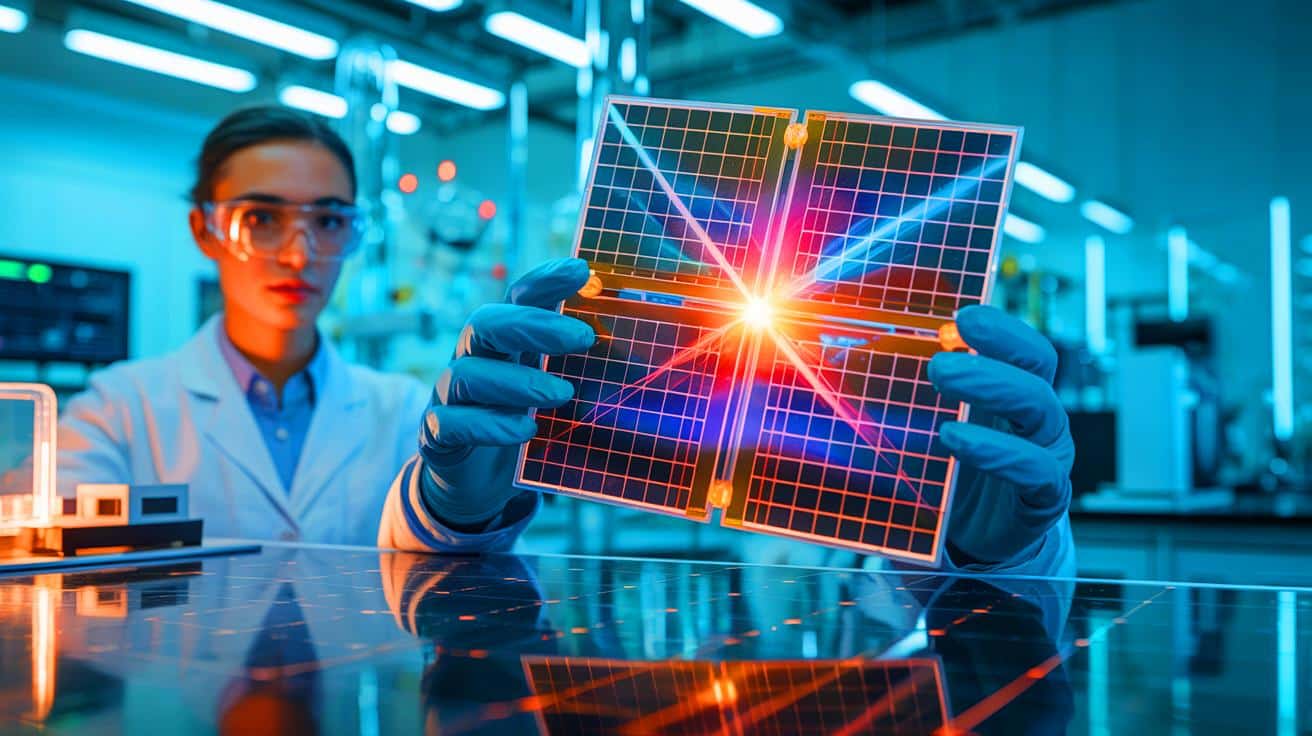
In a remarkable breakthrough for solar technology, Australian scientists have achieved a new global standard with their development of the most efficient and largest triple-junction perovskite–perovskite–silicon tandem solar cell. Spearheaded by Dr. Anita Ho-Baillie at the University of Sydney, the research team has pushed the boundaries of solar efficiency and stability. Their device, a 172-square-foot module, recorded a power conversion efficiency of 23.3 percent, setting a new benchmark for large-area solar cells. This cutting-edge technology not only paves the way for more efficient energy solutions but also underscores the vast potential of perovskite-based solar cells in the quest for sustainable energy.
Revolutionizing Solar Technology
Perovskite solar cells are at the forefront of solar innovation due to their unique structure and composition. These triple-junction solar cells consist of three semiconductor layers, each with a different bandgap, allowing them to absorb a broader range of the solar spectrum. This design enables higher power conversion efficiency compared to traditional silicon-based cells, which are limited in their light absorption capabilities. By integrating two perovskite layers with a silicon base, the researchers maximized spectral coverage, leading to significant improvements in both efficiency and stability.
The team at the University of Sydney achieved these results through a series of chemical and structural modifications. They replaced the commonly used methylammonium with rubidium, an alkaline metal that provides a more stable perovskite crystal lattice. Additionally, the researchers enhanced the surface treatment by substituting unstable lithium fluoride with piperazinium dichloride, further boosting the cell’s resilience. These innovations have set new standards for the performance and durability of solar cells.
Real-World Performance and Durability
To evaluate the real-world applicability of their solar cells, the researchers subjected them to rigorous testing. Using advanced transmission electron microscopy, they discovered that the gold used in the cells did not form continuous films, as previously thought, but existed as discrete nanoparticles. This insight allowed the team to optimize the application of gold nanoparticle coverage, enhancing electric charge flow and light absorption.
The smaller, 0.15-square-inch device demonstrated remarkable durability by passing the EIC Thermal Cycling test, enduring 200 cycles of extreme temperature fluctuations from -40 to 185 degrees Fahrenheit. Impressively, the solar cells retained 95 percent of their efficiency after over 400 hours of continuous light exposure. This performance under real-world stress conditions highlights the potential of these solar cells to withstand challenging environments while maintaining high efficiency.
Global Collaboration and Impact
The success of this groundbreaking research is the result of collaboration with international partners from China, Germany, and Slovenia. Together, these teams have demonstrated that perovskite solar cells can exceed the efficiency limits of silicon-only devices. This progress is a significant step toward the development of cheaper, more sustainable solar energy solutions that can contribute to a low-carbon future.
Dr. Ho-Baillie emphasized the importance of these advances, stating that perovskites have the potential to revolutionize solar energy by pushing efficiencies beyond current limits. The study, published in the peer-reviewed journal Nature Nanotechnology, underscores the role of international partnerships in driving innovation and addressing global energy challenges.
Future Prospects for Solar Energy
The advancements in perovskite-based solar technology signal a promising future for renewable energy. As researchers continue to refine and enhance these solar cells, the potential for widespread adoption becomes increasingly feasible. The ability to produce large, stable, and highly efficient solar modules could lead to significant reductions in the cost of solar energy, making it more accessible to a broader range of consumers.
Looking ahead, the challenge remains in scaling up production and integrating these advanced solar technologies into existing energy systems. As the demand for sustainable energy solutions grows, the continued exploration of perovskite solar cells will likely play a crucial role in meeting global energy needs. How will these innovations shape the future of energy production and consumption?


Wow, 23.3% efficiency is amazing! How soon until we see these panels in stores? 🌞
Wow, this could be a game-changer for renewable energy! 🌞
Are these new solar cells more expensive to produce than traditional silicon-based ones?
This sounds promising, but what about the cost? Will it be affordable for the average consumer?
Finally, some good news from the science world! Thanks, Australia! 🇦🇺
23.3% efficiency? That’s impressive! How does it compare to current industry standards?
What challenges do they face in scaling up production of these solar cells?
👏 Bravo to the team at the University of Sydney!
OK, but can they survive a hailstorm? 😅
Is this the same technology that was being developed in Germany?
What happens when these solar cells reach the end of their lifecycle? Are they recyclable?
Great achievement! Hope this helps reduce carbon emissions globally. 🌍
How do they perform in less sunny climates?
Isn’t perovskite still quite unstable? How long do these solar cells last?
I’m skeptical. How long will these solar cells really last in harsh weather conditions?
Amazing breakthrough, but let’s hope it doesn’t cost an arm and a leg to implement.
Are these cells compatible with existing solar panel infrastructure?
Finally, some light at the end of the tunnel for solar energy! 🔦
What are the implications of using gold nanoparticles in these solar cells?
Hope they address the degradation problem with perovskites. 🤞
How does this technology impact the overall efficiency of solar energy systems?
Is this a true revolution or just another incremental improvement?
Props to the international collaboration! 🌐
But how do they perform in dusty or polluted environments?
Can these cells be used for both residential and commercial purposes?
What’s the expected lifespan of these new solar cells?
Is this just a lab success, or can it be replicated in real-world conditions?
Finally! Always knew Australia had the potential for solar innovation. 😉
Is there a risk of these cells overheating in high temperatures?
Thank you for pushing the boundaries of solar technology! 🙌
Super cool! What’s next in solar tech? 🚀
Could this technology be adapted for other renewable energy applications?
Do these cells require any special maintenance compared to traditional ones?
Hope this doesn’t become another “promising” tech that never sees the light of day. 😅
Is there a timeline for when this technology will be commercially available?
How does this innovation relate to the broader goals of climate change mitigation?
Can these advances be applied to other forms of renewable energy technology?
Great job, Aussie scientists! You guys rock! 🎉
Can we expect to see these perovskite cells on the market soon?
How does the use of rubidium instead of methylammonium affect the environment?
How does this breakthrough compare to traditional silicon solar cells in terms of efficiency?
Yay for renewables! But when will they be viable for everyday use? 🤔
This sounds like a big deal. How soon can we see this tech in action?