




| IN A NUTSHELL |
|
In an unexpected breakthrough, researchers have discovered a new form of oxygen generation in the deep ocean that challenges long-held scientific beliefs. This phenomenon, dubbed “dark oxygen,” suggests that oxygen can be produced in the absence of sunlight, raising significant questions about our understanding of deep-sea ecosystems. As mining companies set their sights on the ocean floor for valuable resources, this discovery poses crucial implications for environmental sustainability. The revelation emphasizes the complexity and mystery that still surrounds our oceans, urging a reevaluation of current practices and assumptions in marine science and industry.
Ocean Researcher Finds Oxygen Generation in Deep Ocean Mystery
In 2013, ocean scientist Andrew Sweetman made a perplexing discovery while studying the remote Clarion-Clipperton Zone in the Pacific Ocean. His sensors detected a surprising occurrence: oxygen production at a depth of approximately 13,000 feet, far beyond the reach of sunlight. Initially, Sweetman considered the possibility of faulty equipment, as it was widely accepted that oxygen generation was the domain of photosynthetic organisms dependent on sunlight. However, after rigorous testing and verification of his instruments, Sweetman arrived at a groundbreaking conclusion.
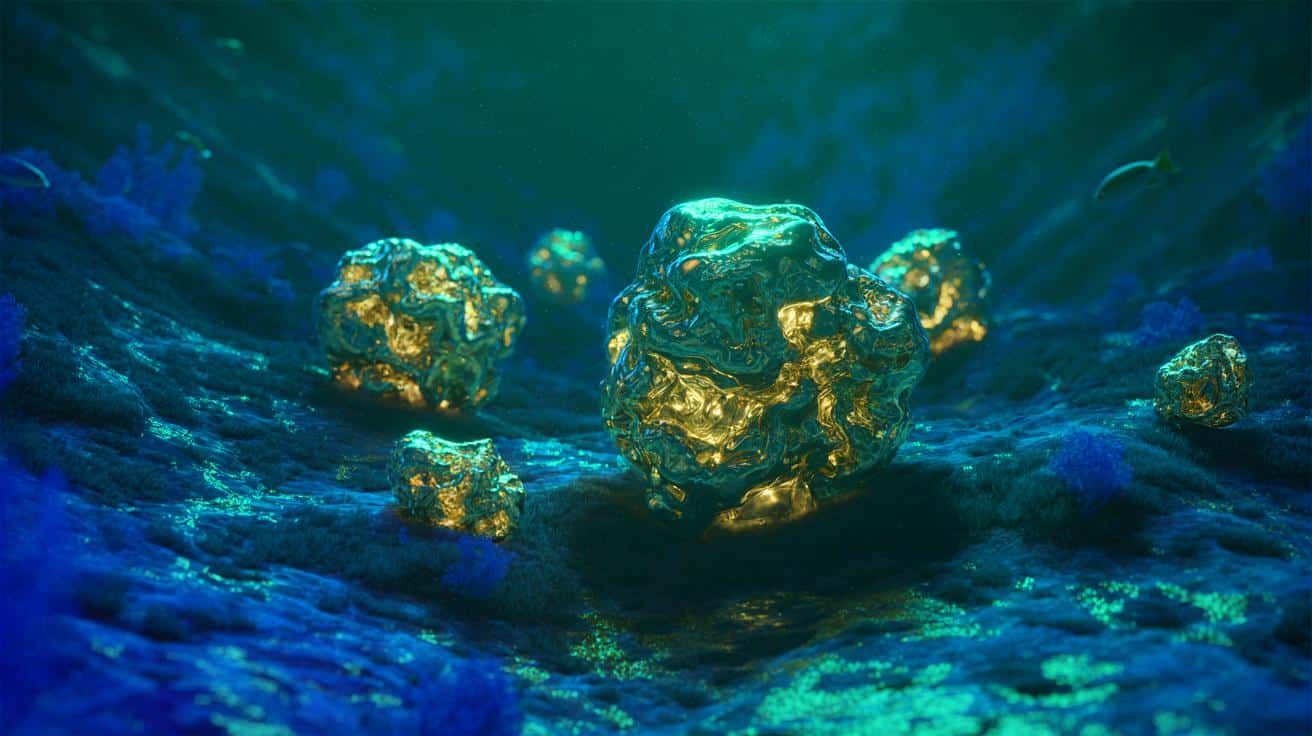
He found that naturally occurring metallic nodules on the ocean floor were producing oxygen. These nodules, rich in valuable minerals such as cobalt, nickel, and lithium, were responsible for the oxygen generation. Published in Nature Geoscience, this discovery challenges existing notions about deep-sea environments and their functioning. The presence of dark oxygen suggests a previously unknown source of oxygen in our oceans, prompting a reevaluation of how these ecosystems operate and thrive.
Natural Batteries: Oxygen Generation May Drive Metallic Nodules
The key to understanding how these metallic nodules generate oxygen lies in their unique properties. Sweetman and his team theorized that the nodules function as natural batteries, splitting ocean water into hydrogen and oxygen through a process known as electrolysis. When immersed in saltwater, the nodules create electrical currents potent enough to separate water molecules, releasing oxygen into the surrounding environment.
Laboratory experiments revealed that the energy produced by these nodules is comparable to that of a standard AA battery. While this energy level is below the threshold required for ocean water electrolysis individually, clusters of nodules on the ocean floor could generate sufficient power to drive this process. This finding raises intriguing questions about the nodules’ role in supporting deep-sea life and highlights the potential environmental significance of the dark oxygen they produce.
Oxygen Sources Endangered by Deep Sea Mining, Scientists Encourage Discretion
The discovery of dark oxygen has far-reaching implications for deep-sea mining, particularly in the mineral-rich Clarion-Clipperton Zone, targeted by numerous companies. Mining poses significant threats to deep ocean environments that rely on these nodules for oxygen. Marine researchers, including Sweetman, caution against the potential devastation of habitats and loss of biodiversity in these largely unexplored areas.
More than 800 marine scientists from 44 countries have signed petitions calling for a moratorium on deep-sea mining, emphasizing the risks of disrupting these fragile ecosystems. Sweetman stresses the importance of considering the impact on dark oxygen generation and the broader ecology. Previous mining efforts in the 1980s caused extensive damage to marine life, with recovery taking years. Therefore, scientific oversight and further investigation into this phenomenon are vital before any large-scale extraction occurs.
The Complexities of Marine Environments and the Future of Ocean Exploration
The revelation of dark oxygen generation in the deep sea offers both an exciting and daunting glimpse into the complexities of marine environments. As scientists continue to unravel the mysteries of our oceans, it becomes increasingly clear that there is much we do not understand about marine ecosystems. The potential impact of deep-sea mining on this newly discovered oxygen source and the ecosystems that depend on it warrants serious consideration. Scientists are calling for more comprehensive studies, emphasizing the need to approach seafloor exploitation with caution, balancing economic interests with the preservation of Earth’s diverse ecosystems.
This discovery underscores the need for a delicate balance between resource extraction and environmental conservation. As we continue to explore the ocean’s depths, how can we ensure that our pursuit of valuable minerals does not come at the expense of vital ecological processes and the health of our planet’s marine life?


Wow, dark oxygen? That’s mind-blowing! 🌊
This is mind-blowing! Who knew that metal nodules could produce oxygen?! 🤯
So, does this mean we might have underestimated the ocean’s contribution to our oxygen supply?
Is this discovery peer-reviewed? How credible is the study?
Should we be worried about deep-sea mining affecting these nodules now? Seems like a risk.
Could this technology be used to help combat climate change?
Why haven’t we discovered this phenomenon earlier? 🤔
Are there any other areas in the ocean where this “dark oxygen” can be found?
Great article! Science never ceases to amaze me. Thank you for sharing this fascinating discovery!
Great article! Thanks for sharing such an intriguing discovery with us. 🌊
Sounds like science fiction! Can’t believe nodules act like batteries. 🤔
I wonder if this could be replicated in a lab for sustainable oxygen production.