




| IN A NUTSHELL |
|
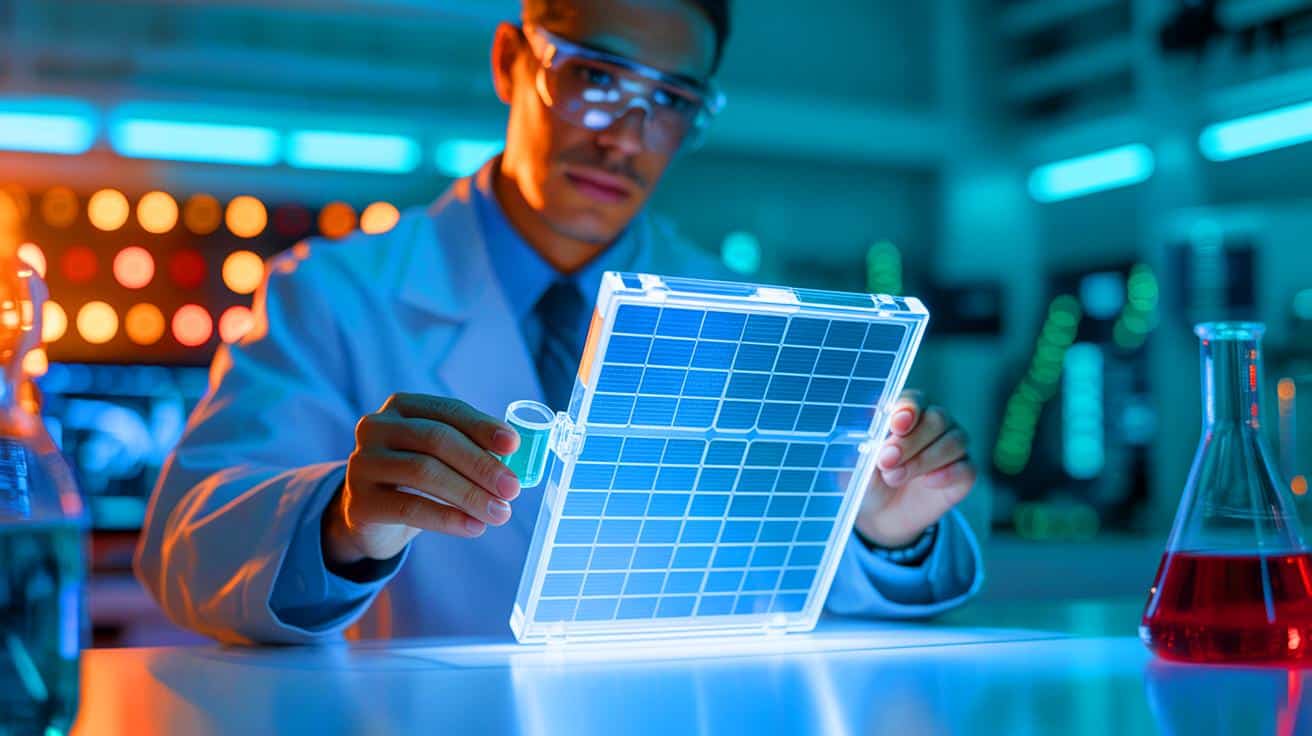
In a groundbreaking development, scientists have engineered a solar panel specifically for indoor use, boasting an efficiency six times greater than existing models. This innovative technology, while still in the experimental phase, holds the promise of rendering traditional batteries obsolete for numerous household electronics. Led by researchers from University College London (UCL), the international team behind this advancement highlights not only the panel’s enhanced efficiency but also its improved durability. These features position the indoor solar panel as a potential game-changer in sustainable energy solutions. As the world increasingly seeks alternatives to conventional energy sources, such advancements are crucial for reducing reliance on disposable batteries.
Perovskite-Based Solar Panels Revolutionize Indoor Energy Harvesting
Traditional silicon-based solar panels have long dominated the energy sector, particularly in outdoor applications. However, their performance diminishes significantly under artificial indoor lighting. Enter perovskite-based solar panels, which are fast becoming the preferred choice for indoor environments. These panels are not only more efficient but also cost-effective to produce. They utilize materials that are readily available and can be manufactured using straightforward processes, akin to printing a newspaper.
The senior author of the study, Dr. Mojtaba Abdi Jalebi, emphasizes the economic advantages of perovskite solar cells, noting their low production costs. Despite their potential, perovskite cells have historically been limited by inherent structural defects. These imperfections, termed ‘traps,’ can hinder electron flow, converting potential energy into heat rather than electricity. Over time, these traps also contribute to the degradation of the cells, reducing their efficiency.
To address these challenges, the research team has developed a novel approach. By optimizing the perovskite cells to contain fewer traps, they have significantly enhanced their energy conversion capabilities. The researchers introduced rubidium chloride to promote uniform crystal growth, thereby minimizing electron traps. Further enhancements were achieved by adding two chemicals, DMOAI and PEACl, which stabilize the cell structure, preventing degradation and ensuring efficient charge flow.
Record-Breaking Energy Conversion Rates Achieved
The results of the team’s efforts are impressive. The newly developed solar cells achieved a conversion rate of 37.6% under indoor lighting conditions of 1000 lux, typical of a well-lit office. This rate sets a new benchmark for solar cells optimized for indoor light, with a bandgap of 1.75 electron volts, tailored to absorb visible light emitted from indoor sources.
Durability tests further underscore the panel’s potential. Over 100 days of testing, the cells retained 92% of their initial efficiency, a significant improvement over control cells, which retained only 76%. A separate test subjected the cells to 300 hours of intense light at 131 degrees Fahrenheit, with the new design retaining 76% of its original efficiency compared to just 47% for untreated cells.
These findings highlight the robust nature of the treated perovskite cells. The research team asserts that their design is six times more efficient than existing indoor solar panels. Moreover, they anticipate that these panels could maintain their performance for up to five years, far surpassing the longevity of current models.
Implications for Everyday Electronics and Sustainability
The introduction of these advanced indoor solar panels could transform the landscape of household electronics. Devices that currently depend on frequent battery replacements, such as remote controls, sensors, and alarms, could be powered by ambient indoor light. This shift not only enhances convenience but also significantly reduces electronic waste.
Dr. Jalebi envisions a future where everyday devices are seamlessly powered by the light already present in homes and offices. The widespread adoption of such technology could alleviate the environmental burden associated with disposable batteries, aligning with global sustainability goals.
The team acknowledges that while the technology is currently confined to laboratory settings, discussions are underway with industry partners. These collaborations aim to explore strategies for scaling up production and commercial deployment. Such advancements could pave the way for a new era of energy-efficient, battery-free electronic devices.
Challenges and Future Prospects for Indoor Solar Technology
Despite the promising results, challenges remain in transitioning from laboratory success to commercial viability. Scaling up production while maintaining the panel’s efficiency and durability is a complex endeavor. Nonetheless, the research team remains optimistic about the potential for widespread adoption.
The rapid expansion of the Internet of Things (IoT) further underscores the need for sustainable energy solutions. As more devices become interconnected, the demand for efficient power sources will only grow. The development of indoor solar panels represents a significant step towards meeting this demand in an environmentally conscious manner.
The study, published in Advanced Functional Materials, highlights the urgent need for alternatives to traditional energy sources. With billions of devices relying on batteries, the shift towards indoor solar panels could mark a pivotal moment in energy sustainability. As the research community continues to innovate, the question remains: How soon will we see these groundbreaking panels integrated into our everyday lives?


Wow, this could change everything! How soon until we can buy these panels? 🌞
Wow, this could be a real game-changer! When can we expect to see these panels in stores? 🤔
37.6% efficiency? That’s impressive! How does it compare to outdoor solar panels?
Looks promising, but how do they perform in low-light conditions? 🤔
Are these panels only for small electronics, or could they power larger appliances too?
How long before my house is battery-free? 😄
I’m a bit skeptical. Are there any hidden costs in the production process?
Does this mean no more AA batteries? Thank you, scientists! 🙌
Finally, a solution to all those dead remote-control batteries! Thank you! 🙌
What about the cost? Will these be affordable for the average household?
I’m skeptical. How do they perform in low-light conditions?
Sounds too good to be true. What’s the catch?
Sounds great, but what about recycling when they reach end of life?
Will these panels work for larger devices or just small electronics?
I’ve heard about perovskites before. Are they safe for indoor use?
This could be the end of battery waste. I hope it happens soon! 🌍
This is great news! Can’t wait to see my house powered by indoor lights. 😄
Is there any potential health risk having these panels indoors?