




| IN A NUTSHELL |
|
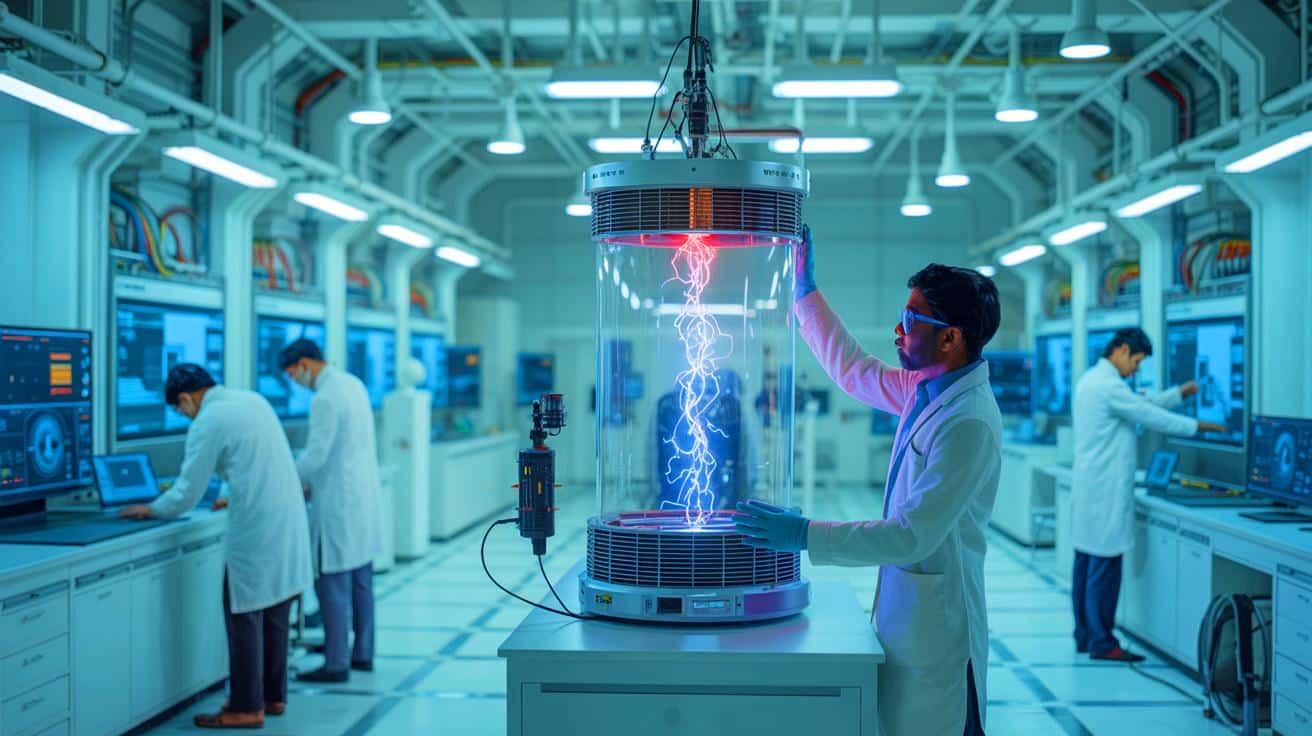
As the global demand for sustainable energy intensifies, countries worldwide are exploring innovative solutions to meet their needs. The United States continues to rely heavily on natural gas, while Japan places its bets on hydrogen as a future energy source. However, India’s recent advancements in energy technology have captured international attention. Indian scientists have developed a groundbreaking device capable of extracting energy from the air, potentially revolutionizing the way we generate electricity. This innovation promises not only to make energy more affordable but also to significantly reduce pollution—a vital step in combating climate change.
Fossil Dependence or a Breath of Clean Air?
The global reliance on fossil fuels remains a significant hurdle, especially in countries like the United States, where natural gas still plays a dominant role in the energy mix. The burning of natural gas contributes substantially to carbon emissions, exacerbating the ongoing climate crisis. Despite this dependence, the U.S. has been making strides to reduce its carbon footprint by investing heavily in renewable energy sources like solar and wind power. These efforts are part of a broader strategy to transition to cleaner energy solutions.
While the U.S. continues its journey toward sustainability, India has taken a bold step forward with a revolutionary technological breakthrough. Indian scientists have developed a device that promises to change how energy is generated and stored. This device captures energy directly from the air, offering a cost-effective and environmentally friendly alternative for electricity production. Such innovation is particularly promising for developing countries grappling with energy and environmental challenges.
India’s Bold Bet: Will Air-Powered Batteries Rewrite the Energy Rulebook?
India’s innovative technology distinguishes itself by harnessing energy from an abundant and freely available resource: air. The device uses a reengineered zinc-air battery capable of storing energy while also generating hydrogen peroxide (H₂O₂) as a byproduct. H₂O₂ is a crucial compound utilized in various industrial processes, such as water purification and textile waste cleaning. This dual functionality enhances the battery’s potential applications across different sectors.
The zinc-air battery operates by controlling the chemical reaction at the cathode, converting oxygen from the air into hydrogen peroxide rather than water. This process is facilitated by a carbon-based catalyst, which is both cost-effective and sustainable compared to traditional methods that rely on precious metals like palladium.
“If you don’t control the oxygen reduction reaction, it will only form water. The strategy here is to control the rate of this reaction to produce H₂O₂, not water,” explained Professor Aninda Bhattacharyya, research leader at the Indian Institute of Science (IISc).
Can Airborne Energy Also Clean Our Waters?
The multifaceted capabilities of the zinc-air battery place it in a unique position to address two critical issues simultaneously. In regions with limited energy access, such as rural or off-grid areas, the battery can provide electricity while purifying contaminated water. This makes it a low-cost, multifunctional solution that could significantly improve living conditions in underserved communities.
The potential benefits of this innovation extend beyond energy production and water purification. By using readily available materials, the technology remains accessible to countries with limited resources, offering a dual solution to pressing problems. Moreover, it aligns with environmental sustainability goals by utilizing air and zinc, thus avoiding reliance on rare earth metals or environmentally harmful processes. The zinc-air battery exemplifies how technology can be harnessed to address multiple challenges concurrently.
The Global Implications of India’s Energy Innovation
India’s air-powered energy device serves as a beacon of hope for a sustainable future, with implications that extend far beyond its borders. By providing a low-cost, environmentally friendly alternative to traditional energy sources, the zinc-air battery could help reduce global dependency on fossil fuels. This innovation not only addresses the pressing need for clean energy but also presents a viable solution to water pollution, marrying energy production with environmental preservation.
As nations worldwide grapple with the dual challenges of energy and environmental security, India’s technological breakthrough could serve as a model for integrating sustainable practices into energy systems. The success of such innovations will depend on global cooperation and investment in clean technologies. Will India’s pioneering approach inspire other countries to rethink their energy strategies and prioritize sustainable development?



Wow, this is amazing! Could this technology be scaled up for industrial use? 🌍
This is incredible! How soon can we expect this technology to be available globally? 🌍
Finally, a battery that does more than just power my gadgets. Now it can clean my water too! 💧⚡
Is this zinc-air device already in use, or is it still in the experimental phase?
India is really leading the charge in sustainable energy. Kudos to the scientists! 👏
Can this technology be scaled up for industrial use, or is it mainly for small-scale applications?
Thank you, India! What an incredible leap towards sustainable energy! 🙌
Wait, so it pulls power from thin air? Are we sure this isn’t just science fiction? 🤔
Bravo India! But how cost-effective is this compared to traditional power sources?
How much energy can these devices actually produce? Are they enough for a household?
How does this zinc-air device compare to solar or wind power in terms of efficiency?
Does anyone else think this sounds a bit too good to be true?
Is there any risk of pollution from the hydrogen peroxide byproduct?
It’s amazing to see innovation tackling both energy and water issues. Double win! 🏆