



| IN A NUTSHELL |
|
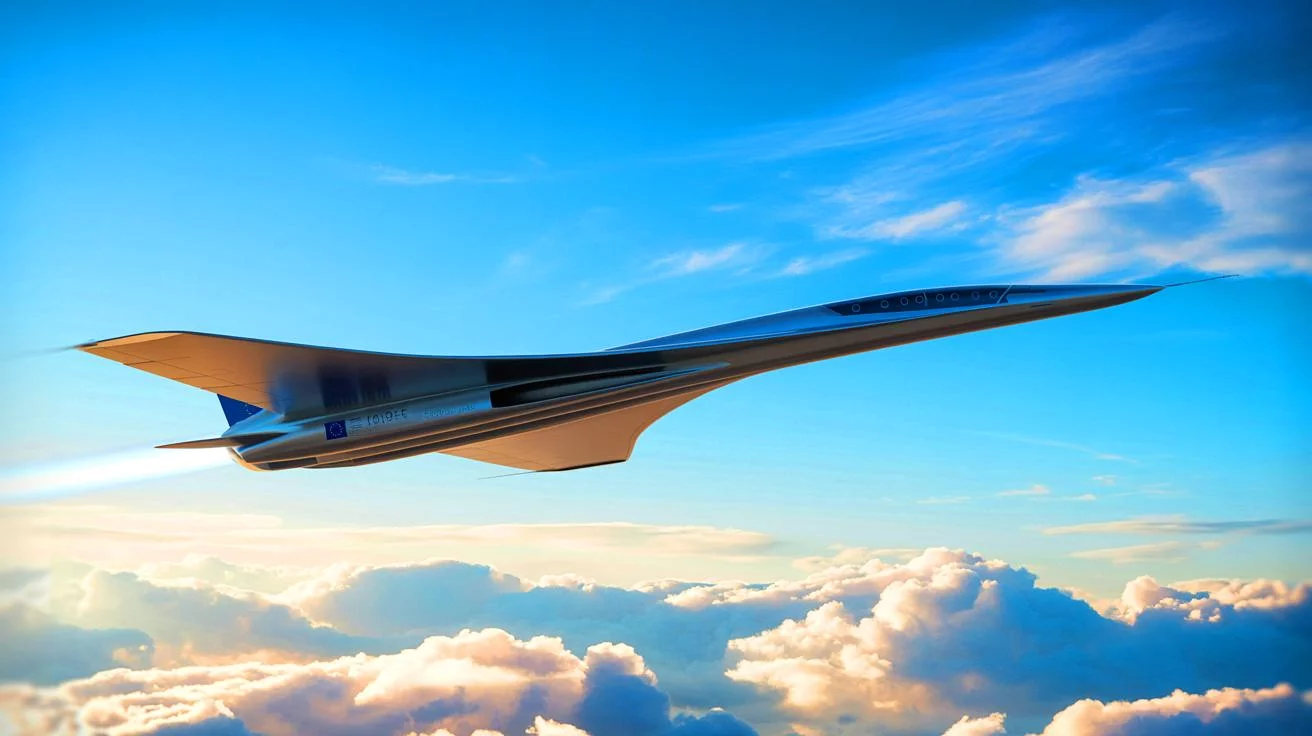
In the ever-evolving world of aerospace innovation, the European Space Agency (ESA) is embarking on an ambitious endeavor with the development of a supersonic aircraft named INVICTUS. This revolutionary project aims to transform the future of air travel by significantly reducing flight times while also prioritizing environmental sustainability. Although still in its conceptual phase, INVICTUS promises to push the boundaries of speed and technology, potentially reshaping global transportation.
Breaking Speed Barriers: INVICTUS’s Potential
The INVICTUS project aims to surpass the legendary Concorde by achieving speeds over twice as fast. The Concorde, a marvel of Franco-British engineering, connected Paris and New York in a mere 3.5 hours. INVICTUS, however, aspires to cut this journey time to an astonishing 1.5 hours by reaching speeds of Mach 5, or five times the speed of sound. This leap forward in speed could redefine the way we think about long-distance travel.
Despite the excitement, the commercial viability of INVICTUS remains uncertain. As a project spearheaded by the ESA, its primary focus may be on scientific and space-related missions. However, a statement by Tommaso Ghidini of the ESA hints at broader applications:
“Hypersonic flight is not just the next frontier; it’s the gateway to a new paradigm of mobility, defense, and space access.”
This potential opens doors to exciting possibilities for the future of aviation and beyond.
Engineering the Future: Challenges Ahead
Visually, INVICTUS draws inspiration from another iconic supersonic aircraft, the SR-71 Blackbird. Yet, the task at hand is not merely to emulate past successes but to exceed them. The project has been entrusted to Frazer-Nash, a British engineering firm, which faces the monumental challenge of developing a thermal shield capable of withstanding the intense heat generated at supersonic speeds.
The task also involves selecting advanced engines to ensure the aircraft’s efficiency and reliability. With a deadline of July 15, 2026, Frazer-Nash must provide the ESA with initial findings on the flight system. The pressure is on to deliver an almost flawless plan, supported by a research budget of 7 million euros. This endeavor is a true test of engineering prowess and innovation.
Environmental Considerations: A Green Approach
As the world becomes increasingly aware of environmental concerns, the development of supersonic aircraft like INVICTUS must consider their ecological impact. The aviation industry is under pressure to reduce its carbon footprint, and the ESA is no exception. The challenge lies in balancing the demands for speed and efficiency while minimizing environmental harm.
INVICTUS seeks to address these concerns by incorporating green technologies and sustainable practices. This includes the potential use of alternative fuels and materials that reduce emissions. The success of this project could set a precedent for future aerospace developments, demonstrating that speed and sustainability can coexist.
Global Implications: Redefining Mobility and Defense
The successful implementation of INVICTUS could have far-reaching implications beyond just faster travel times. Hypersonic technology holds the potential to revolutionize global mobility, defense strategies, and access to space. With Europe taking a lead, this project could shift the balance of aerospace power, inspiring other nations to invest in similar technologies.
The integration of hypersonic aircraft into commercial and military sectors could redefine transportation infrastructure and defense capabilities worldwide. This raises questions about international collaboration and competition in the aerospace industry, as countries strive to secure their place in this emerging field.
As INVICTUS progresses from concept to reality, the world watches with anticipation. The potential for groundbreaking advancements in speed, technology, and sustainability is immense. Yet, questions remain about the project’s commercial viability, environmental impact, and geopolitical consequences. Will INVICTUS pave the way for a new era of aerospace innovation, or will it face challenges that hinder its success?