


| IN A NUTSHELL |
|
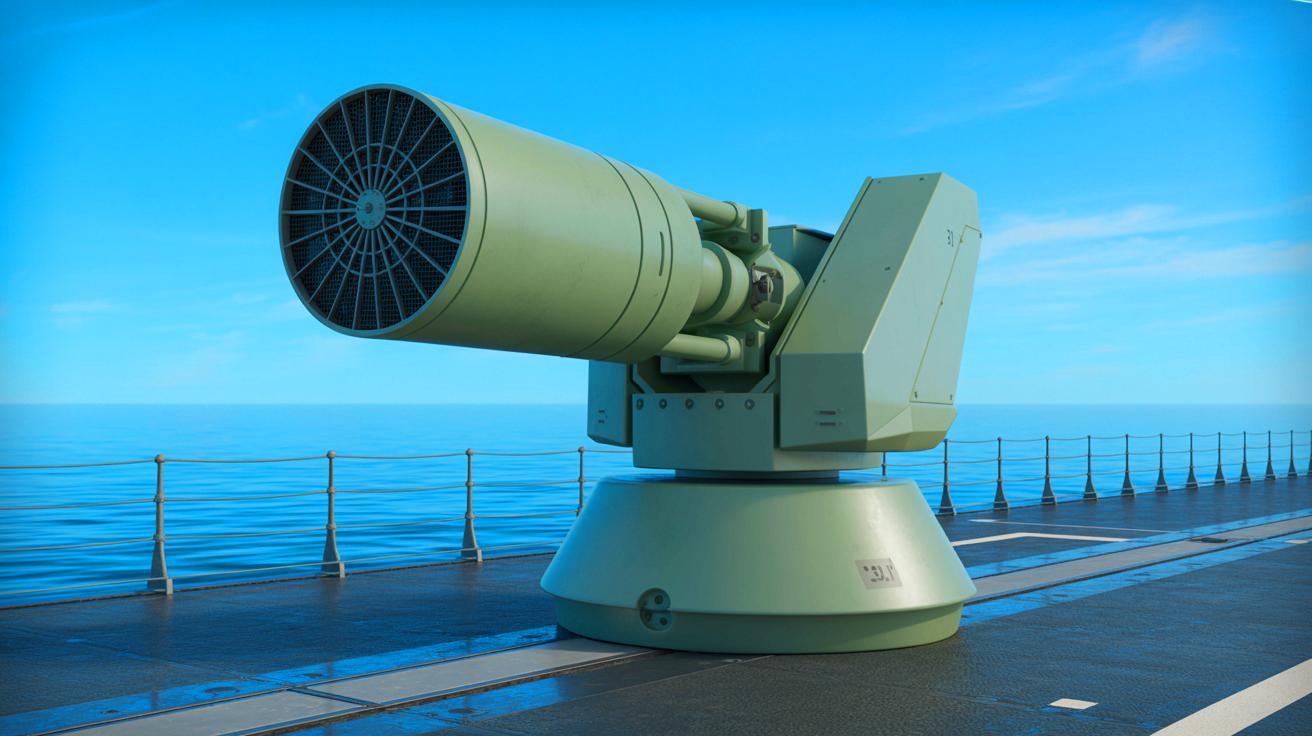
Epirus Inc., a leading defense contractor, has recently unveiled its revolutionary high-energy microwave weapon, the Leonidas H2O. This breakthrough technology successfully neutralized four nautical vessels during testing, marking a significant advancement in modern warfare. The Leonidas H2O is poised to fill a critical gap in defense capabilities, especially for the U.S. Department of Defense. As interest in directed energy weapons increases, this innovation could potentially reshape defense strategies against small vessels, UAVs, and drone swarms. The implications of this technology extend beyond immediate military applications, promising broader strategic shifts.
Unveiling the Leonidas H2O: A New Era in Directed Energy Weapons
The Leonidas H2O represents a significant addition to the array of directed energy weapons currently being developed. Epirus Inc. responded to the U.S. Navy’s 2019 call for non-kinetic solutions under the Vessel Incapacitating Power Effect Radiation (VIPER) program. This initiative, part of the Naval Surface Warfare Center’s efforts, sought to develop non-lethal weaponry capable of incapacitating marine vessels. Until now, no system had met the program’s rigorous requirements.
This breakthrough arrives amid other advancements in directed energy technology. The U.S. Army’s microwave weapon, Thor’s Hammer, showcased its capabilities by neutralizing an enemy drone swarm in 2023. Raytheon, another key player, is developing similar technologies, although they remain in the prototype phase. The Leonidas H2O, however, distinguished itself through a successful demonstration at the U.S. Navy’s Advanced Naval Technology Exercise Coastal Trident program, suggesting it is nearing readiness for operational deployment.
The potential of directed energy weapons continues to expand as the U.S. Army and international forces, like Ukraine, explore combat laser prototypes. The Leonidas H2O’s successful deployment could set a new benchmark for military technology, offering a versatile tool against diverse threats.
Understanding the Power and Efficiency of Leonidas H2O
The Leonidas H2O displayed impressive capabilities during testing, operating at only 50% of its potential power. Despite this limitation, it successfully neutralized a range of vessel motors, demonstrating its effectiveness under constrained conditions. The maximum power output of the system remains classified, adding an element of intrigue to its full potential.
This system’s energy efficiency sets it apart from other high-powered microwave weapons. By delivering high energy with lower peak power, the Leonidas H2O ensures prolonged effects and cumulative impacts on targets. This efficiency provides advantages in size, weight, and mobility, addressing limitations of previous systems.
During tests, the Leonidas H2O faced a simulated attack by vessels with motors ranging from 40 to 90 horsepower. Despite challenging conditions, it achieved a perfect score, stopping all four vessels’ motors. While actual test footage was not released, Epirus provided animations to illustrate the weapon’s capabilities.
Integration into Army and Marine Corps Platforms
The versatility of the Leonidas H2O extends beyond maritime applications. A similar prototype has been delivered to the U.S. Army for counter-airborne threats, supporting the Indirect Fire Protection Capability—High-Power Microwave program. This system is undergoing further testing at Combatant Commands.
Epirus is also adapting its technology to meet the U.S. Marine Corps’ needs. The Leonidas Expeditionary system is designed for USMC Expeditionary Advanced Base Operations and counter-unmanned systems missions. Its compact energy-based design leverages Epirus’s phased array architecture, allowing scalability for diverse operational requirements.
Epirus’s integration of Leonidas technology across different military branches positions it as a leader in directed energy solutions. The flexibility and adaptability of these systems promise to significantly enhance U.S. defense capabilities.
Future Prospects and Military Strategy Implications
Following successful tests, Epirus has been invited to participate in the ANTX CT 25, highlighting ongoing discussions with the U.S. Navy and Coast Guard about high-energy microwave technology benefits. The scalability of the Leonidas platform is a key advantage, with multiple form factors developed to meet various mission requirements.
The Department of Defense has invested significant resources in non-kinetic vessel stop solutions. Leonidas H2O is the first to provide a proven and effective technology to address this capability gap. As Epirus’s innovations gain recognition, the potential for widespread adoption across military branches increases.
Epirus’s commitment to advancing directed energy solutions could soon lead to tangible changes in military strategy and operations. As the Leonidas H2O sets a new standard, what additional groundbreaking advancements might emerge in the realm of directed energy weapons?




Isn’t it ironic that something called “H2O” is freezing boats? 🤔
Does anyone else think this sounds like something out of a sci-fi movie? 🚀
How effective is this against larger vessels, like battleships?
What are the potential risks of deploying such a powerful weapon?
Great article! Thanks for the detailed explanation. 👍
Can this technology be used for civilian purposes, like stopping rogue drones?
I wonder how much it costs to deploy a system like this.
This is both fascinating and terrifying at the same time! 😮