


| IN A NUTSHELL |
|
Deep beneath Greenland’s ice sheet lies a relic of Cold War ambition: Camp Century. This once-secret U.S. military base, buried under 100 feet of ice, symbolizes a bygone era of geopolitical tension. Recent discoveries by NASA scientists, however, have brought this forgotten installation back into the spotlight. Using advanced radar technology, researchers have uncovered the remnants of this underground city, reigniting concerns about the environmental hazards it poses. As global warming continues to melt the ice that once cloaked these secrets, the world is forced to confront the long-term consequences of past military endeavors.
The Birth of Camp Century
In the late 1950s, amid the escalating tensions of the Cold War, the United States embarked on a bold military project: Camp Century. Located in northwest Greenland, this base was constructed by the U.S. Army Corps of Engineers between 1959 and 1960. The ambitious plan involved digging a vast network of 21 tunnels, stretching over 1.86 miles in total length, beneath the thick ice sheet. Dubbed the “city under the ice,” Camp Century was designed to house up to 200 soldiers year-round, with the capacity to store a staggering 600 nuclear medium-range ballistic missiles.
Powered by a nuclear reactor, the base was part of Project Iceworm, an initiative to establish a covert network of nuclear launch sites. These sites aimed to withstand a first strike, providing a strategic advantage in the volatile geopolitical climate of the time. However, the project was fraught with challenges. The ice sheet’s instability, coupled with logistical difficulties, led to the project’s eventual abandonment in 1967, just eight years after its inception.
Environmental Concerns and Buried Waste
When Camp Century was abandoned, it left behind a significant environmental footprint. The base was not fully decommissioned, and an estimated 200,000 liters of fossil fuel and 24 million liters of other waste, including sewage, were left to the elements. Scientists now worry that as the ice continues to melt, this waste could seep into the ice sheet and eventually reach the ocean, posing a considerable environmental threat.
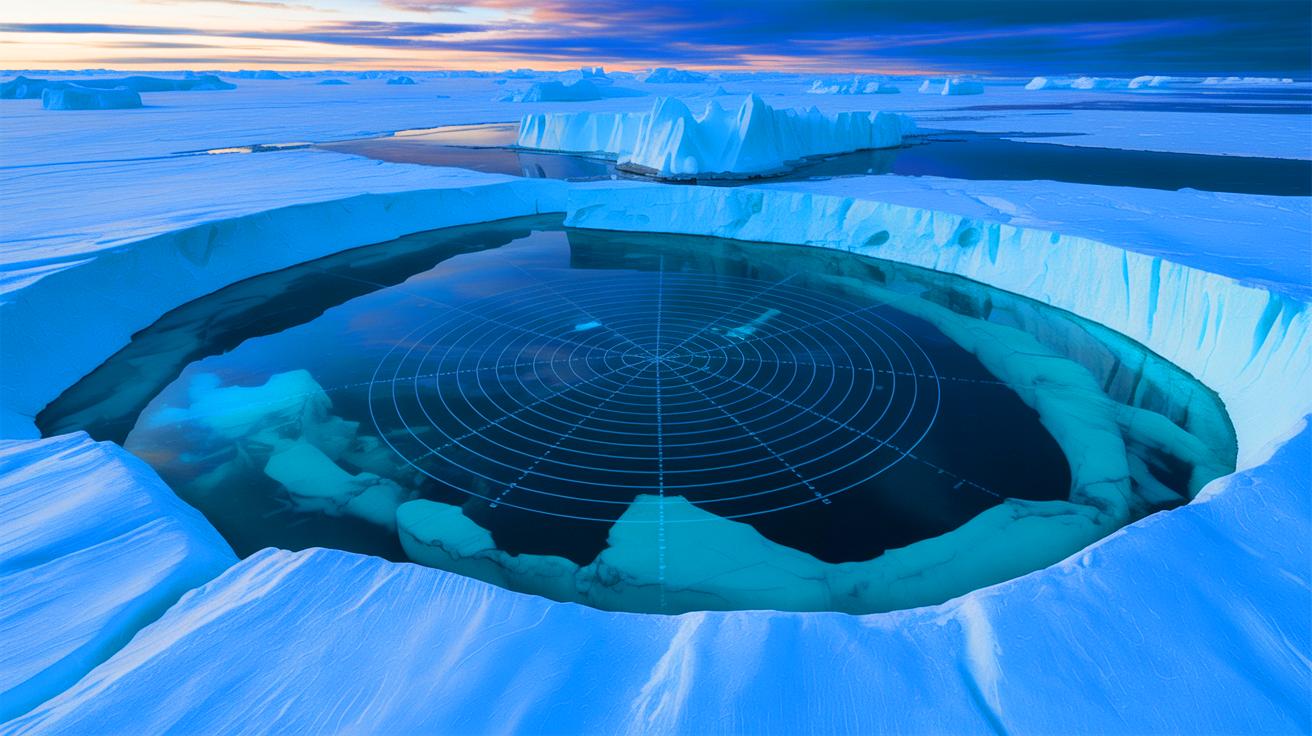
Over the decades, the ice has continued to bury the base deeper, but it has not erased it. Occasional radar surveys have revealed the presence of Camp Century beneath the ice, likening it to an “environmental time bomb.” In April 2024, NASA’s Uninhabited Aerial Vehicle Synthetic Aperture Radar (UAVSAR) provided unprecedented detail of the base’s structures, highlighting the potential risks of the buried waste. The melting ice not only threatens to release this waste but also contributes to rising sea levels, compounding the global challenge of climate change.
The Role of Advanced Radar Technology
NASA’s recent radar surveys have played a critical role in bringing Camp Century back into the public eye. Using UAVSAR technology, scientists were able to differentiate individual structures within the buried base, offering insights previously unavailable. This technological advancement is crucial for understanding the current state of Camp Century and assessing the potential environmental impact.
While the radar data has not yet led to direct intervention, it provides valuable information on the thickness of the ice sheet. This knowledge is essential for predicting how the melting ice will affect global sea levels. As cryospheric scientist Alex Gardner from NASA’s Jet Propulsion Laboratory points out, “Without detailed knowledge of ice thickness, it is impossible to know how the ice sheets will respond to rapidly warming oceans and atmosphere.”
The Future of Camp Century and the Greenland Ice Sheet
As climate change accelerates, the fate of Camp Century remains uncertain. The Greenland ice shelves have lost 35 percent of their volume since 1978, and this rapid melting could expedite the release of waste from the base. However, scientists are primarily focused on understanding the broader implications of ice loss for sea level rise, rather than addressing the specific challenges posed by Camp Century.
Efforts to monitor and study the ice sheet’s thickness are vital for future projections. These studies could inform potential mitigation strategies for the environmental risks associated with Camp Century. Yet, with the ice continuing to recede and the global climate crisis showing no signs of abating, the question remains: how will the world address the legacy of past military activities while navigating the present challenges of climate change?
The story of Camp Century is a poignant reminder of the long-lasting impact of human endeavors on our planet. As the ice continues to melt, exposing remnants of the past, we are faced with the challenge of addressing both historical and current environmental issues. What steps should be taken to mitigate the potential hazards of buried waste, and how can we ensure that future projects consider their long-term environmental implications?