



| IN A NUTSHELL |
|
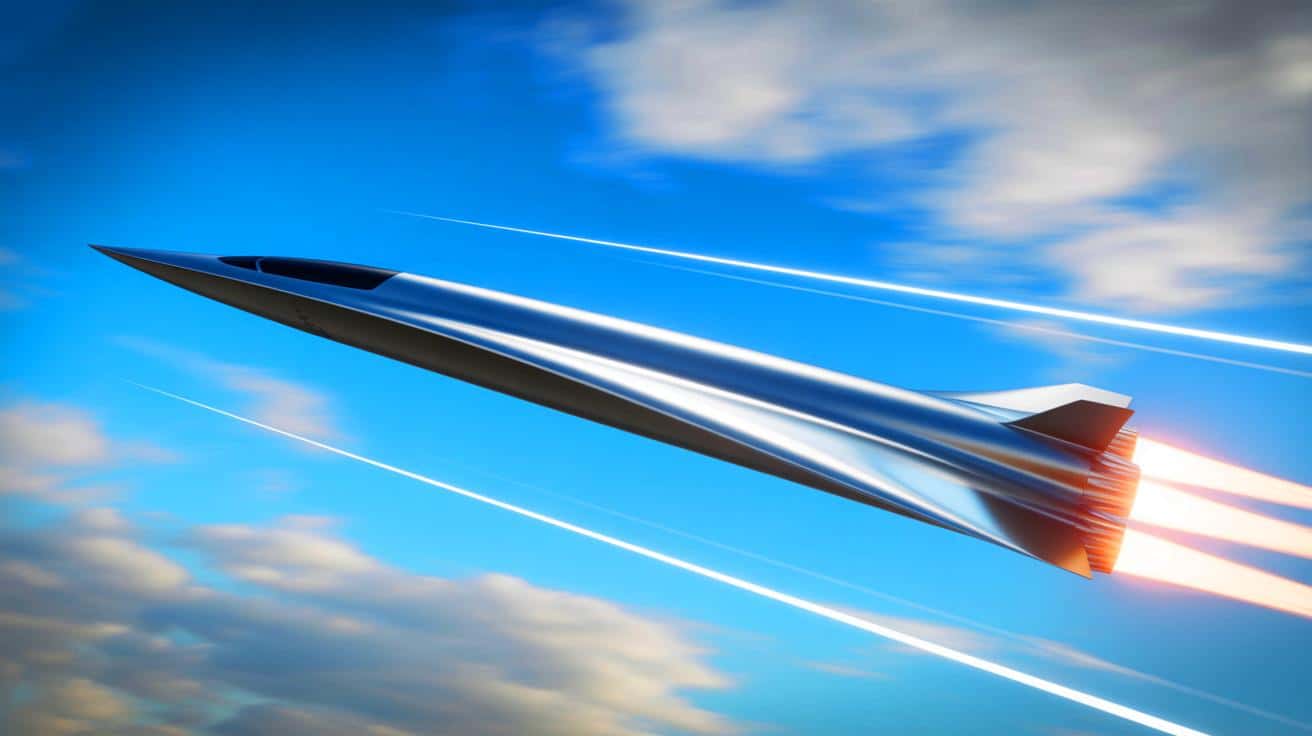
Recently, GE Aerospace conducted a significant test with its new Atmospheric Test of Launched Airbreathing System (ATLAS), marking a pivotal advancement in hypersonic technology. This system leverages a solid-fuel ramjet, an engine with no moving parts, to propel vehicles to speeds exceeding Mach 5. Such innovations have the potential to revolutionize both military defense systems and commercial air travel. The ability to reach hypersonic speeds could transform long-distance flights, making them significantly shorter, and render existing air defense systems obsolete as these vehicles could pass by undetected. This technological leap is not just about speed, but also about efficiency and simplicity in engine design.
Understanding The Mechanics Of Ramjets
Ramjets have long fascinated engineers with their seemingly magical operation. Unlike conventional jet engines, ramjets have no moving parts. Instead, they rely on the vehicle’s speed to compress incoming air. As air enters the engine, it compresses and heats up due to inertia. This process allows the engine to generate thrust without the need for compressors or turbines.
One of the primary engineering challenges with ramjets is managing the intense heat generated during operation. The incoming air must be decelerated to subsonic speeds before it becomes excessively hot, which could potentially damage the engine. Despite these challenges, the simplicity and lightweight nature of the ramjet make it ideal for supersonic and hypersonic applications.
The absence of moving parts means fewer opportunities for mechanical failure, which is crucial for high-speed flight where reliability is paramount. This design also contributes to the engine’s efficiency, making it a preferred choice for applications that demand high speed and reliability.
The Innovative Solid-Fuel Ramjet
GE Aerospace’s ATLAS program takes the ramjet concept a step further by introducing a solid-fuel ramjet (SFRJ). This innovation eliminates the need for liquid fuel systems by lining the engine’s interior with a solid hydrocarbon fuel. As the engine operates, this fuel gradually burns away, revealing fresh layers for continuous combustion.
Unlike traditional solid rocket fuels that carry their own oxidizers, the SFRJ relies on atmospheric oxygen for combustion. This approach not only reduces the engine’s weight but also increases its efficiency. The specific impulse of the SFRJ can reach 1,000 seconds, compared to about 240 seconds for traditional solid fuel rockets, indicating a significant improvement in efficiency.
This design simplifies the engine, reducing costs and making it more suitable for applications where engines are essentially disposable. By cutting down on mechanical components, GE Aerospace has also managed to make the engine lighter and more cost-effective, crucial factors for both military and commercial applications.
Testing And Future Prospects
To validate the SFRJ's performance, GE Aerospace conducted tests using the ATLAS Flight Test Vehicle. This vehicle was attached to an F-104 Starfighter, modified as a test platform capable of reaching Mach 2.2. These tests aimed to study the aerodynamics of the system, as real-world conditions, including vibrations and temperature variations, cannot be fully replicated in wind tunnels.
During these tests, the ramjet was not ignited to avoid potential complications while attached to the jet. Instead, the focus was on understanding the aerodynamic behavior of the system. Future tests will involve free-flight scenarios where the engine can be ignited and tested under operational conditions.
"This marks a pivotal moment for GE Aerospace as we showcase our solid fuel ramjet technology in flight for the first time," said Mark Rettig, vice president and general manager of Edison Works Business & Technology Development at GE Aerospace.
https://www.energy-reporters.com/industry/australian-laser-weapon-shatters-drone-threats-with-terrifying-precision-is-this-the-future-of-warfare/
The success of these tests could pave the way for more frequent testing under realistic conditions, providing invaluable insights into the system's behavior and performance.
Implications For The Future
The successful implementation of solid-fuel ramjet technology could have far-reaching implications for both military and civilian aviation. Hypersonic missiles and aircraft could fundamentally alter global defense strategies by outpacing current detection and response systems. Additionally, commercial flights could see drastic reductions in travel time, potentially opening new frontiers in global connectivity.
However, the deployment of such technology also raises questions about the future of air travel and defense. As countries race to develop hypersonic capabilities, the geopolitical landscape could shift, leading to new alliances and rivalries. Moreover, the environmental impact of hypersonic travel remains to be fully understood, prompting further research and discussion.
As GE Aerospace continues to develop and test hypersonic technologies, how will these advancements reshape the future of aviation and defense? What measures will be necessary to ensure that these powerful technologies are used responsibly and sustainably?



This is incredible! Could this tech eventually be used for commercial flights? ✈️
Wow, no moving parts?! That’s some next-level wizardry! 🧙♂️
So, no moving parts? Sounds like magic to me! 😲
How do they manage the intense heat without traditional cooling systems? 🤔
Will the introduction of hypersonic technology affect the price of air travel?
I’m skeptical. How do they manage the heat without moving parts?
Great article, but I can’t help but wonder about the environmental impact of hypersonic travel.
Thank you for the informative article. The future of aviation seems exciting!
Does this mean goodbye to jet fighters? That’s a big leap!
Solid-fuel ramjet? Sounds like a fancy name for a firework! 🎆
Could this tech be used for civilian purposes, like fast travel between continents?
This is fascinating! But what are the potential risks of adopting this technology for commercial flights?
Gr8 job GE! Hypersonic travel could be the next big thing! 🚀
Wait, is this safe? Hypersonic speeds sound a bit dangerous.
I’m skeptical about this “revolutionary” tech. Remember Concorde anyone?
I’m curious about the environmental impact of these engines. Any insights?
The solid-fuel ramjet sounds efficient, but are there any downsides?
Haha, I wonder if my Amazon orders will arrive faster now! 📦
This sounds like something out of a science fiction movie. Amazing!
How long before this tech is fully operational and used in the military?
Impressive technology! How does it compare to current jet engine efficiencies?
Are there any known risks with deploying hypersonic technologies?
Can’t wait for the day I can fly from New York to Tokyo in a couple of hours!
Given the speed, how do they handle potential collisions or accidents?
Solid-fuel ramjets? Sounds like a game-changer for aviation!
Does hypersonic travel mean more noise pollution? 🤔
Is this technology being pursued by other countries too?
Will this tech be affordable for commercial airlines?
Thanks for the update! Looks like the future of air travel is here! ✈️
How do they test these engines without moving parts? Seems complex.
Hopefully, this tech will be used responsibly and not just for military purposes.
Is there any possibility of using this tech for space travel? 🚀
This is fascinating! How do they ensure safety at such high speeds?
Awesome article! Are there any plans to commercialize this tech soon?
What are the geopolitical implications of widespread hypersonic technology?
Hypersonic speeds? I can barely handle turbulence on a regular flight! 😂
Are there any plans to test this tech in passenger aircraft?
How does this new tech affect current air defense systems?
Can’t help but wonder about the maintenance of these engines with no moving parts.
Fascinating read! Looking forward to more updates on this tech. 👍