




| IN A NUTSHELL |
|
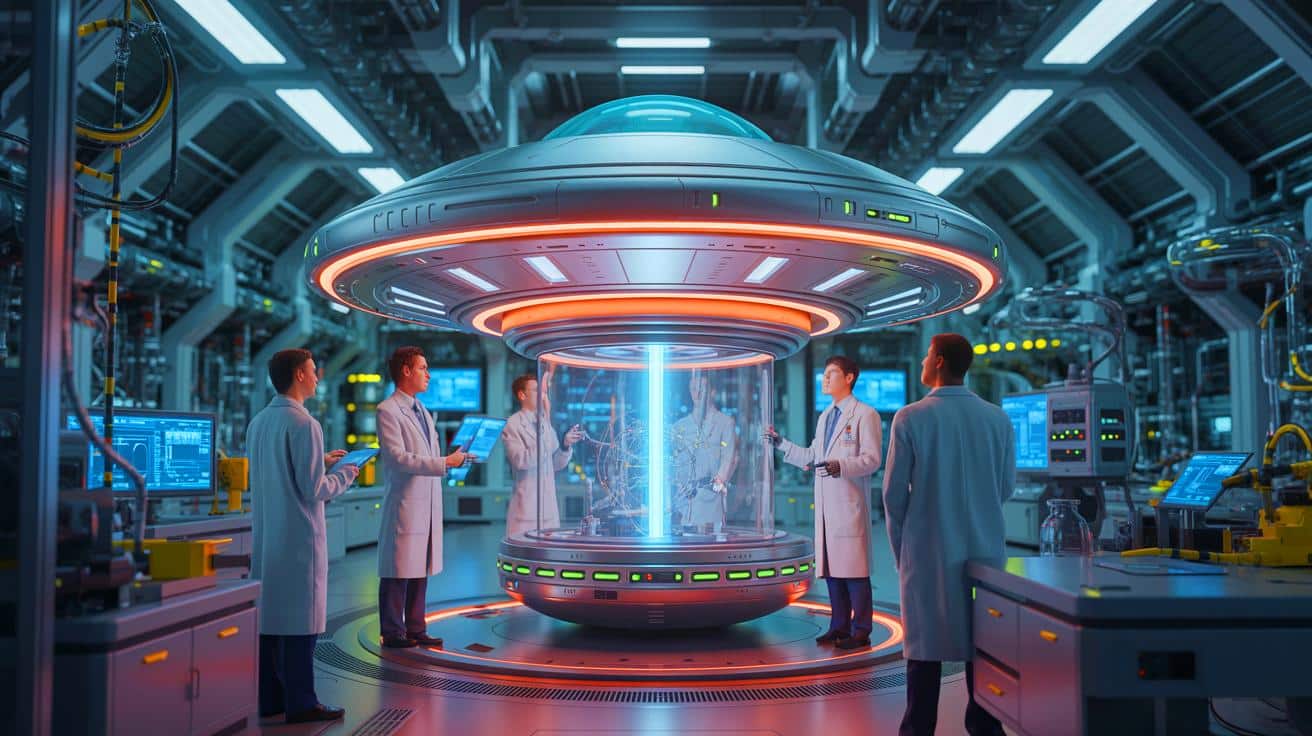
In a European laboratory, nestled away from the eyes of the world, a machine resembling a UFO is quietly revolutionizing our understanding of energy. This peculiar structure, far from being a harbinger of extraterrestrial life, holds the key to potentially limitless power. The machine, known as Stellaris, aims to redefine energy production through nuclear fusion—an ambitious goal that could reshape economies, alter geopolitical landscapes, and significantly reduce our carbon footprint. As researchers push the boundaries of what is scientifically possible, Stellaris stands as a testament to human ingenuity and the relentless pursuit of sustainable solutions to power the future.
From Splitting Atoms to Star Power: Why Fusion Could Change Everything
Nuclear fusion, the process that powers the Sun, represents the next frontier in energy production. Unlike nuclear fission, which involves splitting atoms, fusion merges hydrogen atoms at extreme temperatures to release vast amounts of energy. This process promises several advantages over existing energy sources. For starters, hydrogen, the primary fuel for fusion, is abundant and can be extracted from water. This means a virtually limitless supply of fuel.
Moreover, fusion produces zero greenhouse gas emissions, a stark contrast to fossil fuels that contribute to climate change. Additionally, fusion eliminates the risk of catastrophic accidents akin to Chernobyl or Fukushima, due to its inherent safety features. However, the challenge lies in achieving and maintaining the required temperature of over 100 million degrees Celsius. Only at this extreme heat do hydrogen atoms fuse, releasing their energy. Overcoming this hurdle is critical for fusion to become a viable energy source.
Stellaris: Turning Star Physics into Clean Power
The Stellaris machine, developed by Proxima Fusion, a spin-off of the Max Planck Institute, represents an innovative approach to harnessing fusion energy. Its design, based on a quasi-isodynamic stellarator, incorporates high-temperature superconducting magnets. This configuration offers distinct advantages. First, Stellaris provides continuous stability without the need for an internal electrical current, unlike its predecessor, the tokamak.
Stellaris is also designed to be more energy-efficient, operating continuously with less energy input. Furthermore, the use of artificial intelligence significantly accelerates design simulations, reducing what once took weeks to mere minutes. Importantly, Stellaris can be constructed using existing materials, facilitating its integration into the current supply chain. Inspired by the Wendelstein 7-X, the world’s largest stellarator, Stellaris aims to improve energy output and reduce construction costs, making fusion a feasible commercial power source.
From UFO to Power Plant: Europe’s Bet on the Stellaris Fusion Revolution
Proxima Fusion is on an accelerated timeline to demonstrate the potential of nuclear fusion. Their ambitious plan includes building a demonstrator, named Alpha, within six years. This prototype will be the first stellarator to achieve continuous-state net energy. By the 2030s, Proxima Fusion envisions constructing a 1-gigawatt commercial reactor, marking a significant milestone in energy innovation.
However, realizing this vision is not without significant challenges. The estimated cost of building a reactor ranges from $5 to $10 billion, necessitating substantial investment. Additionally, some of the required technologies are still under development. Despite these obstacles, Stellaris symbolizes a transformative shift in energy production. If successful, it could position Europe as a leader in nuclear fusion, offering a glimpse into a future where clean, abundant energy is the norm.
The Global Implications of Fusion Energy
The pursuit of nuclear fusion extends beyond technological achievements; it carries profound implications for global energy dynamics. Successful fusion energy could reduce our dependence on fossil fuels, curbing greenhouse gas emissions and mitigating climate change. It may also lead to a reshaping of geopolitical alliances, as countries with advanced fusion capabilities gain strategic advantages.
Furthermore, fusion energy has the potential to drive economic growth, creating jobs and spurring innovation. However, achieving fusion energy on a commercial scale requires international collaboration, pooling resources, and expertise to overcome technical and financial challenges. As the world grapples with energy crises and environmental concerns, the promise of fusion as a clean and virtually infinite energy source offers hope for a sustainable future.
The Stellaris machine, with its UFO-like appearance, symbolizes more than just scientific curiosity; it embodies the aspiration for a sustainable energy future. As researchers continue their quest to unlock the secrets of nuclear fusion, the world watches with bated breath. Will fusion energy finally become the cornerstone of a cleaner, more prosperous world? And if so, how will we navigate the challenges and opportunities this new era of energy presents?

Wow, this is like something out of a sci-fi movie! 🚀
Wow, this is mind-blowing! Could we finally see the end of fossil fuels? 🚀
How soon can we expect to see this technology in action?
Is this technology safe? How do they prevent meltdowns?
I’m skeptical. We’ve been hearing about nuclear fusion for decades with no real progress.
Sounds like science fiction. Why hasn’t this been done before?
Thank you for the in-depth article. It’s fascinating to see how close we are to a new energy era.
Thank you for the informative article! It’s inspiring to see such innovation in energy. 😊
Is it really possible to achieve over 100 million degrees Celsius safely? 🤔
What are the environmental impacts of building such a reactor?
Sounds amazing, but what are the environmental impacts of building and maintaining these reactors?
How long until we see these reactors in operation? Can’t wait! 🔋
Can this technology be adapted for smaller-scale applications, like in homes or cars?