




| IN A NUTSHELL |
|
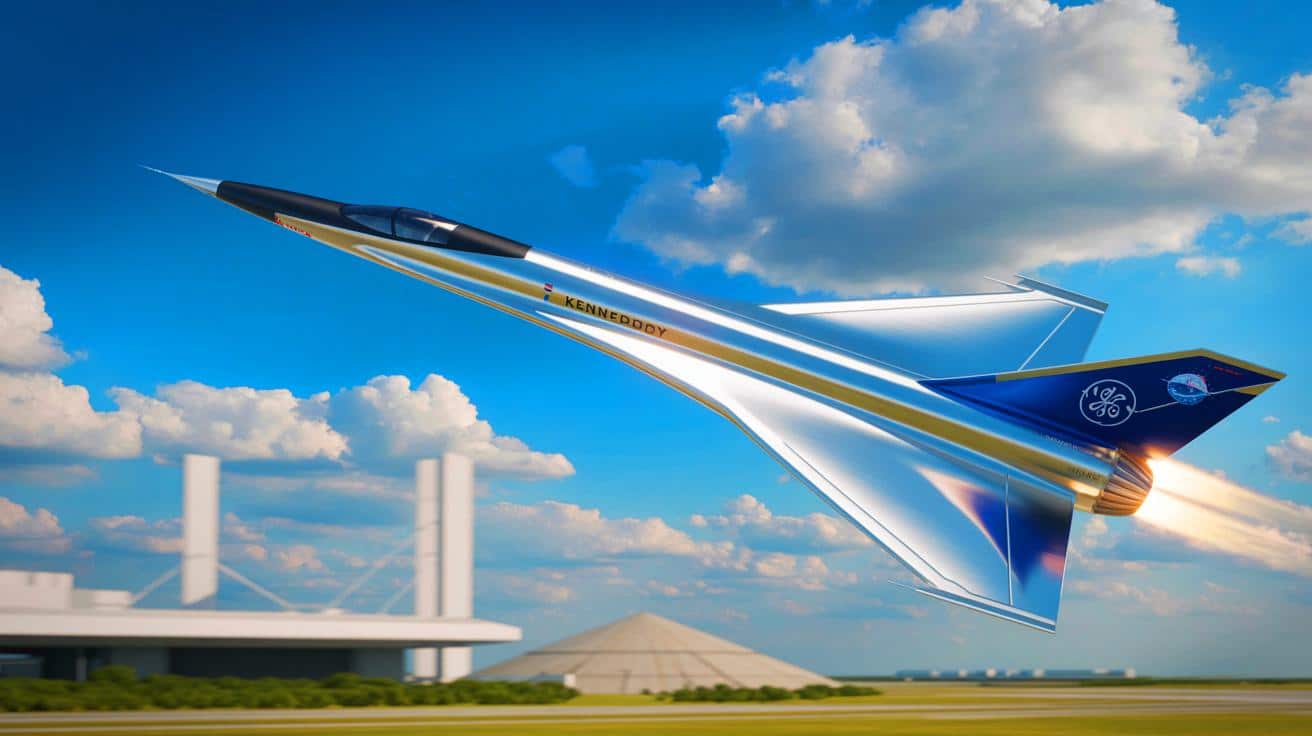
In a significant stride for defense and aerospace innovation, GE Aerospace has successfully completed a series of supersonic test flights under the Pentagon-backed ATLAS program at the Kennedy Space Center. This venture marks a pivotal moment in the advancement of solid fuel ramjet propulsion technology. The Atmospheric Test of Launched Airbreathing System (ATLAS) Flight Test Vehicle, carried by a Starfighter F-104 aircraft, achieved supersonic speeds across three flights. These tests underscore the potential of solid fuel ramjets to extend the range and capability of future munitions, aligning with the broader goals of the U.S. Department of Defense to enhance high-speed propulsion technologies.
Pentagon-funded Development
The ATLAS program is a significant focus of the Pentagon’s investment in advanced propulsion technologies. Funded through Title III of the Defense Production Act, this initiative aims to scale air-breathing propulsion systems to significantly enhance the range and effectiveness of future munitions. The data gathered from these test flights is crucial for the design of next-generation defense systems, which demand higher speed, greater range, and improved responsiveness.
GE Aerospace is strategically investing in multiple high-speed and hypersonic propulsion technologies as part of its comprehensive defense strategy. The company's commitment to innovation is evident in its pursuit of various cutting-edge technologies, ensuring that the United States maintains its competitive edge in aerospace defense capabilities.
Expanding Hypersonic Portfolio
Over recent years, GE Aerospace has been actively expanding its portfolio in hypersonic technology. The acquisition of Innoveering, a leader in hypersonic propulsion systems, in 2022 marked a significant boost to its capabilities. This acquisition has enabled GE to enhance its expertise and infrastructure, fueling advancements in high-speed propulsion.
The company has also made substantial upgrades to its testing facilities in Ohio, New York, and Niskayuna, allowing for advanced mission-relevant testing that was previously unattainable. This infrastructure development complements the recent successes, including the demonstrations of two rotating detonation combustion (RDC) engines at its Aerospace Research Center. These tests, featuring a missile-scale ramjet and a dual-mode ramjet, represent a milestone in GE's efforts to develop high-speed aircraft propulsion technologies.
Rotating Detonation Combustion Advances
The RDC technology represents a breakthrough in propulsion systems, offering a significant leap in performance. The recent tests demonstrated a threefold increase in engine airflow compared to earlier hypersonic demonstrators, showcasing the scalability and potential of GE's rotating detonation combustion designs. These advancements underscore the maturity of GE's propulsion technology and its strategic roadmap toward integrated high-speed solutions.
RDC technology employs detonation waves for combustion, as opposed to conventional methods, resulting in higher thrust and efficiency while minimizing engine size and weight. This innovation is the product of collaboration between GE Aerospace engineers, the Innoveering team, and the company's research center, highlighting GE's commitment to driving innovation in defense systems.
| Technology | Advancement | Impact |
|---|---|---|
| Solid Fuel Ramjet | Supersonic Test Flights | Extended Range and Capability |
| Rotating Detonation Combustion | Threefold Increase in Airflow | Higher Thrust and Efficiency |
As GE Aerospace continues to push the boundaries of propulsion technology, these developments are poised to redefine the landscape of aerospace defense. The successful ATLAS test flights and advancements in RDC technology highlight a promising future for high-speed propulsion systems. As the defense sector evolves, what further innovations will emerge to meet the complex challenges ahead?



Isn’t it amazing how technology keeps evolving so rapidly? These innovations sound like something out of a sci-fi movie! 🚀
Wow, three times faster? That’s mind-blowing! 🚀
Are these rotating detonation bombs really going to make China’s missiles obsolete overnight?
I’m curious, how do these rotating detonation bombs compare to China’s missile technology in terms of cost-effectiveness?
How much did this Pentagon project cost? 🤔
Wow, solid fuel ramjet technology sounds impressive! But how does it actually work?
Could this technology be used for commercial planes eventually?
Great article! Thanks for keeping us informed about these advancements. 😊
Why do they always announce these advancements? Shouldn’t they keep it a secret if they’re military tech?
Is it just me, or does “rotating detonation” sound a bit scary? 😅
This is fascinating! But what are the potential risks of using rotating detonation combustion technology?
Why is the Pentagon investing so heavily in these technologies now?
Thanks for the article, but I think comparing it to China is a bit premature. Let’s see how it performs in real scenarios first. 🤔
I’m a bit skeptical. How reliable are these test results?