




| IN A NUTSHELL |
|
In recent years, Lockheed Martin has become a pivotal force in advancing maritime defense technology for the United States Navy. The introduction of the Joint Air-to-Ground Missile (JAGM) and its accompanying JAGM Quad Launcher (JQL) represents a significant leap in military capabilities, enhancing the Navy’s ability to respond to diverse threats. This development underscores Lockheed Martin’s commitment to providing cutting-edge solutions that ensure strategic superiority. By integrating these advanced systems, the company aims to bolster the Navy’s operational flexibility and effectiveness across multiple domains, paving the way for a new era in naval defense.
A Revolutionary System for Naval Defense
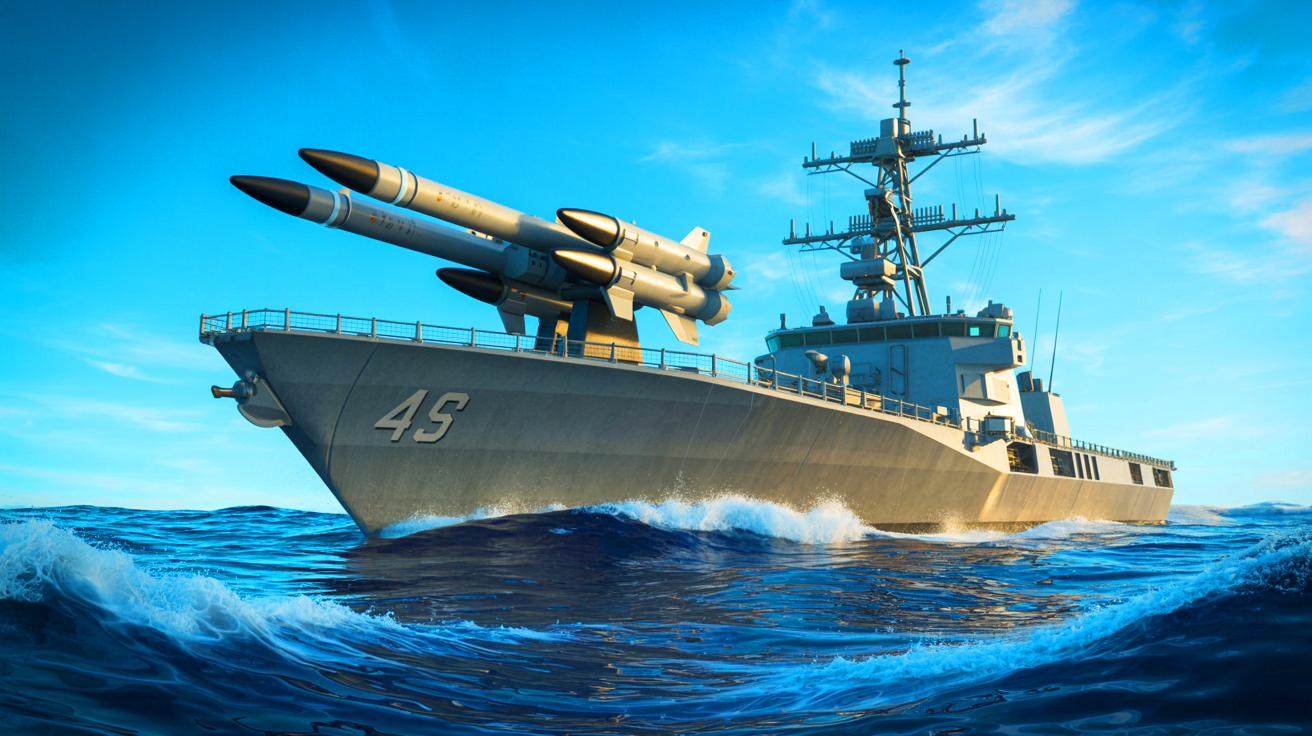
The JAGM Quad Launcher (JQL) by Lockheed Martin marks a transformative advancement in naval defense systems. This innovative system is engineered to provide rapid reloading capabilities, a feature crucial in dynamic threat environments. According to Joey Drake, program director for Multi-Domain Missile Systems, the JAGM is poised to replace the LONGBOW HELLFIRE missile, offering superior tactical flexibility with its dual-mode seeker. This seeker allows operators to select modes best suited for varying tactical scenarios, thus enhancing the missile’s adaptability.
The shift from LONGBOW to JAGM not only represents a technological upgrade but also ensures a seamless transition in logistical support for the Navy. Even as LONGBOW production winds down, it remains operational on Navy littoral combat ships. The JAGM offers a viable, cost-effective alternative currently in production, thereby reinforcing the Navy’s capabilities in both defensive and offensive operations. This continuity is essential for maintaining the Navy’s readiness and rapid response potential across diverse operational theaters.
Extended Capabilities Across Multiple Threat Domains
The JAGM stands out with its multi-mode seeker, significantly enhancing operational effectiveness against air, maritime, and land threats. This capability is particularly vital in adverse weather conditions and scenarios involving sophisticated countermeasures. With over 1,000 units already delivered primarily for deployment from USMC’s AH-1Z attack helicopters, the transition to surface ship defense is a logical expansion that broadens the Navy’s strategic options.
Chris Abt, director of advanced concepts at Lockheed Martin, highlights the strategic value of deploying JAGM on surface ships. This move not only diversifies naval capabilities but also streamlines logistical support across the fleet. The integration of JAGM is anticipated to reduce operational costs while enhancing maritime superiority, making it an indispensable asset in maintaining strategic dominance at sea.
Proven Performance Against Maritime Threats
The effectiveness of the JAGM against maritime threats, including unmanned surface vessels, has been successfully demonstrated by Lockheed Martin. This validation is particularly crucial as the Navy contends with evolving threats from unmanned systems. Ongoing software updates are set to further enhance the missile’s capabilities, particularly against unmanned aerial systems (UAS), ensuring that the JAGM remains at the forefront of modern naval operations.
The flexibility of the JAGM, whether deployed from the existing surface-to-surface missile module or the new modular and reloadable JQL, underscores Lockheed Martin’s commitment to cutting-edge defense solutions. This adaptability ensures the JAGM continues to play a central role in contemporary naval strategies, effectively addressing emerging threats while maintaining strategic superiority on the global stage.
Continuous Innovation Through Software Enhancements
Lockheed Martin’s commitment to innovation is evident in the continuous software upgrades to the JAGM, which enhance its effectiveness against the growing threat of unmanned aerial systems (UAS). These upgrades are crucial for keeping the JAGM relevant and effective in an ever-evolving battlefield. By focusing on technological excellence, Lockheed Martin cements its position as a leader in the defense industry, capable of meeting the demands of dynamic threat environments.
The JAGM’s software advancements ensure it can adapt to current threats and remain prepared for future challenges. As these technological enhancements continue to unfold, they will undoubtedly influence the trajectory of global maritime defense. Lockheed Martin’s efforts to stay ahead of the curve demonstrate a proactive approach to defense strategy, positioning the company to navigate the complexities of modern warfare effectively.
As Lockheed Martin pushes the boundaries of missile technology, the landscape of global defense is set for significant evolution. The integration of systems like the JAGM and JQL promises to redefine naval capabilities, offering unparalleled operational flexibility and effectiveness. Looking ahead, how will these technological advancements continue to influence the dynamics of maritime defense on a global scale?



Wow, Lockheed Martin is really stepping up their game! 🚀 How long until other countries catch up?
Thunder fell without rain? Sounds like a song title or smthng. 😂
Isn’t this just another arms race in disguise? 🤔
Thank you for sharing such an insightful article! The future of naval defense looks intriguing.
How does this “breakthrough” compare to existing Russian technology?
Great article, but are we just escalating tensions with such weapons?
How does the JAGM technology impact current naval strategies?
The “dual-mode seeker” sounds impressive, but what does it really mean in practical terms?
Can we expect other major defense contractors to follow suit with similar innovations?
Not sure if I should be excited or scared by this development! 😬
Lockheed Martin always seems to be at the forefront of military innovation.
How many more upgrades can we expect from the JAGM in the coming years?
Do these advancements make older naval vessels obsolete?
Why do we need to keep investing in advanced weapons systems? Can’t we focus on peace? ✌️
This is all well and good, but what’s the cost to the taxpayer?
JAGM replacing LONGBOW HELLFIRE sounds like a major upgrade! 🛠️
I wonder if Russia is developing similar technology to counter this?
Thank you for breaking down such a complex topic into understandable terms!
If Lockheed Martin is leading now, what’s next on their agenda?
Will this new tech make naval battles a thing of the past or just more intense?
How reliable is the JAGM in adverse weather conditions?
It’s fascinating how technology keeps evolving! What will they think of next? 🤖
Is there any international regulation on these kinds of weapons?
Sounds like Lockheed Martin is setting the stage for the next military era.
Are there any potential risks to deploying such advanced systems?
I’m curious, how does this affect global military alliances?
Can we trust software updates to keep the JAGM effective against new threats?
This article is an eye-opener! Thanks for the detailed insights.
How does the JAGM’s performance compare to its predecessors?
Are there any environmental concerns with these new weapon systems?
Is the JAGM only for the US Navy, or are allies getting it too?
What about cybersecurity? Are these systems hack-proof? 🔒
Looks like Lockheed Martin is securing its spot as a leader in defense tech.
Hope these advancements are used wisely and not recklessly. 🙏
How does this innovation align with global disarmament efforts?
Impressive work by Lockheed Martin, but let’s hope it doesn’t lead to more conflict.