



| IN A NUTSHELL |
|
Los Alamos National Laboratory (LANL), in collaboration with Lawrence Livermore National Laboratory (LLNL), has achieved a breakthrough in fusion research by successfully achieving fusion ignition using the innovative Thinned Hohlraum Optimization for Radflow (THOR) window system. Conducted at the National Ignition Facility (NIF), this experiment marks a significant milestone in fusion science. The test generated a fusion energy yield of 2.4 megajoules, producing a self-sustaining “burning plasma.” This advancement not only highlights the potential of fusion energy to address key scientific challenges but also paves the way for future developments in energy production.
First Operational Test of THOR
The recent experiment marked the first operational test of LANL’s THOR window system. This system is designed to provide a source of high-flux X-rays, crucial for studying materials under extreme radiation conditions. LANL physicist Joseph Smidt emphasized the significance of this experiment, demonstrating the capability of their designs to achieve the fusion ignition conditions necessary for stockpile stewardship.
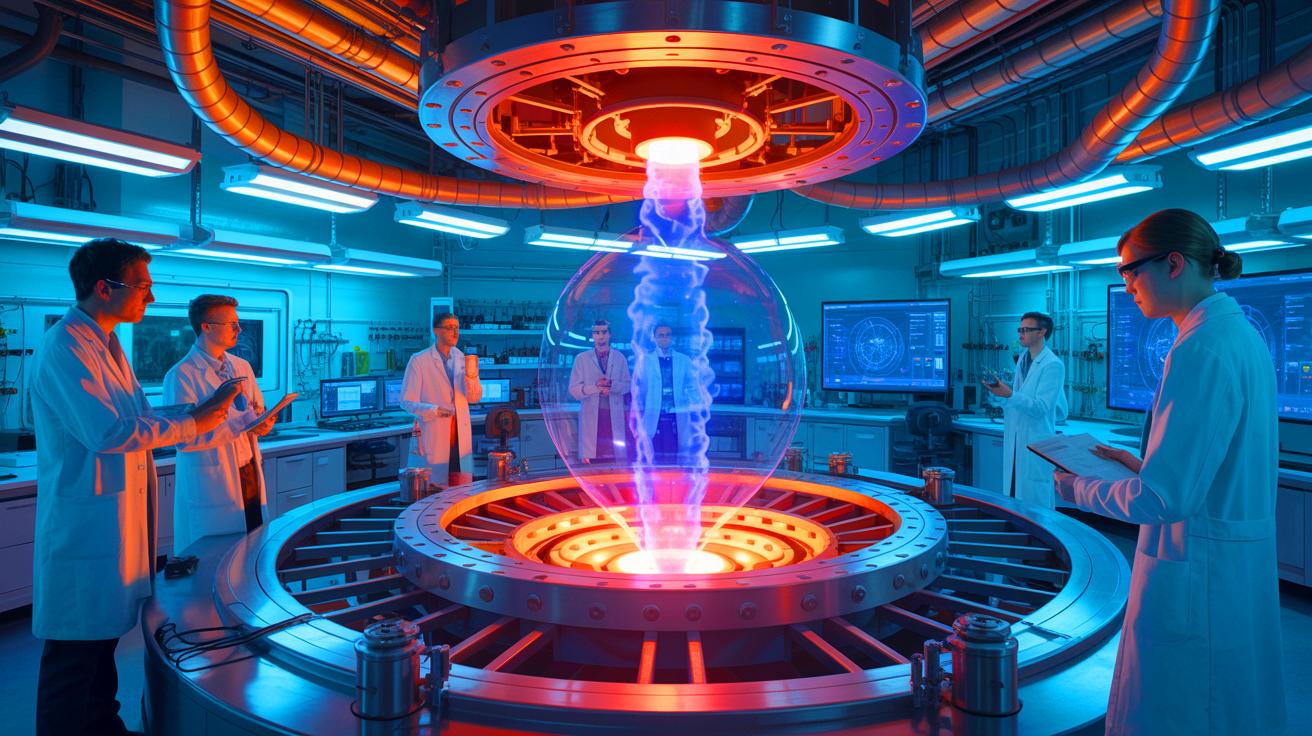
In the experiment, lasers were directed into a gold-coated cylinder, or hohlraum, which contained a capsule of deuterium and tritium fuel. The lasers generated X-rays inside the hohlraum, causing the fuel capsule to implode symmetrically and initiate fusion. This milestone is a critical step toward advancing fusion science and expanding its applications, showcasing the potential of the THOR system in achieving fusion ignition.
Modifying the Standard Hohlraum
The THOR design modifies the standard hohlraum by incorporating windows that allow some of the generated X-rays to escape. These escaping X-rays are then used to irradiate test materials, aiding scientists in studying radiation flow and energy absorption. One of the primary challenges in designing the THOR hohlraum was managing energy loss and potential asymmetry.
The process of fusion ignition is highly sensitive to the energy balance of implosion. Introducing windows can create an exit path for X-ray energy, potentially disrupting the uniformity needed for fuel capsule compression. LANL physicist Brian Haines highlighted the sensitivity of igniting capsule implosions to energy loss. The success of the experiment validates computer simulations used to design the platform, making it a significant achievement in the field.
Expanding Applications of Ignition Platform
While LLNL first achieved ignition in 2022, this experiment represents a crucial step in expanding the applications of the ignition platform. Lab physicist Ryan Lester stated that the experiment validates high-fidelity simulations and demonstrates ignition-scale performance even with modifications to the THOR platform. With the viability of the THOR concept now established, researchers plan further development.
Future work will focus on refining the windows to increase transparency and designing experimental packages to attach to the hohlraum. This will enable the collection of data on material properties under plasma conditions, previously unattainable in laboratory settings. These advancements are expected to broaden the scope of fusion research and its practical applications, offering new opportunities for scientific exploration.
The Implications of Fusion Ignition
The successful use of the THOR window system in achieving fusion ignition opens new avenues for research and development. By demonstrating that ignition-scale performance can be achieved with modifications, this experiment challenges existing paradigms in fusion science. The ability to control and harness fusion energy has far-reaching implications, from energy production to scientific exploration.
Fusion energy holds the promise of providing a clean, virtually limitless energy source. The advancements made in this experiment contribute to understanding the complex processes involved in achieving and sustaining fusion. As researchers continue to explore these possibilities, the potential for transformative changes in energy production and scientific research becomes increasingly tangible.
The recent success in achieving fusion ignition with the THOR window system marks a pivotal moment in fusion research. This breakthrough underscores the potential of fusion energy to revolutionize energy production and scientific exploration. As researchers build on this success, the question remains: how will the advancements in fusion technology shape the future of energy and science?

Incredible achievement! Can’t wait to see how this impacts renewable energy! 🌍
Wow, this is a game-changer! But how long until we see this in commercial use? 🤔
Isn’t 2.4 megajoules a bit low for a breakthrough? Just curious!
Is this the same as cold fusion or something different?
Finally, some good news in science! Thank you, Los Alamos team! 🙌
2.4 megajoules sounds impressive, but how does that compare to other energy sources?
How does this compare to other fusion projects around the world?
Thank you, Los Alamos! This could be a game-changer for the planet. 🙏
Why aren’t we hearing more about this in mainstream media?
This sounds like sci-fi becoming reality. Incredible! 🚀
Why is it called ‘burning plasma’? Doesn’t sound very eco-friendly. 🤔
Does this mean we’re closer to having cheap fusion energy?
This is amazing, but how long until we see fusion power plants?
Great work, but can we trust the long-term sustainability of this method?
I hope this brings us closer to a cleaner energy future. 🌍
Will this new system help reduce our reliance on fossil fuels?
2.4 megajoules… is that a lot? I’m not sure what that means in practical terms.
When can we expect the next breakthrough? Can’t wait! 😄
This is fantastic! Thanks for the detailed explanation.
Is this similar to what they’re doing in ITER? 🔬
Finally, a step toward sustainable energy! But how cost-effective is it?
What are the next steps for the THOR system?
Are there any environmental risks associated with this technology?
Can this be scaled up to power cities? 🏙️
I’m not a scientist, but this sounds amazing. Kudos to the team! 👏
This is a milestone, but how far are we from practical application?
How long did it take to develop the THOR window system?
What’s the next big challenge after achieving fusion ignition?
Seems promising, but what about the cost and complexity of implementation?
How does this affect the timeline for fusion energy becoming mainstream?
What role does LLNL play in this project? 🤓
Is this technology safe for long-term use? That’s my biggest concern.
How do they manage the energy loss during X-ray escape?
Can this tech help in other fields of science? 🎉
The future looks bright with fusion energy on the horizon! ☀️
Does this mean we’re one step closer to achieving infinite energy?
What are the risks of this experiment going wrong?
How will this advancement impact global energy policies?
Is there any international collaboration on this project?
How does this compare to nuclear fission in terms of safety?
What are the main challenges in achieving a stable fusion reaction?
Will this tech be accessible to developing countries too? 🌍
Finally, some progress in fusion! But are there any downsides?
Sounds great, but how long till we see this in everyday life?