




| IN A NUTSHELL |
|
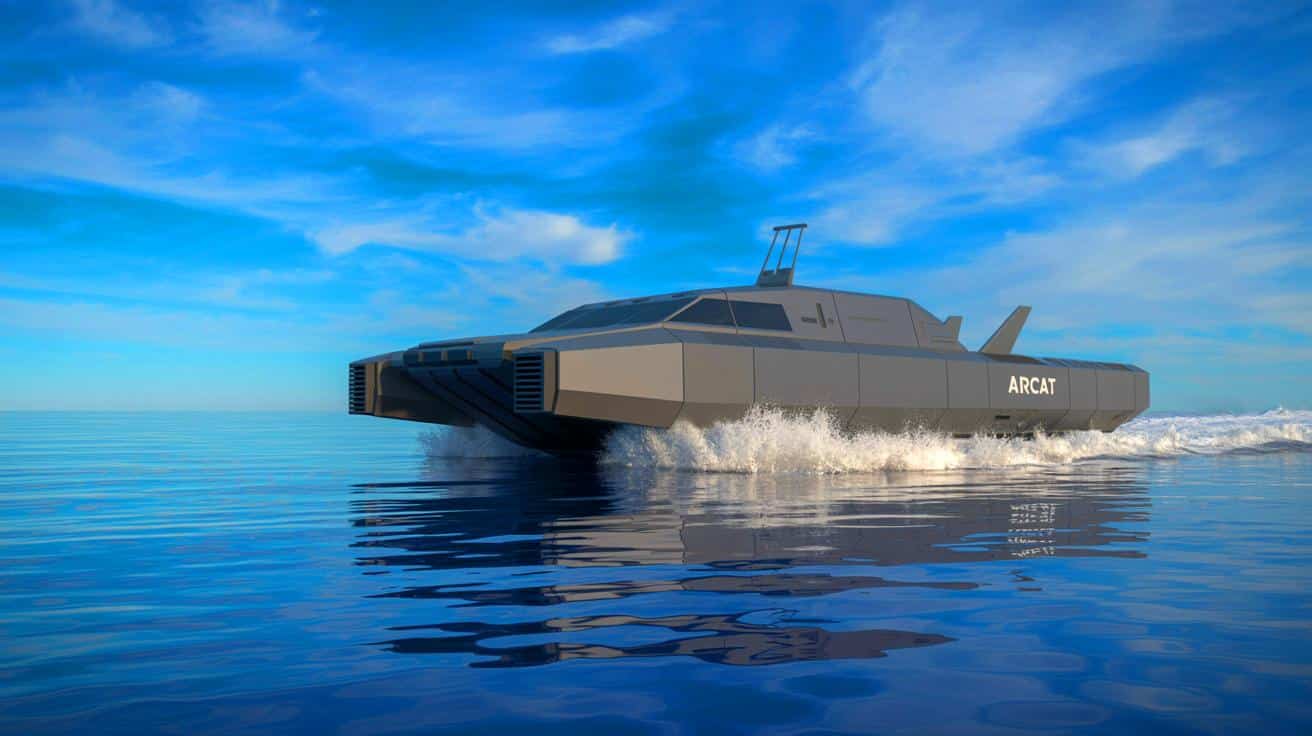
The launch of the AIRCAT Bengal MC heralds a significant shift in naval capabilities, marking a new era in military technology. Developed by Eureka Naval Craft in collaboration with Greenroom Robotics, this autonomous vessel is poised to redefine naval warfare. Boasting advanced features, the Bengal MC promises flexibility and cost efficiency, making it a game-changer in modern military operations. As global tensions rise, such innovations become crucial for maintaining strategic dominance. This article delves into the multifaceted capabilities of the Bengal MC, exploring its potential impact on global naval strategies and its role in shaping future military technologies.
Revolutionizing Naval Warfare with Advanced Capabilities
The AIRCAT Bengal MC is not merely a vessel; it represents a paradigm shift in autonomous maritime technology. With the ability to carry a 44-ton payload, it can transport two 40-foot ISO modules while reaching speeds over 50 knots. This capability allows for rapid deployment over its range of 1,000 nautical miles, minimizing the need for constant refueling. The Bengal MC’s strategic value is further enhanced by its armament, featuring Tomahawk cruise missiles and Naval Strike Missiles.
Targeted at major naval powers including the United States and its allies, the Bengal MC offers a strategic advantage by reducing the need for larger, more expensive warships. Its versatility and lethality make it appealing to nations like Japan, South Korea, and the Philippines. In an era where speed and precision are paramount, the Bengal MC’s ability to operate autonomously sets it apart as a formidable force in naval warfare.
Enhanced Lethality with Missile Launch Capabilities
The Bengal MC’s missile launch capabilities represent a major leap in naval strategy. By allowing missions that traditionally required larger vessels, it reduces costs and boosts operational efficiency. The vessel’s design challenges the status quo, offering a fast, heavily armed alternative to older, slower ships. According to Bo Jardine, CEO of Eureka Naval Craft, innovation like this is essential in the current naval landscape.
Beyond speed and firepower, the Bengal MC enhances strategic flexibility and adaptability. Its capacity to carry heavier payloads at high speeds boosts the effectiveness of naval operations. With advanced autonomy, the vessel can swiftly respond to threats and opportunities, offering a significant tactical edge. The Bengal MC’s integration of speed, firepower, and autonomy positions it as a crucial asset in modern naval strategy.
Unmatched Efficiency and Versatility
The Bengal MC is a model of fuel efficiency and cost-effectiveness, making it a valuable asset for budget-conscious navies. Its modular design allows it to fulfill multiple roles, from troop transport to electronic warfare. This adaptability ensures it can be tailored to meet specific operational needs, providing a customized solution for diverse maritime challenges.
The partnership with Greenroom Robotics enhances the vessel’s capabilities with advanced autonomous navigation systems. This integration allows seamless operation across all mission phases, ensuring human operators are supported by cutting-edge technology. The Greenroom Advanced Maritime Autonomy Software system, rigorously tested, guarantees reliability and performance, affirming the vessel’s role as a leader in naval innovation.
Expanding the Fleet with Modular Design
The AIRCAT Bengal MC is part of a prestigious fleet designed for specific missions, including fast attack and high-speed troop transport. Its modular design philosophy allows for mission-specific customization, a crucial feature in an era where naval forces must respond to varied threats and opportunities.
Eureka Naval Craft’s commitment to innovation is evident in its expanding fleet and strategic partnerships. The collaboration with Greenroom Robotics exemplifies a forward-thinking approach to maritime autonomy, setting a new standard for naval operations. As the naval landscape evolves, the Bengal MC represents a bold step forward, offering strategic advantages that are hard to ignore.
As the AIRCAT Bengal MC embarks on its maiden voyages, it prompts critical questions about the future of naval warfare. How will autonomous technology reshape global naval strategies, and what challenges and opportunities will it bring? The answers to these questions will likely shape the next generation of military innovation and strategic planning.



Wow! 🚀 This sounds like something out of a sci-fi movie. Are these warships already being used by any navy?
This is amazing! Can’t believe how far technology has come. 🚀
Will these autonomous ships really replace traditional destroyers? 🤔
50 knots?! That’s faster than my internet connection! 😂
What about the ethical concerns of autonomous warfare?
How do these robot warships handle bad weather or rough seas?
50 knots is fast, but how does it handle rough seas?
It’s fascinating to see technology advancing at such a pace. Thanks for the insight! 🙌
Great article, very informative!
How does the Bengal MC compare to other naval drones in terms of cost?
This seems like a game-changer, but what about the ethical implications of autonomous warships?
Will it have any defensive capabilities, or is it purely offensive?
The collaboration with Greenroom Robotics sounds promising. Any idea about their track record?
Why are they using Tomahawks instead of newer missiles?
Can these ships be hacked? Cybersecurity must be a major concern, right?
Isn’t it risky to have so much autonomy in military vessels?
Wow, this sounds like something out of a sci-fi movie! 🛸
Can it operate in all weather conditions? 🌧️
When will the first units be deployed?
This is a game changer for sure. Thanks for the great write-up!
What prevents these ships from being hacked?
Can they be used for non-military purposes too?
50 knots! That’s faster than my car 😂
How environmentally friendly is this new tech?
Is there a risk of these ships making accidental hostile actions?
Who do you think will buy these first, the US or its allies? 🤔
How long did it take to develop the Bengal MC?
The future of warfare is here, and it’s a bit scary.
Does the public get any say in this kind of military innovation?
Looks impressive, but how reliable is the autonomy software?
Can we expect to see more autonomous vessels in civilian applications?
Why Bengal MC? Curious about the name! 🐯
How does it handle communication with other military units?
Seems like a lot of power in such a small package! 💥
What are the potential drawbacks of using such vessels?
Not sure how I feel about robots in warfare…🤖
How many units are planned for production?
Impressive tech, but I hope it doesn’t lead to an arms race.
Does it have any stealth capabilities?