

| IN A NUTSHELL |
|
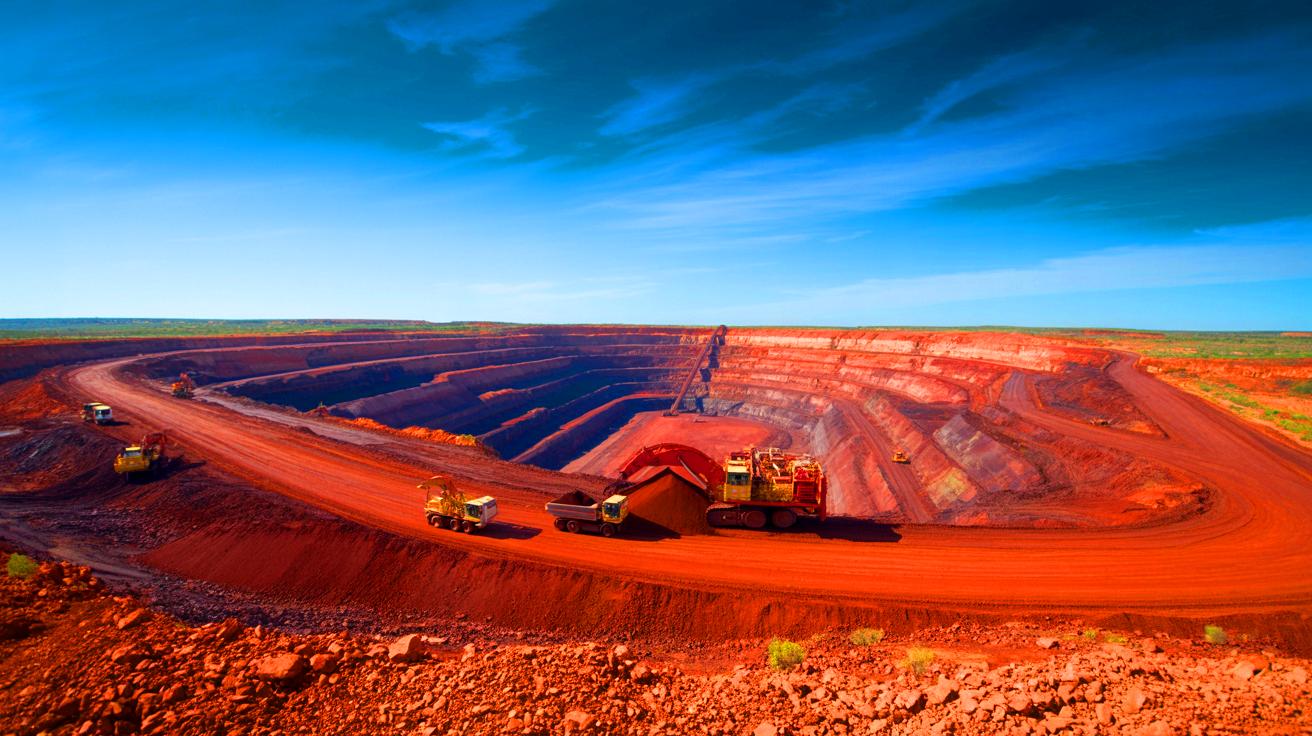
The recent discovery of a massive iron ore deposit, estimated at 55 billion metric tons, in Western Australia’s Hamersley Province has captured global attention. Formed over a billion years ago through ancient tectonic upheavals, this find challenges existing geological theories and holds the potential to redefine both economic and scientific landscapes. The colossal reserve, situated within the Pilbara Craton, offers not only a significant boost to Australia’s mining industry but also a new perspective on Earth’s geological history. As the world takes note of this remarkable discovery, questions arise about its broader implications for the global iron market and scientific exploration.
Unveiling a Colossal Resource in the Pilbara
The Pilbara Craton, one of the oldest pieces of continental crust on Earth, houses the newly discovered iron ore deposit. This region, dating back more than three billion years, has long been a subject of interest for geologists. Until now, it was believed that the major ore bodies in the area formed around 2.2 billion years ago. However, recent uranium-lead isotope analysis by researchers from Curtin University and the University of Colorado Boulder has revealed a more recent formation age, between 1.4 and 1.1 billion years.
According to Liam Courtney-Davies, the lead author of the study, “The energy from this epic geological activity likely triggered the production of billions of tonnes of iron-rich rock across the Pilbara.” This revelation ties the formation of the deposit to the breakup of the ancient supercontinent Columbia and the subsequent assembly of early Australia, events that unleashed mineral-rich fluids deep underground. Some samples from the Hamersley Province boast an iron content exceeding 60%, making the deposit not only vast but also exceptionally high-grade compared to the global average of about 30%.
Tectonic Shifts and the Birth of a Super-Deposit
The formation of the Hamersley deposit coincided with tectonic processes that reshaped the planet’s crust. The breakup of Columbia and later continental collisions provided the necessary heat and pressure to transport vast amounts of iron from deep within the Earth to nearer the surface, where it concentrated into dense, mineable bodies. Martin Danisík, an associate professor at Curtin University, explains that understanding the connection between supercontinent cycles and ore formation “improves our ability to predict where we should explore in the future.”
This knowledge suggests that similar tectonic settings elsewhere could host undiscovered reserves of comparable scale, making the Hamersley find a geological blueprint for resource exploration. The implications of this discovery extend beyond Australia, offering a new lens through which to view Earth’s mineral history and guiding future exploration efforts worldwide.
Global and Local Implications
At current market prices of approximately $105 per metric ton, the potential value of the Hamersley deposit exceeds $5.775 trillion USD. This staggering figure dwarfs the output of many other mining regions and solidifies Australia’s position as the world’s leading iron ore producer. The scale of the find has caught the attention of major importers like China and India, whose steel industries rely heavily on a steady supply of iron.
Locally, the deposit could drive significant infrastructure development in Western Australia, including expanded rail lines and new port facilities. The region is already a mining hub, but the size and quality of this reserve could accelerate investment, job creation, and long-term economic growth. As the world watches, this discovery promises to reshape both local and global economic landscapes.
A New Lens on Earth’s Mineral History
Beyond its economic potential, the Hamersley discovery represents a scientific milestone. By precisely dating the ore and linking it to tectonic events, the research offers a clearer picture of how the planet’s geology has evolved over billions of years. It highlights the importance of integrating advanced isotopic dating techniques with satellite imagery and geophysical surveys to locate high-value resources.
This ancient deposit serves as both a tangible source of raw material for the modern world and a deeper understanding of Earth’s geological past. This rare combination will keep scientists, economists, and policymakers watching Western Australia closely for years to come, as they seek to unlock the secrets hidden beneath the surface.
The discovery of the Hamersley iron ore deposit marks a turning point in geological exploration and economic potential. As scientists continue to study this ancient reserve, the world waits to see how this find will influence future mining endeavors and reshape our understanding of Earth’s geological history. What other secrets might the planet hold, waiting to be unearthed by the next generation of explorers?


Wow, that’s a lot of iron! Australia is going to be rich! 💰
Wow, this is a game-changer for Australia! But will it really crash the global economy? 🤔
How will this discovery impact the global steel market? 🤔
How long will it take before we start mining this enormous deposit?
Will mining this deposit cause environmental damage?
Is this really going to crash the global economy, or is that just sensationalism?
55 billion tons?! That’s heavy news! 😉
Sounds like a plot for a new sci-fi movie: “The Iron Mountain!” 🎬
Can someone explain how a discovery like this could disrupt the global economy?
I’m curious, how long would it take to extract all that iron ore?
The real question is, how will this affect the koalas? 🐨
Thanks for the article! This is definitely something to keep an eye on. 👍
Does this mean cheaper prices for iron products soon?
Can this discovery help reduce China’s monopoly on iron? 🤞
Bet the mining companies are celebrating tonight! 🥳
Hope they invest in sustainable mining practices. 🌱
How does this discovery change our understanding of geological history?
Wow, that’s a lot of iron! Hope it’s put to good use. 🛠️
Are there similar undiscovered deposits in other parts of the world?
Mining always has risks, both environmental and economic!
This sounds like a game changer for Australia!
Are there any plans to protect ancient rock formations during mining?
What’s the next step for the mining companies involved?
Can’t wait to see how this impacts Australia’s economy.
So, when do we start building an iron ore-themed amusement park? 🎢
Is there a possibility of finding other valuable minerals in the same area?
Thanks for the insightful article! 😊
Does this mean more jobs in Western Australia? 💼
Wow, the geopolitics of mining just got a lot more interesting! 🌍
Hope they have a plan to deal with dust and pollution. 🌬️
Can this lead to technological advancements in mining?
So much iron! I wonder how this was hidden for so long.
Could this discovery lead to new trade alliances?
Hope this doesn’t lead to over-mining and depletion of resources.
Why is it always Australia finding these gigantic deposits? 🇦🇺
Could this iron deposit discovery impact renewable energy sectors?
I’m skeptical. What’s the catch here?
How does this affect the indigenous communities in the area?
Can’t wait to see how the stock market reacts to this news! 📈
Could this find change the balance of power in global mining? ⚖️
Fascinating read! Keep up the good work. 👏
What a massive find! How will it be managed sustainably?