




| IN A NUTSHELL |
|
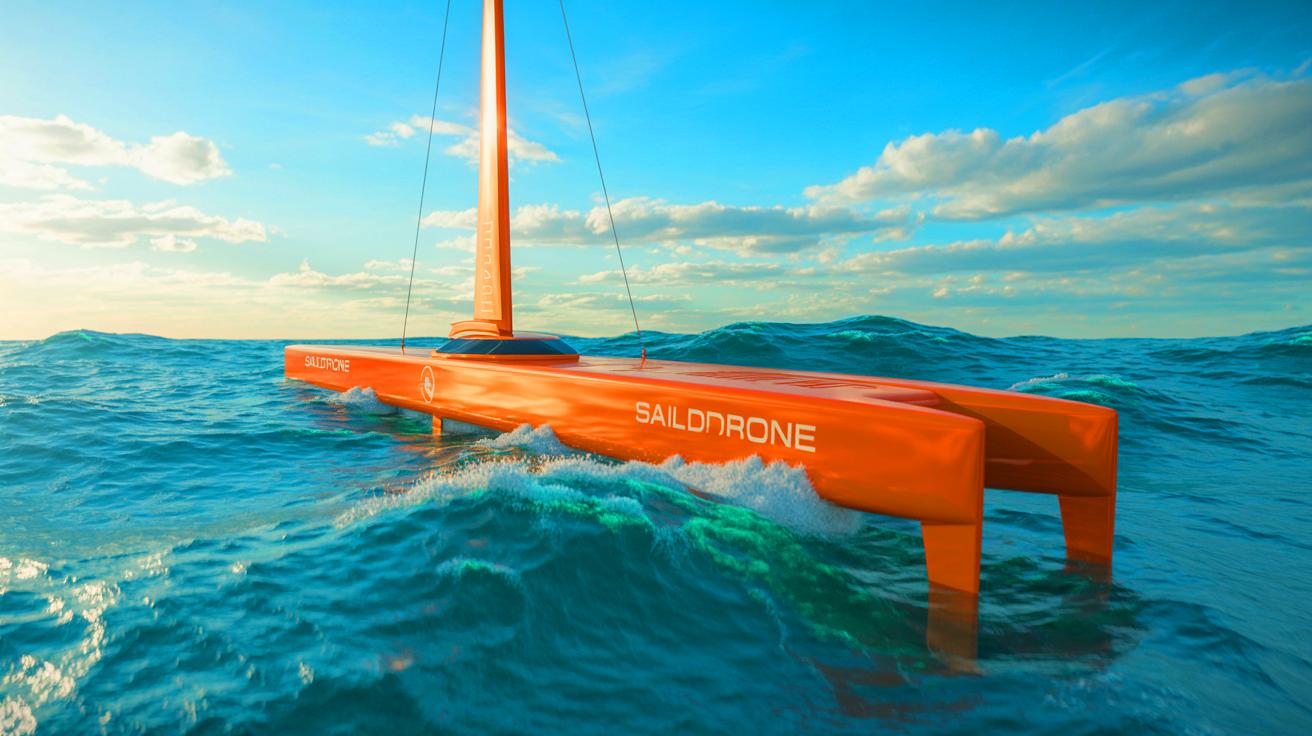
The maritime industry is witnessing a groundbreaking innovation with the introduction of the Saildrone Surveyor, the world’s largest fully autonomous unmanned surface vehicle (USV). This 65-foot-long vessel has been certified by the American Bureau of Shipping (ABS) for its ability to conduct long missions across the open oceans. Designed by Saildrone Technologies, a California-based company, the Surveyor is set to redefine ocean mapping and maritime intelligence. Its certification marks a pivotal moment in the evolution of autonomous maritime operations, showcasing the potential for cost-effective and efficient solutions in challenging marine environments.
The Significance of ABS Certification
The recent certification of the Saildrone Surveyor by the American Bureau of Shipping (ABS) represents a landmark achievement. According to Patrick Ryan, ABS senior vice president and chief technology officer, this step is a substantial leap forward for the maritime industry. The certification underscores the vessel’s compliance with rigorous international safety and design standards, positioning it as a beacon of innovation in the field. ABS has long been a leader in the maritime sector, and its endorsement of the Surveyor highlights the organization’s commitment to advancing autonomous maritime technologies.
Richard Jenkins, founder and CEO of Saildrone, emphasized that the ABS certification is more than a formal acknowledgment.
“The ABS certification is more than a certificate – it’s a signal to governments and the maritime industry that Saildrone USVs are mature, safe, tested, and ready for scale,” he stated.
https://www.energy-reporters.com/environment/unbelievable-chaos-transforms-our-destiny-us-scientists-ignite-global-fury-with-revolutionary-plastic-breakthrough/
This milestone is the culmination of years of targeted investment in adapting ABS’s technical capabilities to keep pace with emerging technologies. It signals a readiness for large-scale deployment of autonomous maritime systems, paving the way for future advancements.
Advanced Capabilities of the Surveyor
The Saildrone Surveyor is engineered for extended missions in open-ocean environments, capable of operating without human intervention. The vessel’s design allows it to perform a variety of tasks, including deep-ocean floor mapping and maritime awareness operations. This makes it an invaluable asset for military, homeland security, and commercial clients seeking cost-effective solutions in some of the world’s most challenging marine environments.
The Surveyor’s ability to operate autonomously for extended periods is a testament to the advanced engineering and innovation that went into its development. Its certification by ABS not only assures its safety and reliability but also sets a new standard for unmanned maritime systems. This achievement is particularly significant as the maritime industry increasingly shifts towards digitalization and automation, demanding higher standards of safety and efficiency.
Innovation and Safety in Autonomous Vessels
The Saildrone Surveyor is not the first autonomous vessel from Saildrone Technologies to receive such acclaim. In 2023, the 32-foot-long Voyager, optimized for coastal surveillance, also received ABS certification. The Surveyor, however, expands the operational potential of unmanned surface vehicles with its long-endurance range and deep-sea capabilities. This advancement is crucial as the global maritime industry accelerates its transition towards more sustainable and automated solutions.
ABS officials have highlighted the importance of certifying autonomous vessels like the Saildrone Surveyor. As the industry embraces digitalization, the need for robust standards and regulations becomes increasingly evident.
“Saildrone USVs are capable of fully autonomous operations with no human onboard and are remotely monitored 24 hours a day, seven days a week by the company’s global Mission Management team,” stated ABS.
https://www.energy-reporters.com/environment/they-said-it-was-impossible-japan-beam-technology-vaporizes-forever-plastics-and-sparks-global-uproar-over-future-waste-solutions/
This level of autonomy and oversight ensures the safety and efficiency of operations, even in remote and harsh marine conditions.
Charting the Future of Maritime Operations
ABS’s collaboration with shipbuilders, governments, and stakeholders is driving the advancement of remote-control and AI-driven operations at sea. This collaborative approach is essential for developing standards that keep pace with the rapid innovation in autonomous maritime technologies. The Saildrone Surveyor’s certification is a testament to the progress being made in this field and the potential for future developments.
The maritime industry is on the cusp of a new era, where autonomous vessels play a central role in operations. The Surveyor’s capabilities demonstrate the potential for significant cost savings and increased efficiency in maritime operations. As the industry continues to evolve, the role of organizations like ABS in shaping the future of autonomous maritime systems will be crucial. Their efforts in setting standards and ensuring compliance will help navigate the challenges and opportunities that lie ahead.
The introduction of the Saildrone Surveyor marks a significant milestone in the evolution of autonomous maritime technologies. As the world moves towards more sustainable and efficient solutions, the role of autonomous vessels will become increasingly important. The Surveyor’s certification by ABS is a step towards a future where unmanned systems are a staple in maritime operations. As we look to the future, how will these advancements shape the global maritime industry, and what new challenges and opportunities will arise?


This is amazing! How does the Saildrone Surveyor manage to map the ocean floor without any human help? 🤔
Wow, this is some next-level stuff! Imagine a world where all ships sail themselves! 🤖🚢
Does this mean we can have robotic pirates in the future? 😂
Wow, technology has come so far. I hope they don’t start making robot ships for passengers next! 😅
How does it handle storms? I can’t even handle Mondays without coffee!
Is this really safe? What happens if the ship encounters extreme weather conditions?
Is it environmentally friendly? 🌍
This is both fascinating and kinda scary. Machines taking over, anyone?
As a marine biologist, I’m excited to see the data this will produce. Thank you for sharing! 🐋
Great article! Thanks for keeping us updated on new tech developments!
Does anyone else think this sounds like the start of a sci-fi movie where robots take over? 😬
How does this compare to other autonomous vessels already in use?
Can it avoid other ships and obstacles in the ocean? Safety first, after all!
My GPS can’t even get me to the right store, and this thing sails the ocean alone?!