




| IN A NUTSHELL |
|
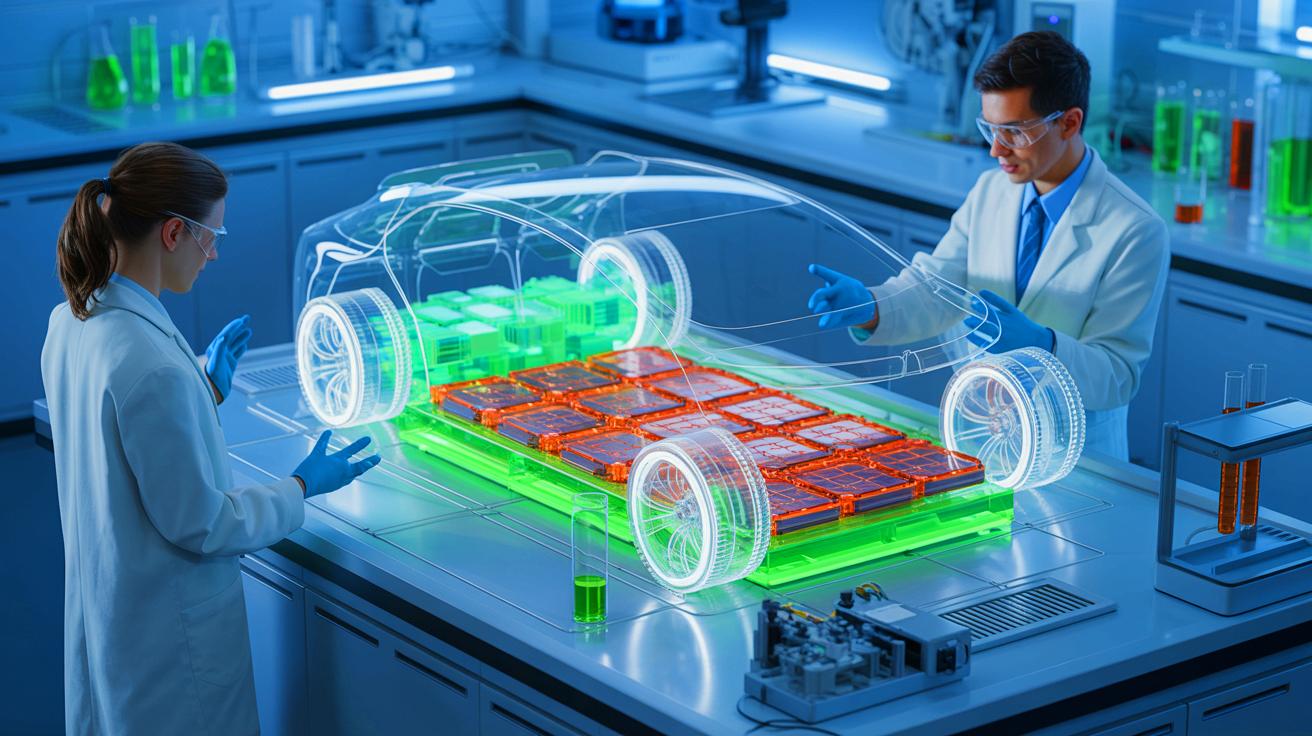
In the quest for a sustainable future, electric vehicle (EV) technology stands as a beacon of hope. Yet, the challenge of recycling EV batteries looms large, with many ending up in landfills. An innovative approach by researchers at MIT might just offer a new path forward. They have crafted a “self-assembling” battery material designed to simplify the recycling process. Inspired by an imaginative scene from the “Harry Potter” series, this breakthrough could redefine how we think about battery design and sustainability. The material, acting as an electrolyte, offers a promising avenue for making battery recycling more efficient and environmentally friendly.
Battery Tech Inspired by Harry Potter Magic Trick
In an unexpected twist, the inspiration for this groundbreaking technology came from the fictional world of “Harry Potter.” A scene where Dumbledore magically cleans a room sparked an idea in researcher Yukio Cho’s mind. Cho envisioned a similar ease in recycling battery components, leading to the exploration of self-assembling molecules. These molecules, called aramid amphiphiles (AAs), are capable of forming complex structures and then reverting to their original state.
This innovative material draws on the robust chemical structure of Kevlar, known for its bulletproof qualities. By integrating polyethylene glycol (PEG), researchers enabled these molecules to conduct lithium ions effectively. When introduced to water, the molecules spontaneously form durable nanoribbons with ion-conducting surfaces. These nanoribbons can then be hot-pressed into a solid-state material, forming the backbone of this new battery technology.
Cho explains, “The material is composed of two parts. The flexible chain provides a host for lithium ions, while the strong organic component ensures stability.” This duality in the material’s design is key to its effectiveness and potential for widespread adoption.
Porsche Sparks Conflict: “We Fear Battery Tech Lag” as Smarter Solutions Threaten The US Auto Market
Proof-of-Concept
The practicality of this innovation lies in its ability to disassemble easily when its lifecycle ends. When the battery is submerged in organic solvents, the electrolyte dissolves, akin to cotton candy in water. This process allows the battery’s components to be separated and recycled with minimal effort. The nanoribbons, while demonstrating strength and durability, still face challenges.
One such challenge is polarization, which slows down ion movement during rapid charging and discharging. “The lithium ions moved along the nanofiber all right,” Cho notes, “but transferring them from the nanofibers to the metal oxide was the most sluggish part.” Despite these hurdles, the researchers remain optimistic about the material’s potential.
The current state of development remains a proof-of-concept, with further experiments planned to enhance performance. The promise of this technology lies in its ability to facilitate the reuse of materials, potentially increasing domestic lithium supplies and paving the way for future battery advancements.
Environmental and Economic Implications
As the world grapples with the environmental toll of technology, the implications of such a sustainable battery solution are profound. Traditional battery recycling methods often involve harsh chemicals and complex processes, which contribute to environmental degradation. By contrast, MIT’s approach could significantly reduce the ecological footprint of EV batteries.
Beyond environmental benefits, the economic potential of this technology is significant. By simplifying the recycling process, manufacturers could reduce costs associated with battery disposal and material recovery. This could lead to lower prices for consumers and increased adoption of EVs, further driving the shift toward renewable energy sources.
Moreover, the ability to reclaim valuable materials such as lithium could lessen dependence on mining, which is both environmentally destructive and geopolitically sensitive. The prospect of a self-sufficient supply chain for battery components is an enticing vision for the future of clean energy.
Future Prospects and Challenges
While the promise of this innovation is clear, several challenges remain. The technology must be optimized to match the performance of current commercial batteries. Additionally, widespread adoption will require industry buy-in and potential redesigns of existing battery systems.
Nonetheless, the researchers are optimistic about the future. They believe that as new battery technologies emerge over the next five to ten years, this recyclable material could be more easily integrated. The findings, published in Nature Chemistry, highlight a potential roadmap for the next generation of sustainable battery technology.
As the world moves toward a more sustainable future, the question remains: Will industries and consumers embrace these innovative solutions, or will traditional practices continue to dominate the landscape?


Wow, that sounds like magic! 🪄 How soon can we expect to see these batteries in the market?
Wow, a Harry Potter-inspired battery? 🧙♂️ That’s pure magic! How soon can we get this tech in our cars?
This is amazing! But how cost-effective is this new technology compared to traditional methods?
I wonder if this could help reduce the demand for lithium mining?
Does this mean Kevlar will be the new standard for batteries? Seems like overkill for everyday use. 🤔
Are there any potential safety issues with using organic solvents in this process?
Is this really feasible on a commercial scale, or are we just dreaming?
Harry Potter as inspiration? That’s a creative twist! 🧙♂️
Could this technology be applied to recycling other types of batteries too?
Great job, MIT team! Thank you for pushing the boundaries of what’s possible. 🙌
Thank you for this enlightening article! It’s fascinating to see science fiction inspire real-world solutions. ⚡
How does the energy efficiency of these batteries compare to current models?
The idea is great, but will the batteries last as long as traditional ones?
Harry Potter and the Chamber of Batteries! 😂 Can’t wait to see how it unfolds.
This sounds too good to be true. Are there any hidden drawbacks?