


| IN A NUTSHELL |
|
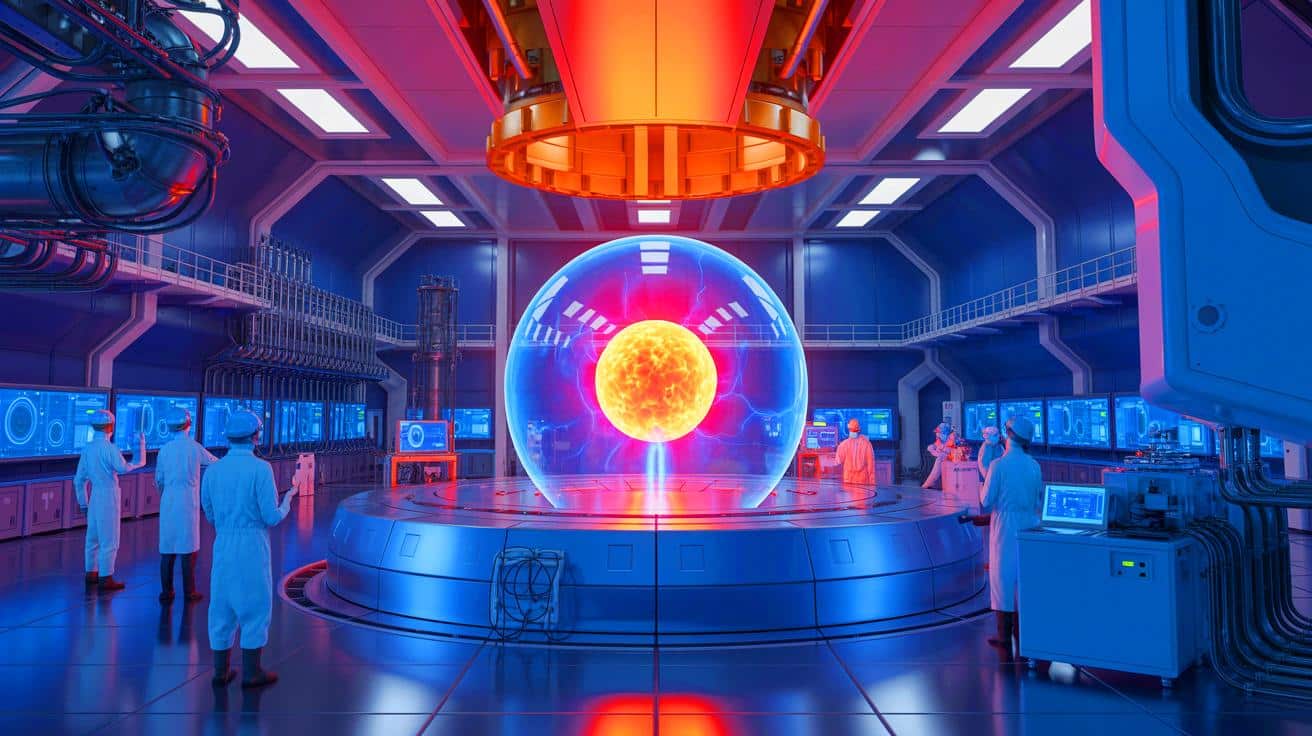
In a groundbreaking achievement, China’s Experimental Advanced Superconducting Tokamak (EAST), often referred to as the “artificial sun,” has reached a significant milestone in the field of nuclear fusion research. On January 20, 2025, EAST successfully sustained plasma for 1,066 seconds, dramatically surpassing the previous record of 403 seconds set in 2023. This accomplishment marks a pivotal moment in the quest for nuclear fusion, a process that holds the promise of providing an almost limitless supply of clean energy. As the world continues to grapple with the challenges posed by climate change and the need for sustainable energy sources, EAST’s success offers renewed optimism for a future powered by fusion.
Understanding Nuclear Fusion and EAST
Nuclear fusion is the process that powers the sun and involves the merging of light atomic nuclei to form a heavier nucleus, releasing an immense amount of energy. Unlike nuclear fission, fusion has the potential to offer a cleaner energy source with minimal radioactive waste. The EAST reactor, located in Hefei, China, has been designed to replicate these stellar conditions. It utilizes a doughnut-shaped chamber to confine hot plasma using powerful magnetic fields. The goal is to achieve the extreme temperatures and pressures necessary for nuclear fusion to occur.
The pursuit of a sustainable fusion reaction on Earth has been a long-standing challenge for scientists. The recent success of EAST represents a significant step forward in this endeavor. By maintaining plasma for an extended period, researchers have demonstrated the potential of magnetic confinement to achieve the conditions necessary for continuous fusion. This development not only underscores China’s technological capabilities but also raises the bar for international fusion research efforts.
The Recent Milestone
On January 20, 2025, EAST achieved a stable operation of high-confinement plasma for 1,066 seconds, reaching temperatures exceeding 180 million degrees Fahrenheit. This milestone is not merely a record-breaking achievement but also a demonstration of the reactor’s improved stability and efficiency. Maintaining such extreme conditions is critical in the pursuit of nuclear fusion, where the aim is to achieve a self-sustaining reaction.
The ability to sustain plasma for over 17 minutes highlights the progress made in understanding plasma behavior and the improvements in reactor components. These advancements are essential for the development of future fusion power plants. This accomplishment is a testament to the dedication and hard work of the scientific community, which continues to push the boundaries of what is possible in fusion research.
Implications for Clean Energy
Nuclear fusion has long been viewed as a potential solution to the world’s energy needs, offering a nearly inexhaustible and environmentally friendly energy source. Unlike current nuclear reactors that rely on fission, fusion produces minimal radioactive waste and carries a lower risk of catastrophic accidents. The success of EAST is a critical advancement toward making fusion a viable alternative to fossil fuels.
As nations strive to reduce carbon emissions and combat climate change, fusion energy presents a promising alternative. The potential to generate power without greenhouse gas emissions could revolutionize the global energy landscape. However, significant technical challenges must be overcome to realize this potential, including achieving a net positive energy output.
Global Implications and Challenges Ahead
China’s achievement with EAST positions it as a leader in the global race to develop fusion energy. The ability to maintain stable plasma conditions for extended periods is a crucial step toward developing fusion reactors capable of providing continuous power. This accomplishment not only highlights China’s growing capabilities in advanced scientific research but also contributes to international efforts to harness fusion energy as a sustainable power source.
Nevertheless, several challenges remain. Developing materials that can withstand prolonged exposure to the extreme temperatures and radiation within fusion reactors is crucial. Additionally, achieving a net positive energy output, where the energy produced by fusion exceeds the energy input required to sustain the reaction, remains a significant hurdle. The path to practical fusion energy is complex and requires continued international collaboration and innovation.
The recent success of EAST provides valuable insights for future fusion projects, such as the International Thermonuclear Experimental Reactor (ITER) in France. Lessons learned from EAST’s experiments will inform the design and operation of next-generation fusion reactors, bringing the vision of fusion-powered electricity closer to reality. As the world looks toward a sustainable future, the question remains: how quickly can we overcome the remaining challenges to make fusion energy a practical reality for all?


Wow, 100 million degrees? That’s hotter than my coffee this morning! ☕️🔥
Can fusion energy really replace fossil fuels, or is it just a pipe dream?
Incredible achievement! Kudos to the scientists and engineers involved. 👏
How does this compare to the fusion research happening in other countries?
Do we even have the materials to build reactors that can withstand such heat?
Fusion energy: the technology of the future… and always will be? 🤔
Bravo China! But at what cost is this advancement being made?
Can you explain the difference between fusion and fission in layman’s terms?
Artificial sun” sounds like something out of a sci-fi movie. 🌌
Is this just a publicity stunt, or is there a real chance of practical application soon?
How will this affect global politics if one country controls fusion energy?
I’m excited but also concerned about the environmental impacts. Is it truly clean?
Is this really safe? I mean, what happens if something goes wrong with such high temperatures?
How long before fusion energy becomes affordable for the average person?
This is a step in the right direction, but there’s still a long way to go!
China seems to be making a lot of technological advancements lately. 🤖
Does this mean we could eventually have fusion reactors in our homes?
Hope this doesn’t turn into another nuclear arms race! 🕊️
What are the biggest hurdles remaining to make fusion a reality?
Finally! A real solution to climate change might be on the horizon. 🌍
With all these advancements, why are we still so reliant on fossil fuels?
So, when can I expect my electricity bill to go down? 💸
Great article, but I’m skeptical about the timeline for commercial fusion energy.
Thank you for the insightful article. The future of energy is looking brighter than ever! 🌞
How close are we to using this technology in our daily lives?
I’m not sure if I should be excited or terrified about an “artificial sun.” 😅
Why is it that China is the one leading the world in this technology?
This sounds promising, but haven’t we heard similar breakthroughs before?