


| IN A NUTSHELL |
|
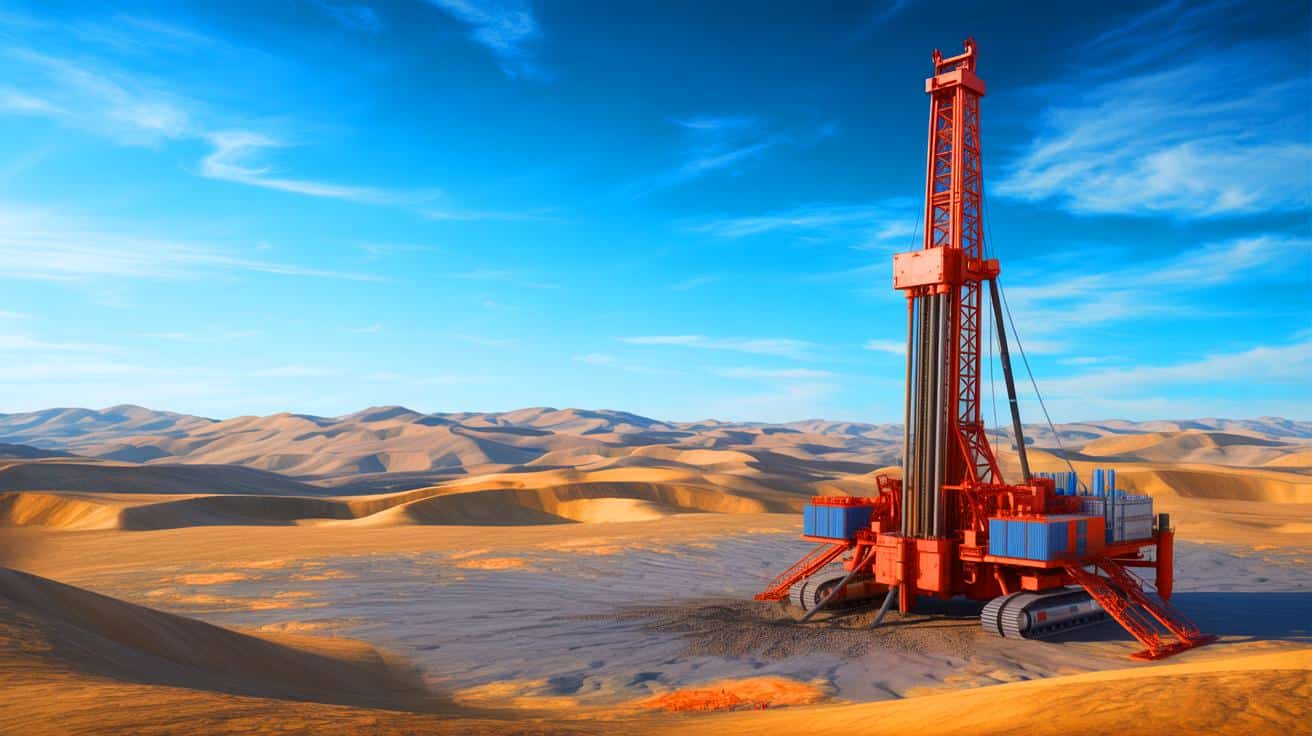
In the midst of China’s Taklimakan Desert, a scientific endeavor of unprecedented scale is underway. China has embarked on a mission to drill over 11,000 meters into the Earth’s crust. This ambitious project aims to penetrate layers untouched for millions of years, promising to unlock secrets about the Earth’s ancient history and its geological processes. Overseen by the China National Petroleum Corporation (CNPC), this project is not only a feat of engineering but also a significant leap in deep-Earth exploration. As the world watches, the implications of this venture could extend far beyond scientific curiosity, potentially altering our understanding of Earth’s geological narrative.
Why China Is Drilling This Deep
The project is centered around accessing the Cretaceous layer, a part of Earth’s crust that dates back over 145 million years. This era was marked by dramatic tectonic shifts and changes in climate, making it a potential treasure trove of information. Scientists believe that examining this layer could provide insights into ancient climate records, plate movements, and even the formation of fossil fuels.
The drilling site, located in the Tarim Basin, is strategically chosen. Known for its energy potential, the basin holds vast reserves of oil and gas. Previous explorations by companies like Sinopec have revealed significant hydrocarbon resources at depths of 8,500 meters. However, this new borehole aims to surpass previous efforts and delve deeper into Earth’s mysteries.
“The goal is to decode a part of the planet that’s been completely untouched for millions of years,” said Wang Chunsheng, a technical expert involved in the project.
https://www.energy-reporters.com/news/chinese-scientists-create-oyster-powered-bone-glue-revolutionary-bone-02-adhesive-fixes-fractures-in-2-minutes-with-400-pound-strength-while-eliminating-metal-implants/
The ambition is not just to discover new resource deposits but also to enhance models for earthquake prediction, subsurface mapping, and geological dating. This endeavor could redefine our understanding of Earth’s subsurface dynamics and resource potential.
The Physics of Deep-Earth Drilling
The challenges of drilling to such depths are immense. The drilling rig, weighing over 2,000 tons, must withstand extreme temperatures and pressures far beyond normal conditions. At 11,000 meters, temperatures can soar to 392°F, and pressures can be 1,300 times greater than at the surface. These conditions pose significant risks, from equipment overheating to sudden rock collapses.
Historically, similar efforts have faced numerous challenges. The Kola Superdeep Borehole in Russia, which reached 12,262 meters, encountered unpredictable rock behaviors and equipment failures. Despite these challenges, it yielded unexpected scientific discoveries, such as microscopic plankton fossils at 6,000 meters and the presence of water deep underground.
Sun Jinsheng, a geoscientist at the Chinese Academy of Engineering, likened the project to “driving a heavy truck along two silk threads,” highlighting the delicate nature of operations at such depths.
This endeavor is not just a test of engineering but also a testament to human curiosity and the desire to push the boundaries of what is possible.
Part of a Wider Strategic Shift Beneath the Surface
China's deep-Earth drilling project is part of a broader strategy to advance frontier technologies. This initiative aligns with President Xi Jinping's 2021 directive for breakthroughs in areas like space exploration, deep-sea mining, and Earth sciences. The timing of this project, following Chinese missions to the Moon, Mars, and an asteroid return mission, underscores a dual focus on exploring both outer space and Earth's depths.
Globally, there is growing interest in understanding the planet's subsurface dynamics. As countries seek new energy sources and climate data amid rising uncertainties, deep-Earth exploration becomes increasingly important. A U.S. Geological Survey report emphasizes the significance of such endeavors for identifying rare earth elements, hydrocarbon basins, and seismic fault zones.
China's drilling project could yield critical data that enhances global geological models and strengthens its own scientific and energy credentials. What lies beneath—whether new fossil fuels, ancient microbial life, or unexpected geological formations—could shift the balance of knowledge in a world hungry for resources.
Anticipated Discoveries and Broader Implications
The potential discoveries from this project are vast. Beyond resource identification, the borehole could uncover new geological phenomena and life forms adapted to extreme conditions. Such findings might revolutionize our understanding of Earth's history and its capacity to host life.
Moreover, the project's success could inspire similar initiatives worldwide, fostering international collaboration in geoscience. As nations grapple with energy demands and climate challenges, the insights gained from deep-Earth exploration could inform sustainable practices and technological innovations.
While the immediate focus is scientific discovery, the long-term implications are profound. How might these findings influence global energy strategies? Could they lead to breakthroughs in climate science? As China continues its descent into the Earth's depths, the world waits to see what revelations will emerge.
As China embarks on this ambitious journey, the scientific community and global observers are eager to see what lies beneath the Earth's surface. Will the project unveil new resources, ancient life forms, or geological phenomena that challenge current understanding? The answers remain uncertain, but they hold the potential to redefine our relationship with the planet we call home.

Isn’t this just another way for China to grab more resources? 🤔
Is this drilling safe for the environment? 🌍
Fascinating read! Thanks for sharing. 😊
Why is China so interested in the Earth’s core all of a sudden?
Wow, drilling 11,000 meters! That’s deeper than my last existential crisis!
What happens if they accidentally hit magma? 😱
Great article, but I’m curious about the cost. How much does a project like this cost?
Thank you for this insightful article. It really sheds light on China’s ambition in Earth sciences.
Sounds like a sci-fi movie plot! 🚀
What kind of technology is being used to withstand such high temperatures?
What about the environmental impact of such a massive project? 🌍
11,000 meters is impressive, but how does it compare to the Kola Superdeep Borehole?
I’m skeptical. Is this really just about science, or is there more to it?
How does this compare to the Kola Superdeep Borehole in Russia?
Can this drilling affect seismic activity in the area?
Wow, this is huge news! Can’t wait to see what they find! 🎉
Thanks for the in-depth article. Very informative!
Anyone else worried about the potential for resource exploitation? 🤔
This sounds like a dangerous mission. Hope they have safety measures in place.
I’ve always wondered what lies beneath the Earth’s surface. Exciting times!
How long will it take to reach the target depth?
Are there any international regulations on drilling this deep?
Hope they find some ancient dino fossils down there! 🦖
Isn’t this a bit risky considering the pressure and temperature down there?
What are the potential risks of drilling in the Taklimakan Desert?
Is this project a part of China’s Belt and Road Initiative?
How does this project fit into global energy strategies?
Does China plan to share their findings with the international community?
What if they find something that changes our understanding of Earth’s history?
Can’t help but feel this is a resource grab in disguise.😒
Why did they choose the Tarim Basin for this project?
Would love to see some visuals of the drilling process!
What measures are in place to protect the surrounding ecosystem?
Is this part of a wider global effort to explore Earth’s depths?
Very ambitious project! Kudos to the team involved. 👏
Do they have backup plans if something goes wrong?
Can this project really help with earthquake prediction?
How might these findings impact climate science?
Will this project inspire other countries to start their own deep-earth drilling projects?
What kind of new geological phenomena are they hoping to discover?
How does this align with China’s space exploration goals?
Could this project contribute to new technological innovations?
Are there any similar projects happening elsewhere in the world?
What are the long-term goals of this drilling endeavor?
Exciting times in geoscience! Can’t wait to see the results. 🌟