




| IN A NUTSHELL |
|
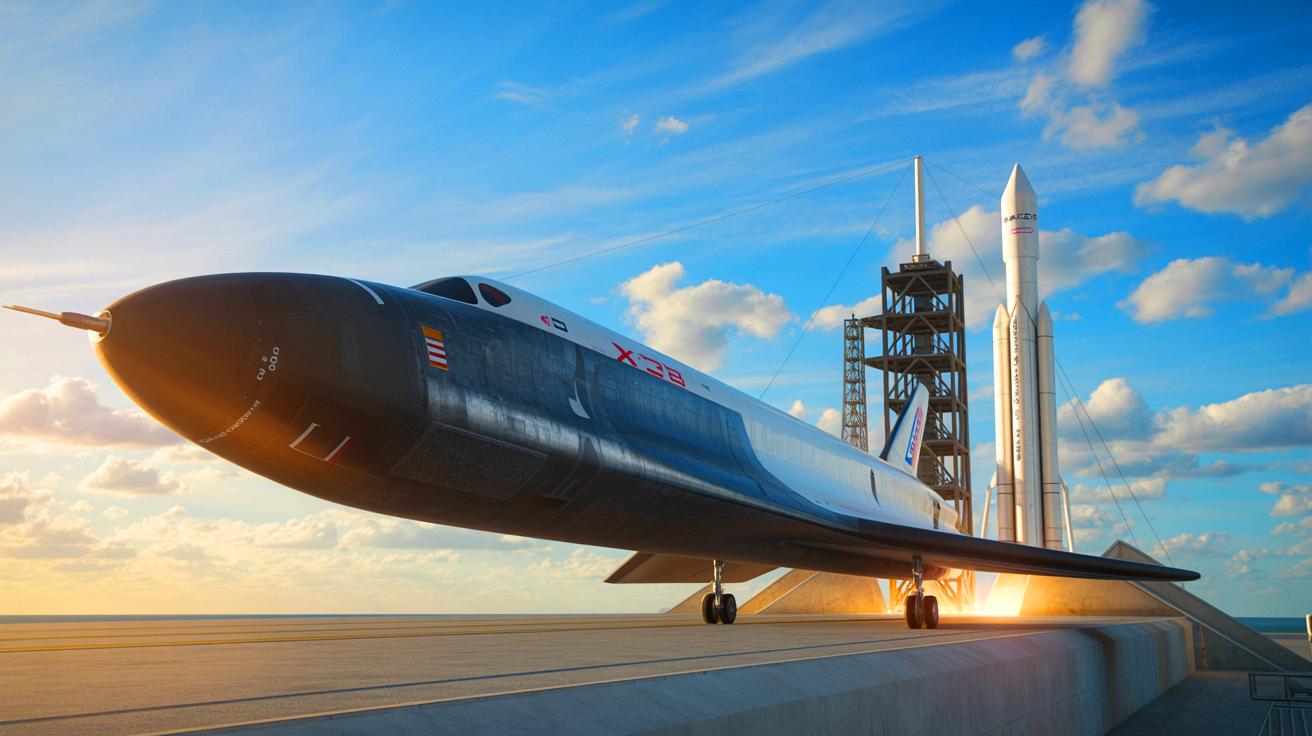
On August 21, 2025, the U.S. Space Force’s X-37B orbital test vehicle will embark on its eighth mission, launching from the Kennedy Space Center in Florida. Developed by Boeing, this uncrewed and autonomous spacecraft is a pivotal asset in the U.S. military’s space operations, conducting experiments in both high and low Earth orbits. Despite its known presence, the specific functions of the X-37B remain largely classified, adding an air of mystery to its missions. As it prepares for launch, the space plane will rely on a SpaceX Falcon 9 rocket, safely encased within the rocket’s carbon composite fairing, highlighting its dependency on collaborative aerospace efforts.
The Versatile Design and Capabilities of the X-37B
The X-37B, often likened to a smaller version of the retired space shuttle, is distinguished by its modular design, allowing it to undertake a wide range of experiments and missions. This flexibility is a testament to Boeing’s advanced engineering, which ensures the spacecraft’s exceptional performance and durability. The modularity of the X-37B makes it a versatile tool in space exploration, capable of adapting to various scientific and technological advancements. This adaptability is crucial as space becomes an increasingly complex and contested domain.
One of the standout features of the X-37B is its autonomous re-entry capability. This allows for safe and reliable returns to Earth, enabling quick refurbish, reprocess, and re-fly cycles. Such efficiency is vital for the rapid advancement of space technologies and the continuous development of new experiments. The spacecraft’s ability to safely return and be reused makes it a cost-effective solution in the realm of space exploration, supporting a sustainable approach to space missions.
The Significance of the Seventh Mission
On March 7, the X-37B completed its seventh mission, landing successfully at Vandenberg Space Force Base in California. This mission was a crucial demonstration of the spacecraft’s capabilities, executing a range of test and experimentation objectives that emphasized its robust maneuverability. By testing space domain awareness technology, Mission 7 aimed to enhance the U.S. Space Force’s understanding of the space environment, which is crucial for effective operations in a crowded and contested space domain.
The technologies tested during Mission 7 are vital for maintaining the U.S. Space Force’s strategic edge in space operations. As the space environment becomes more congested, the ability to understand and navigate this domain is increasingly important. The successful completion of this mission underscores the X-37B’s role in advancing the United States’ capabilities in space exploration and defense.
Exploring New Frontiers: Quantum Navigation
Among the various experiments the X-37B is capable of conducting, one notable development is the exploration of quantum navigation technology. This involves the use of a quantum inertial sensor as a potential alternative to GPS, leveraging quantum science for navigation. Such technology could revolutionize navigation for spacecraft, airplanes, ships, and submarines, especially in environments where GPS is unavailable or compromised.
Quantum navigation technology represents a significant advancement in how we understand and interact with space. As satellite-based systems like GPS become integral to our daily lives, finding alternatives that offer reliability and precision in GPS-denied environments is crucial. The X-37B’s role in testing these cutting-edge technologies positions it at the forefront of space innovation, contributing to the broader goal of enhancing navigational capabilities in diverse and challenging settings.
Collaboration with SpaceX and the Path Forward
The X-37B’s reliance on SpaceX’s Falcon 9 rocket for launch is a key example of the collaborative nature of modern space exploration. This partnership underscores the importance of cooperation between private and public sectors in advancing space technologies. The use of SpaceX’s reliable launch services enables the X-37B to reach its intended orbit efficiently, showcasing the benefits of leveraging commercial capabilities for military and scientific objectives.
As the X-37B prepares for its eighth mission, the focus remains on expanding the boundaries of what is possible in space. The ongoing collaboration between Boeing, the U.S. Space Force, and SpaceX is indicative of the dynamic and evolving landscape of space exploration. This mission not only highlights the technological prowess of the X-37B but also raises questions about the future role of such spacecraft in the broader context of international space operations.
With the X-37B poised to embark on its latest mission, the questions surrounding its secretive capabilities and future potential remain as intriguing as ever. As space exploration continues to evolve, how will the balance between secrecy and transparency shape the future of military and civilian space operations?