




| IN A NUTSHELL |
|
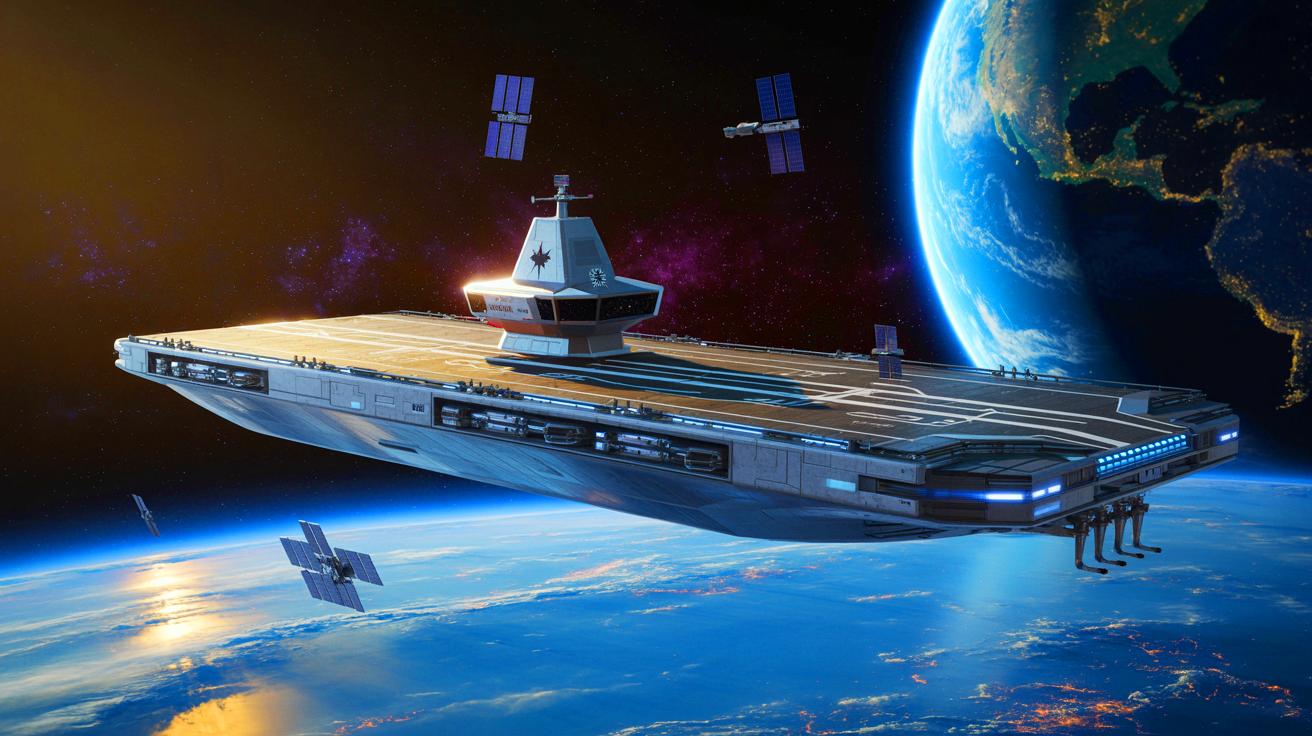
The United States is taking a significant leap in space technology with the development of an orbital aircraft carrier, a project that promises to change the landscape of satellite deployment. This ambitious endeavor is spearheaded by Gravitics, in collaboration with the U.S. Space Force, highlighting a strategic focus on space as a critical domain. Amid global tensions and a competitive space race, the U.S. aims to secure its dominance in space exploration and defense. This initiative marks a pivotal moment in the nation’s efforts to maintain technological and strategic superiority in the cosmos.
The Vision Behind the Orbital Aircraft Carrier
Gravitics is at the forefront of this revolutionary project, aiming to transform the way satellites are deployed. The orbital aircraft carrier, funded to the tune of $60 million by the U.S. Space Force, seeks to launch satellites directly from Earth’s orbit. This approach offers a faster, more agile response to national security threats, eliminating the reliance on traditional rocket launches. By having a space-based carrier, the U.S. military can gain a strategic advantage, ensuring that it remains prepared for immediate and future security challenges.
This initiative comes at a time of increasing concern over a potential space arms race. The ability to have a pre-positioned platform in orbit allows the U.S. to deploy satellites as needed, providing flexibility and rapid response capabilities. As the U.S. strengthens its orbital presence, it also demonstrates a commitment to leading in space technology, reinforcing its position as a global leader in innovation and defense.
Enhancing Space Security and Superiority
The orbital aircraft carrier designed by Gravitics provides a secure environment for housing multiple satellites, protecting them from the harsh conditions of space. This protection is vital for safeguarding the sensitive electronics and batteries of satellites, which are essential in today’s era of electronic warfare and cyber threats. By ensuring the safety and functionality of satellites, the U.S. enhances its space security capabilities.
Furthermore, the ability to conceal satellites from adversaries offers a tactical advantage, aligning with the Space Force’s mission of achieving orbital dominance. Gravitics CEO Colin Doughan describes the carrier as a “game-changer,” highlighting its potential to revolutionize military capabilities. This project not only strengthens the U.S. military’s operational readiness but also sets a precedent for future technological advancements in space exploration.
Public-Private Partnerships and Their Impact
The collaboration between Gravitics and the U.S. Space Force exemplifies the growing importance of public-private partnerships in advancing space technology. Gravitics is also working with Axiom Space on a pressurized space module, showcasing its commitment to both defense and commercial solutions. These partnerships are crucial for integrating cutting-edge technologies into national defense strategies, enhancing the U.S.’s position in space.
By joining forces with private companies, the government can leverage innovation to bolster national security while fostering developments with potential civilian applications. The success of such collaborations could open new market opportunities and drive further advancements in space technology. As these partnerships continue to thrive, they may play a key role in shaping the future of space exploration and exploitation.
The Future of Space Exploration
The emergence of technologies like the orbital aircraft carrier signals a new era in space exploration. This advancement has the potential to transform security, surveillance, and communication paradigms, impacting both military operations and private sector involvement. The implications of this technological leap are vast, heralding a shift in how space is utilized and governed.
As the U.S. Space Force and companies like Gravitics prepare for future challenges, questions arise about international cooperation in space. How will these innovations influence diplomatic relations between nations? More importantly, how can we ensure that space remains a domain of shared peace and progress, benefiting all of humanity?
As the United States embarks on this ambitious journey into space, the implications of its technological advancements extend far beyond national borders. The collaboration between the U.S. Space Force and private companies like Gravitics highlights a strategic approach to maintaining space superiority. As these innovations continue to unfold, the world watches closely. How will these developments shape the future of international relations and the shared use of space resources?



Wow, an orbital aircraft carrier! Does this mean we’ll have space battles soon? 🚀
What exactly are “gravitics”? Sounds like something out of a sci-fi movie!
Can someone explain how this project impacts international space treaties?
This is amazing! Proud to see the U.S. leading in space tech. 🙌
This is got to be a big fantasy. Otherwise a boondoggle. SpaceX has the cutting edge spacecraft. They are just getting starship up to speed. Someone else building a space aircraft carrier. I don’t think so.
How do they plan to fuel and maintain this carrier in space?
Interesting article! But isn’t this just escalating the space arms race? 🤔
It’s always about military supremacy, isn’t it? What about peaceful uses?
I’m skeptical. How “secure” can anything really be in space?
Great read! Thank you for keeping us informed on space advancements.
Do other countries have similar projects in development or is the US ahead?
More money on military tech… meanwhile, Earth still has plenty of problems. 😅
How will this affect space debris and the overall environment in orbit?
Gravitics sounds like a made-up word. What does it actually mean?
Love the collaboration between public and private sectors—more innovation! 💡
Isn’t it risky to have such high-tech equipment in space, vulnerable to attacks?
Will this lead to a decrease in traditional rocket launches?
Hope this tech can also be used for peaceful exploration and not just defense.
Are there any international laws governing orbital carriers like this one?
This is all really cool, but how does it benefit the average person? 🤷♂️
Great insight into the future of space security, but I wish it was less militarized.
How much of this tech could trickle down to civilian applications?
I’m excited to see what the future holds for space exploration! 🚀
What are the potential risks of having more military assets in space?
Is it just me, or does this sound like the plot of a sci-fi thriller? 🤖
How does this affect the U.S.’s relations with other spacefaring nations?
Thanks for the article! It’s fascinating to see how far we’ve come in space tech.
How will they ensure these technologies don’t fall into the wrong hands?
Yeah, this is more fantasy than fact. SpaceX is pioneering spaceflight now. Leading the pack with Starship. Still working out the bugs. An aircraft carrier in space? Yeah I don’t think so. More like wishful thinking. Just saying. Where is spaceflight now?
Looks like a big pile of BS.
“This article is based on verified sources”? This writer is a moron. In 2 seconds you can google “Orbital Drone Carrier” and see the Gravitics site, which shows a picture of the spacecraft. It’s not a stupid aircraft carrier in space. Also, why are there two Earths in your picture? This is the dumbest picture I’ve seen in years.