




| IN A NUTSHELL |
|
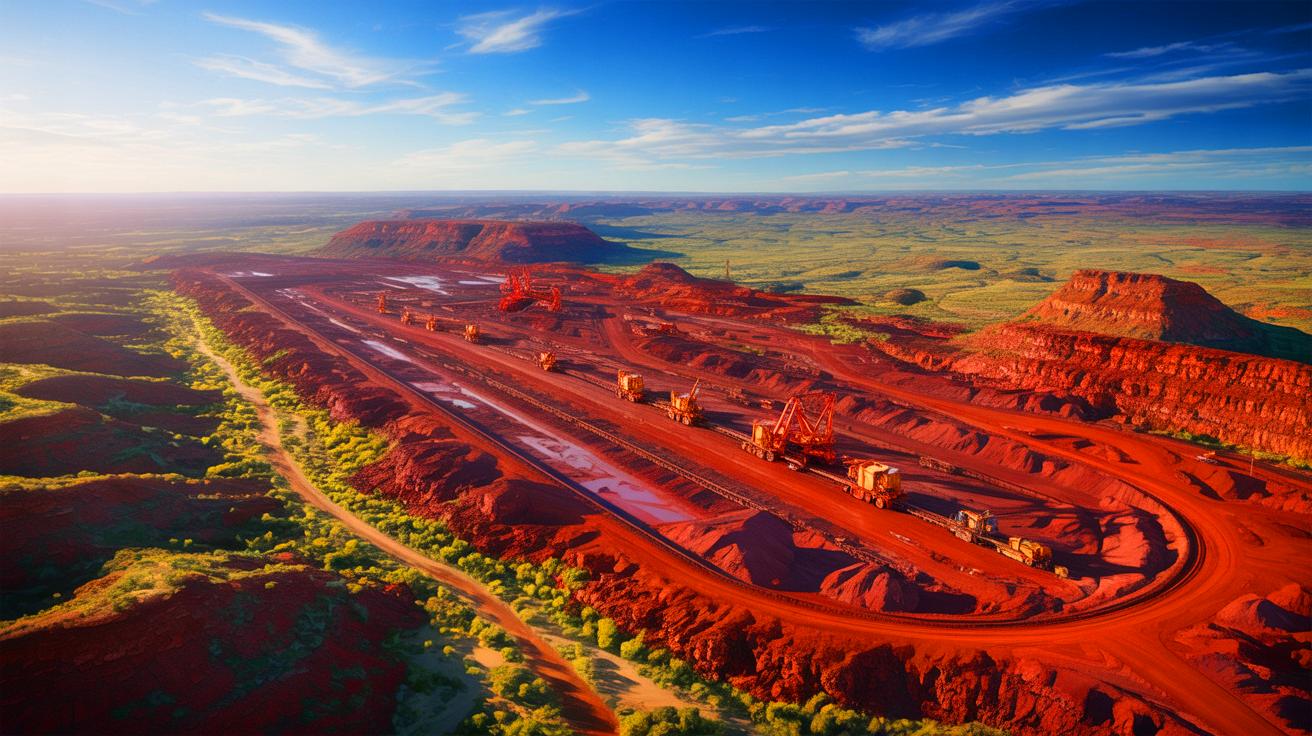
In a groundbreaking discovery, geologists have unearthed an immense iron ore deposit in Western Australia’s Pilbara region. Valued at nearly $6 trillion, this finding is poised to have far-reaching implications on the global iron market. With iron concentrations exceeding 60%, this newly discovered deposit is one of the richest ever recorded, challenging traditional geological theories about mineral formation. As experts and markets react to this revelation, it promises not only economic benefits but also fresh insights into Earth’s geological history. The discovery’s impact could reshape international trade dynamics and deepen our understanding of the planet’s past.
The Pilbara’s Hidden Wealth: A Geologist’s Dream
The Pilbara region, already famed for its mineral resources, has unveiled its most significant find to date: the largest iron ore deposit in the world. This discovery radically alters the geological landscape of an area long known for its desolate beauty and mineral abundance. Historically, the region’s Hamersley Range has been a focal point for mining activities, but recent technological advancements have revealed iron concentrations far beyond previous estimates.
New geological studies suggest that these formations are approximately 1.4 billion years old, rather than the previously estimated 2.2 billion years. This revision implies that ancient supercontinent cycles were instrumental in forming these vast mineral deposits. The dynamic shifts of Earth’s crust over eons appear to have created optimal conditions for these rich concentrations. This breakthrough not only enhances our understanding of Earth’s ancient history but also opens new avenues for future mineral discoveries in similar geological environments.
Technological Breakthroughs in Mining
Advanced technology played a crucial role in uncovering this extraordinary deposit. Geologists employed cutting-edge isotopic dating and chemical analysis to ascertain not only the size but also the remarkable quality of the ore. Initial estimates indicated a 30 percent iron content; however, recent analyses have revealed concentrations exceeding 60 percent, classifying this deposit among the richest worldwide.
These technological advancements extend beyond academic interest. They facilitate more efficient and environmentally sustainable mining practices by minimizing waste and optimizing extraction processes. This technological leap sets a new standard for the mining industry and boosts confidence in future explorations. As researchers continue to refine these methods, the potential for discovering other significant deposits increases, offering promising prospects for understanding Earth’s mineral resources.
Changing Dynamics in the Global Iron Market
Australia’s role in the global iron market is set to expand with this discovery, reinforcing its position as a leading supplier. The sheer scale of the deposit is likely to influence global iron prices, potentially prompting shifts in economic and strategic alliances among nations dependent on iron imports. As countries reevaluate their economic dependencies, this could lead to new trade agreements and partnerships, reshaping the international mining landscape.
Beyond its economic impact, the discovery challenges long-standing geological theories. Continued study of the region may provide insights into the processes that shaped Earth’s surface and its mineral wealth. These findings could revolutionize our understanding of mineral formation and encourage exploration in similar geological settings around the world.
Rethinking Geological History
The implications of this discovery extend beyond immediate economic benefits. The deposit has the potential to revolutionize geological history by questioning established scientific beliefs. As geologists delve deeper into the region, they seek to uncover more about the ancient processes that led to the formation of such significant mineral deposits.
This finding not only enriches our understanding of Earth’s past but also drives future research endeavors. The insights gained could lead to further breakthroughs in geology and mining, unlocking new opportunities for exploration and discovery. As the scientific community investigates the mysteries of the Pilbara region, the potential to uncover more vast mineral deposits grows, promising exciting developments in the years ahead.
As the world considers the full implications of this monumental discovery, one question remains: what other secrets lie hidden beneath Earth’s surface, poised to challenge our understanding and reshape our future?

Wow, $6 trillion? That’s a lot of ore! 😲
Thank you for the insightful article! It’s fascinating how these deposits were formed.
$6 trillion in iron? That’s like finding a treasure chest underground! 💰
Are there any environmental concerns related to mining this deposit?
The US-China trade clash is heating up. Could this discovery be the tipping point?
What about the impact on iron prices? Will they drop significantly now?
This article gave me a new appreciation for geology. Thanks!
Are we sure these estimates are correct? Seems almost too good to be true.
Will this affect jobs in the mining sector? More job cuts or more hiring?
How do they estimate the value to be $6 trillion? 🤨
The Pilbara region just keeps giving! Truly a geological wonder.
Amazing discovery, but what about the indigenous lands in the area?
Why are US-China relations always involved in resource discoveries? 🤷♂️
This is like the gold rush all over again, but with iron!
How much of this deposit is actually mineable?
I’m curious about the technological methods used. Can someone explain more?
With discoveries like this, Earth’s history becomes even more intriguing. 🌍
Sounds like a game changer for the global economy!
Could this discovery lead to more diplomatic tensions globally?
Isn’t it amazing how modern technology can uncover such secrets from the past?
Will this discovery impact Australia’s mining regulations or policies?
The article was well-written, but I wish it had more on the environmental impact.
Iron ore and international politics—what a mix! 🏛️
Hope this leads to sustainable mining practices and not just profit-driven ventures.
Is the $6 trillion value based on current market prices or future projections?
This article has me dreaming of becoming a geologist. Thanks for the inspiration!
How will this discovery affect the local communities in the Pilbara region?
Will this affect China’s current iron supplies and prices? 🤔
Any chance this find will lead to new technological developments in mining?
I’m skeptical about the long-term implications for the global market.
What other minerals could be out there waiting to be discovered? 🌟
Great article! I knew Australia was rich in resources, but this is next level.
Can the global market handle such a massive influx of iron? 🤔
Isn’t it risky to depend too much on one country’s resources?