




| IN A NUTSHELL |
|
The United States is embarking on a bold new venture in space technology with the development of an orbital aircraft carrier. Spearheaded by the innovative startup Gravitics, this project represents a significant leap forward in satellite deployment capabilities. The U.S. Space Force has partnered with Gravitics to advance this initiative, underscoring the strategic importance of space in national defense. As geopolitical tensions continue to rise, this project aims to secure the United States’ dominance in space and strengthen its defense capabilities. This collaboration between private industry and the military illustrates a new era in space exploration and defense strategy.
The Vision Behind the Orbital Aircraft Carrier
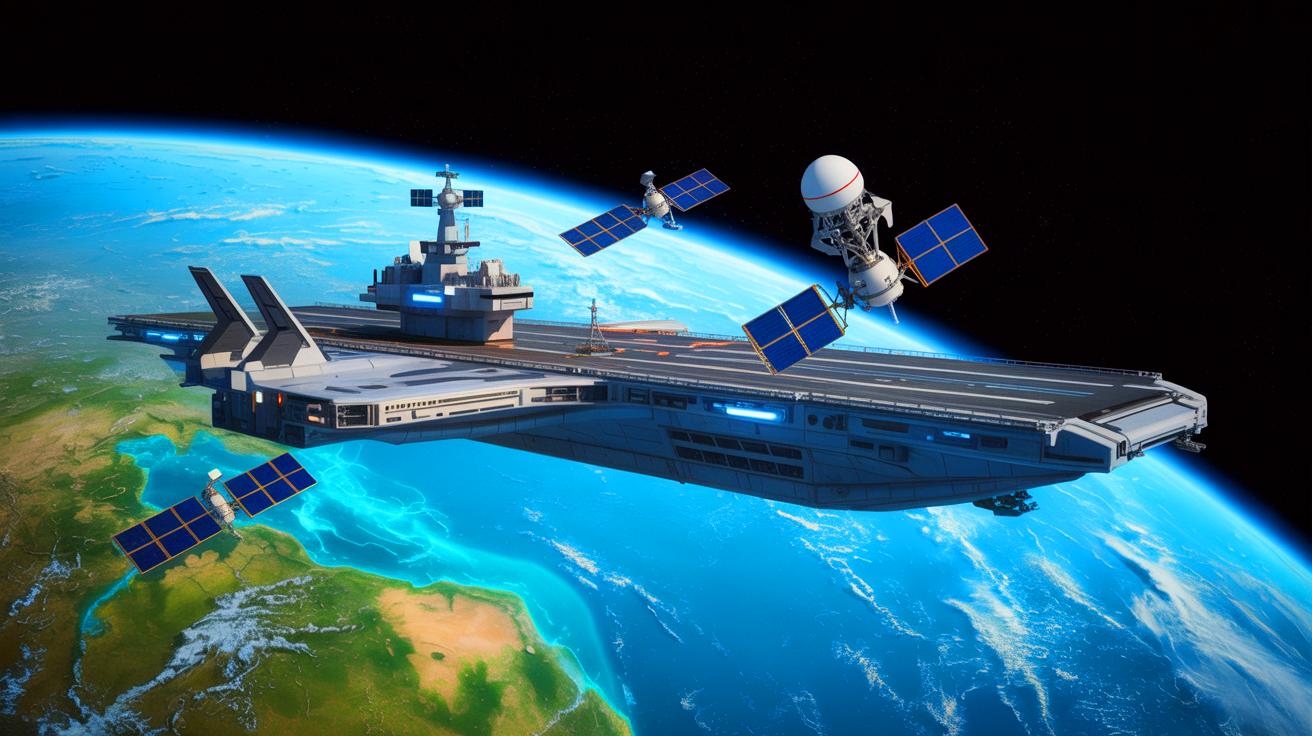
Gravitics is leading the charge in redefining satellite deployment with its innovative orbital aircraft carrier. Funded by a $60 million investment from the U.S. Space Force, the project aims to facilitate the direct launch of satellites from Earth’s orbit. This approach eliminates the reliance on traditional rocket launches, providing a more agile response to national security needs. The concept of a space-based carrier offers a substantial strategic advantage, positioning the U.S. military to respond rapidly to emerging threats.
This initiative reflects the U.S. military’s commitment to maintaining a strong presence in orbit, especially in light of potential competition in space. A pre-positioned orbital platform allows for flexibility in satellite deployment, addressing both current and future security challenges. By embracing this cutting-edge technology, the United States reaffirms its leadership in space innovation, setting a new standard for military and technological capabilities.
Enhancing Space Security and Superiority
The orbital aircraft carrier developed by Gravitics provides an unpressurized environment to house multiple satellites securely. This design ensures that satellites are protected from the severe conditions of space, safeguarding their batteries and sensitive electronics. In an era of increasing electronic warfare and cyber threats, this protection is paramount. The ability to shield satellites effectively offers a strategic edge, bolstering the U.S. military’s space security capabilities.
Moreover, the carrier has the potential to conceal satellites from adversaries, adding a tactical advantage. Gravitics CEO Colin Doughan has described the carrier as a “game-changer,” aligning with the Space Force’s mission of achieving orbital dominance. This project not only strengthens military capabilities but also sets a precedent for future advancements in space exploration technology.
Public-Private Partnerships and Their Impact
The development of the orbital aircraft carrier highlights the crucial role of public-private partnerships in advancing space technology. Gravitics, alongside Axiom Space, is also working on a pressurized space module, demonstrating its commitment to both defense and commercial applications. This dual approach indicates the potential for growth and alignment with the Department of Defense’s objectives.
Collaborations between private companies and government entities are essential for integrating innovative technologies into national defense strategies. By working together, these partnerships can enhance the U.S.’s position in space and pave the way for civilian applications. The success of such collaborations may lead to new market opportunities and further advancements in space technology.
China Firm Sparks US Fears: This New Battery Defies -40°F, Solar Industry Faces Potential Disruption
The Future of Space Exploration
With technologies like the orbital aircraft carrier on the horizon, a new era of space exploration is emerging. This technological leap has the potential to transform security, surveillance, and communication paradigms, benefiting both military and private sectors. The implications are profound, indicating a shift in how space is utilized and governed.
As the U.S. Space Force and companies like Gravitics prepare for future challenges, questions about international space cooperation arise. How will these innovations influence diplomatic relations between nations? More importantly, how can we ensure that space remains a domain of shared peace and progress, benefiting all of humanity?
The intersection of technology and defense in space exploration presents a complex landscape for the future. As the United States continues to invest in orbital advancements, the implications for security, international relations, and commercial opportunities grow. As these developments unfold, it is crucial to consider how international cooperation can be fostered alongside technological progress. Will the pursuit of space superiority lead to collaboration or competition among nations?




Wow, this is like something straight out of a sci-fi movie! 🚀
Wait, a real-life Star Trek ship? 🚀 What’s next, warp speed?
How does this project affect the budget for other space programs?
Isn’t $60 million a bit low for something this advanced? 🤔
Are there any international agreements that could be violated by this orbital carrier?
This is amazing news! Can’t wait to see what comes next in space exploration. 🌌
Thank you for this insight into the future of space tech!
How secret can these satellites be if we’re reading about them now?
Great article! Thanks for keeping us informed about space tech advancements.
Can we trust private companies with such sensitive technology?
What are the potential risks of having such powerful tech in orbit?
This sounds like a plot twist in a Tom Clancy novel!
Sounds like science fiction! Can’t wait to see it in action. 🌌
Is $60 million enough for a project of this scale?
How will this impact our relations with other space-faring nations?
Gravitics sounds like an impressive company. What other projects are they working on?
How soon can we expect this carrier to be operational?