




| IN A NUTSHELL |
|
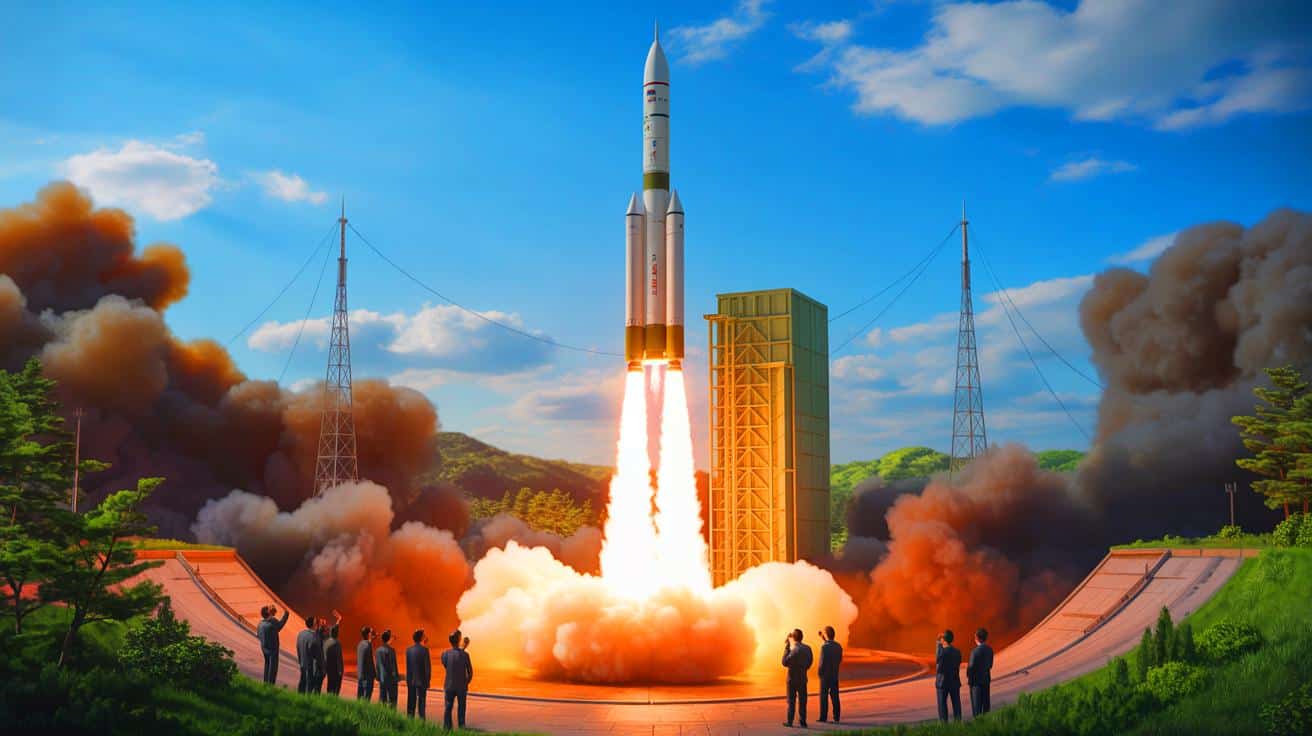
In recent developments across the globe, the aerospace industry has witnessed significant strides in missile technology and space exploration. North Korea’s assertion of testing a powerful new solid rocket motor for intercontinental ballistic missiles (ICBMs) underscores ongoing advancements in military capabilities. Meanwhile, the United States and Russia continue their endeavors in space exploration, marked by resupply missions to the International Space Station and efforts to enhance rocket engine production. Amid these technological pursuits, international collaborations and new ventures, such as Astrobotic’s agreement with Norway’s Andøya Space, highlight the growing interconnectedness in space logistics and exploration.
North Korea’s Advancements in Missile Technology
North Korea’s recent test of a solid-fuel rocket engine marks a pivotal development in its missile technology. According to reports from the Korean Central News Agency, the test was overseen by leader Kim Jong Un and demonstrated a thrust capability of 443,000 pounds. This engine, built with carbon fiber, is intended for use in the Hwasong-20 missile. Such advancements suggest that North Korea is steadily progressing toward an arsenal capable of threatening the continental United States.
Solid-fuel missiles offer distinct advantages over their liquid-fueled counterparts, primarily in terms of mobility and readiness. These missiles can be stored for extended periods, are easier to conceal, and can be launched with minimal preparation time. Analysts speculate that North Korea might showcase this technology in future tests, potentially aligning with significant national events such as the ruling party congress in 2026. This progression in missile capabilities emphasizes the importance of monitoring geopolitical dynamics in the region.
The Role of Solid Rocket Motors in Modern Defense
Ursa Major, a prominent player in the aerospace industry, has embarked on a significant venture to enhance the production of solid rocket motors (SRMs) in the United States. The company recently broke ground on a new 400-acre facility in Colorado, which will focus on testing and qualifying large-scale SRMs. This initiative aims to support national defense programs and ensure that the U.S. military has access to reliable and advanced missile technology.
Ursa Major's portfolio includes SRMs ranging from 2 inches to 22 inches in diameter, catering to various missile systems such as the Navy's Standard Missile fleet. The company's efforts to expand its production capabilities highlight the growing demand for robust and adaptable missile technology. As geopolitical tensions continue to shape defense strategies, the development and deployment of advanced SRMs remain a crucial component of national security.
International Collaborations in Space Exploration
Astrobotic's recent agreement with Norway's Andøya Space marks a significant step forward in international space collaboration. This partnership will facilitate the testing of Astrobotic's Xodiac lander testbed at the Andøya Space facilities. The Xodiac rocket, originally developed by Masten Space Systems, is designed to simulate lunar and Martian landings.
With the acquisition of Masten's intellectual property, Astrobotic aims to deliver cost-effective testing capabilities to the European space market. The agreement with Andøya Space underscores the importance of cross-border partnerships in advancing space exploration. As countries and companies strive to explore beyond Earth's orbit, collaborative efforts such as this provide the necessary infrastructure and expertise to achieve ambitious goals.
Challenges and Opportunities in Rocket Engine Production
Amidst the advancements in missile technology and space exploration, Russia faces challenges in maintaining its historical leadership in rocket engine production. President Vladimir Putin has urged aerospace industry leaders to renew efforts in developing booster rocket engines for space vehicles. This initiative aims to bolster Russia's competitiveness in the global space market.
However, the outlook for heavier-duty Russian rocket engines remains uncertain. The RD-180 engine, once a cornerstone of Russia's space endeavors, is no longer in production following the cessation of sales to the United States. As Russia navigates these challenges, it must balance domestic needs with opportunities to compete in international markets. The future of Russia's space industry hinges on its ability to innovate and adapt to evolving technological landscapes.
As the world continues to witness remarkable advancements in missile technology and space exploration, questions about the implications of these developments arise. How will countries balance the pursuit of technological progress with the need for international cooperation and security? The answer may shape the future of global aerospace endeavors.


Wow, North Korea’s advancements in missile technology are concerning. How should the world respond? 🤔
Wow, 443,000 pounds of thrust? That’s some serious power! 🚀
Carbon fiber in missiles? What’s next, titanium submarines? 🤔
Interesting article, but how reliable are these reports about North Korea?
Are there any environmental implications of using solid-fuel rockets?
Thank you for keeping us updated on such critical global developments.
How does Ursa Major’s new facility impact the local economy in Colorado?
I’m skeptical about North Korea’s claims. Do we have any independent verification?
Is solid-fuel really that much better than liquid-fuel for missiles?
Great read! The future of space exploration looks promising. 😊
Can the U.S. catch up with these advancements, or is it already too late?
How does Russia plan to overcome its challenges in rocket engine production?
This article makes me wonder about the future of international relations. 🌍
Why is there so much focus on missile technology instead of peaceful space exploration?
Are there any potential downsides to using carbon fiber in missile construction?
Loved the emojis in the article! Makes it more engaging. 😄
Does the public have a role in influencing these technological advancements?
Is it really possible to build ICBMs with carbon fiber? Sounds like something out of a sci-fi movie!
Is North Korea really using carbon fiber for ICBMs? Sounds like a sci-fi novel.
Not sure if I should be impressed or worried about these developments.
How will international partnerships like Astrobotic’s affect global space policies?
What other materials are being considered for future missile and rocket designs?
Interesting article, but I wish it went more into the geopolitical implications.
Are there any upcoming tests scheduled for these new technologies?
Fascinating read, but how credible is the information from the Korean Central News Agency?
Can smaller countries benefit from these advancements in space exploration?
What is the role of private companies in advancing missile and space technology? 🚀
Thank you for this comprehensive update on global missile and space technology. 🚀
How does this new North Korean engine compare to others globally?
Why is Russia facing challenges in rocket engine production now? Haven’t they always been leaders in this field?
America racing to compete sounds like a plot twist in a spy thriller!
Ursa Major expanding its facilities sounds like a big move. How does this affect the US military’s capabilities?
It’s impressive to see international collaborations grow in space exploration. 🌌
I can’t believe we’re still racing to compete with North Korea. Feels like a Cold War 2.0.
Will this new engine actually change the balance of power in missile technology?