




| IN A NUTSHELL |
|
The United States is breaking new ground in space technology through a pioneering project that promises to redefine satellite deployment. At the heart of this initiative is an orbital aircraft carrier developed by Gravitics, a forward-thinking startup collaborating with the U.S. Space Force. This project underscores a strategic commitment to space as a vital domain and illustrates the growing collaboration between private companies and national defense agencies. With global tensions on the rise, the U.S. is making a concerted effort to assert its dominance and secure its position in the space arena.
The Vision Behind the Orbital Aircraft Carrier
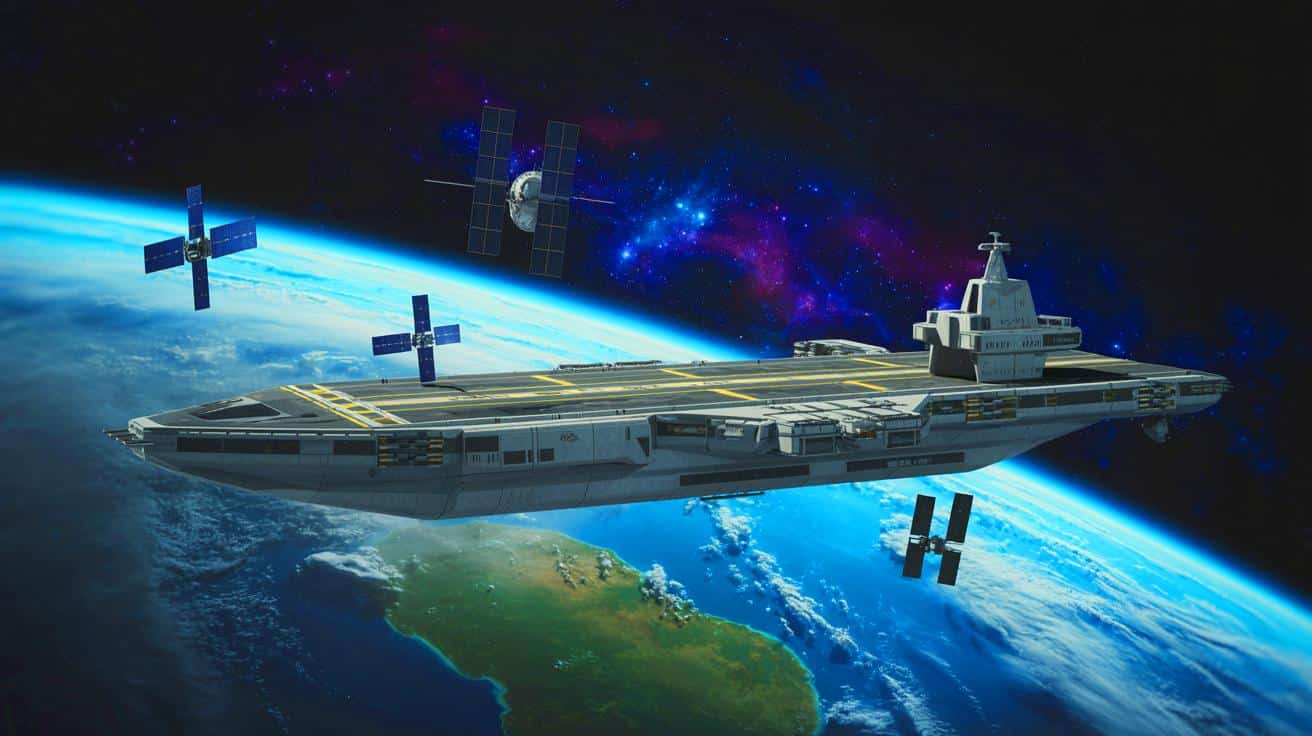
Gravitics, in collaboration with the U.S. Space Force, is embarking on an ambitious $60 million project to develop an orbital aircraft carrier. This innovative platform aims to revolutionize how satellites are launched by enabling direct deployment from Earth’s orbit. Such a capability is expected to provide a faster and more agile response to national security threats, eliminating the need for traditional rocket launches. The strategic advantage this offers to military operations is substantial.
This initiative aligns with the U.S. military’s goal of maintaining a robust presence in orbit, particularly in light of the potential for a space arms race. By pre-positioning a platform in orbit, the U.S. can launch satellites on demand, addressing both immediate and long-term security concerns. This advancement is a testament to the United States’ commitment to maintaining leadership in space technology, positioning the nation at the forefront of global space capabilities.
Enhancing Space Security and Superiority
The orbital aircraft carrier developed by Gravitics is designed to house multiple satellites in an unpressurized environment. This design ensures the protection of sensitive electronics and batteries from the harsh conditions of space. In an era dominated by electronic warfare and cyber threats, such safeguarding is crucial. By isolating and shielding satellites, the U.S. gains a strategic advantage in enhancing its space security capabilities.
An additional benefit of the orbital carrier is its ability to conceal satellites from adversaries, providing a tactical edge. Gravitics CEO Colin Doughan describes the carrier as a “game-changer” that aligns with the Space Force’s mission of achieving orbital dominance. This project not only enhances military capabilities but also sets a precedent for future technological advancements in space exploration.
Public-Private Partnerships and Their Impact
The development of the orbital aircraft carrier highlights the increasing importance of public-private partnerships in the space sector. Gravitics, along with Axiom Space, is also developing a pressurized space module, demonstrating its commitment to both national defense and commercial solutions. This dual approach showcases Gravitics’s alignment with the Department of Defense’s objectives and its growth trajectory.
Collaborations between private companies and government entities are essential for integrating innovative technologies into national defense strategies. By working together, these partnerships bolster the U.S.’s position in space while fostering the development of technologies with potential civilian applications. The success of these collaborations could open new market opportunities and drive further advancements in space technology.
The Future of Space Exploration
With the advent of technologies like the orbital aircraft carrier, a new era of space exploration and utilization is emerging. This technological leap has the potential to transform security, surveillance, and communication paradigms, impacting both military operations and private sector involvement. The implications are vast, signaling a shift in how space is utilized and governed.
As the U.S. Space Force and companies like Gravitics prepare to face future challenges, questions about international space cooperation arise. How will these innovations influence diplomatic relations between nations? More importantly, how can we ensure that space remains a domain of shared peace and progress, benefiting all of humanity?




Wow, so we’re in a space arms race now? 😮 How does this compare to what other countries are doing?
Wow, $60 million for a space weapon? That’s a lot of money. What else could that be used for on Earth? 🤔
Is $60 million really enough to develop something this advanced?
If these satellites are so secret, how do we even know about them? 😂
Thank you for the article! This is both fascinating and a bit terrifying. 😅
How will they keep these satellite deployments secret if they’re happening in space?
Isn’t this just going to escalate the space arms race? Seems risky. 😬
This sounds like science fiction! 🚀 Is it really happening?
Why aren’t we focusing on space exploration for peace instead of military purposes?
Thank you for shedding light on this! The collaboration between private companies and the government is fascinating.
Great read! I’m curious about the environmental impacts of this project.
Does this mean we could see a rise in space piracy? 🏴☠️
Wait, can this thing really deploy satellites without anyone knowing? That’s both impressive and scary.
How does Gravitics plan to maintain this carrier in orbit?
Is there a risk of space debris from this orbital carrier?