



| IN A NUTSHELL |
|
The evolution of warfare technology is taking a significant leap as the United States Air Force integrates artificial intelligence (AI) into its aerial combat strategies. This development is marked by the introduction of the XQ-58A Valkyrie, a drone designed to operate in collaboration with human-piloted aircraft. By leveraging AI, these drones can make rapid decisions and execute maneuvers with precision. As this technology advances, it raises questions about the future role of AI in military operations. How will this integration affect human pilots, and what are the implications for global security dynamics?
Introducing the XQ-58 Valkyrie
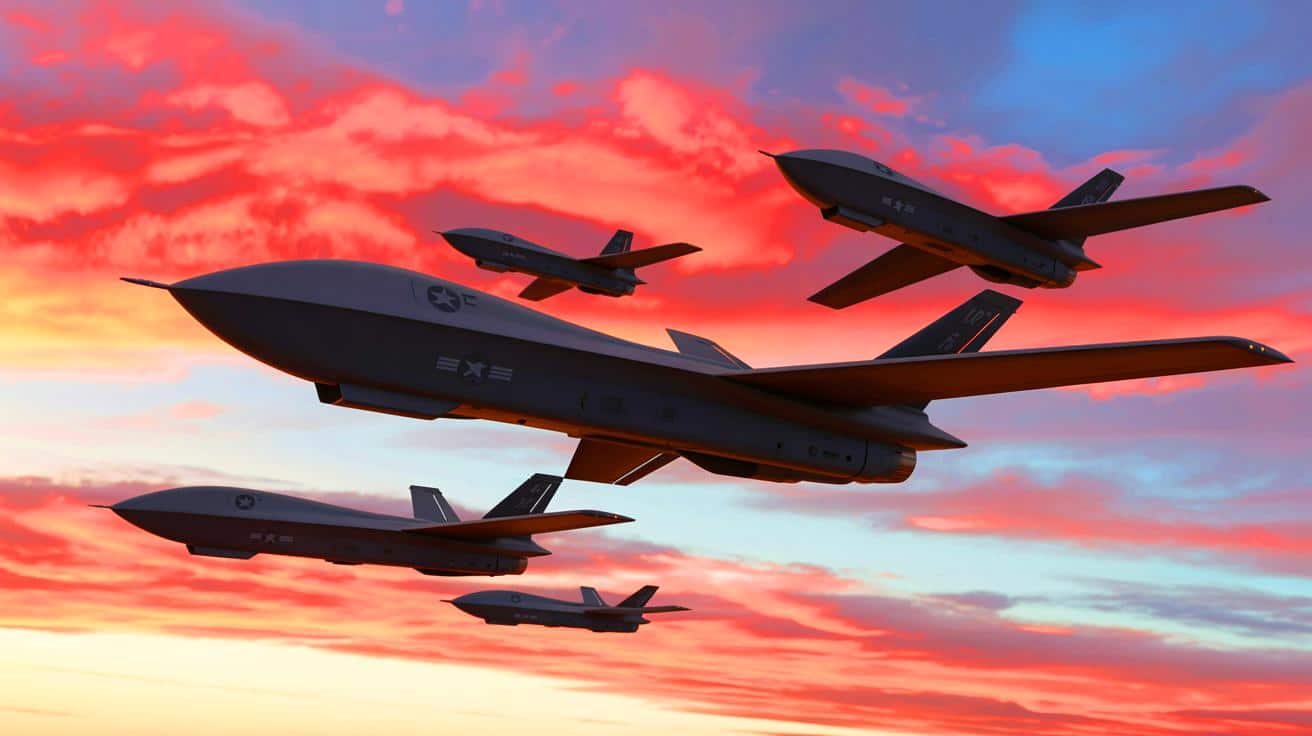
The XQ-58 Valkyrie represents a new era in unmanned aerial systems. Developed by Kratos, it is part of the Low-Cost Attritable Strike Demonstrator program aimed at creating high-performance yet cost-effective aircraft. The Valkyrie can travel up to 3,452 miles and reach speeds of 659 miles per hour, with an altitude ceiling of 45,000 feet. Its capacity to carry a payload of 6,000 pounds enhances its versatility in combat scenarios.
This unmanned system is already flying alongside advanced fighters like the F-35 and F-22, demonstrating its capability to integrate with existing military assets. The USAF’s Eglin Air Force Base in Florida has become a testing ground for these drones, highlighting their role in advancing human-machine collaboration. The potential for rapid production and deployment makes the Valkyrie an attractive option for expanding military capabilities.
Human-Machine Collaboration in the Air Force
Human-machine teaming is at the forefront of the USAF’s strategy to enhance its operational capabilities. The integration of AI-piloted drones like the Valkyrie with manned aircraft is central to this initiative. In recent tests conducted by the 96th Test Wing, pilots have managed autonomous drones in simulated combat scenarios. These exercises provide valuable data that inform the development of semi-autonomous capabilities.
The USAF’s efforts extend beyond drones. The automation of the F-16 fighter jet, dubbed the “Viper,” is a critical milestone in this journey. The VENOM modification process equips these jets with advanced software and hardware to enable autonomous flight. While a pilot remains onboard to oversee operations, the system allows for real-time autonomy testing. This dual approach ensures that human oversight is maintained while exploring the potential of AI in combat situations.
Challenges and Opportunities of AI Integration
The integration of AI into military operations presents both challenges and opportunities. On one hand, AI-driven systems promise enhanced efficiency and precision in combat. They can undertake high-risk missions without endangering human lives, offering strategic advantages in intercepting enemy aircraft.
However, the reliance on AI also raises concerns about the loss of human control. The USAF acknowledges that full autonomy is not feasible at present, emphasizing the need for human instructions to guide operations. This cautious approach reflects the complexities of balancing technological advancements with ethical considerations. The potential for AI to transform military engagements is immense, but it requires careful management to ensure responsible use.
The Future of AI in Military Operations
As AI technology continues to evolve, its role in military operations is likely to expand. The USAF’s initiatives with the XQ-58 Valkyrie and automated F-16s demonstrate the potential for AI to enhance combat capabilities. However, these developments also prompt important questions about the future of warfare.
How will AI reshape the dynamics of air combat? What impact will it have on global security and defense strategies? The integration of AI in military operations is not just a technological transformation; it is a shift in the way conflicts are approached and resolved. The challenge lies in harnessing this technology responsibly to ensure it contributes to global peace and security.
As the United States Air Force continues to explore the possibilities of AI in combat, the implications for military strategy are profound. The XQ-58 Valkyrie and AI-enabled F-16s represent just the beginning of this journey. How will these technologies evolve, and what new challenges will they present? The future of warfare is being redefined, and it invites a broader discussion on the ethical and strategic considerations that accompany such advancements. What role will AI play in shaping the future of global security?




Wow, AI flying jets? Sounds like something out of a sci-fi movie! 🚀
Wow, AI flying jets? What’s next, robots in the cockpit? 🤖
Are we ready for AI to make life-or-death decisions in combat? This is both fascinating and terrifying.
Is it safe to let AI control military drones? What happens if something goes wrong?
Great article! Really makes you think about the future of warfare. 🛫
What happens if the AI malfunctions during a mission? 🤔
Great article! It’s fascinating to see how AI is reshaping military strategies.
Thanks for the insights! This is a game-changer for military strategy.
How do human pilots feel about working alongside AI drones?
This is both exciting and terrifying. Are there any fail-safes?
This sounds like the plot of a sci-fi movie! 🎬
Is there any risk of these drones being hacked?
How will this affect the jobs of human pilots in the future?
I wonder how other countries will respond to the USAF’s AI initiatives.
What’s the cost comparison between these drones and traditional fighter jets?
The idea of AI in military operations is both exciting and unsettling. 😬
What measures are in place to ensure ethical use of AI in warfare?