




| IN A NUTSHELL |
|
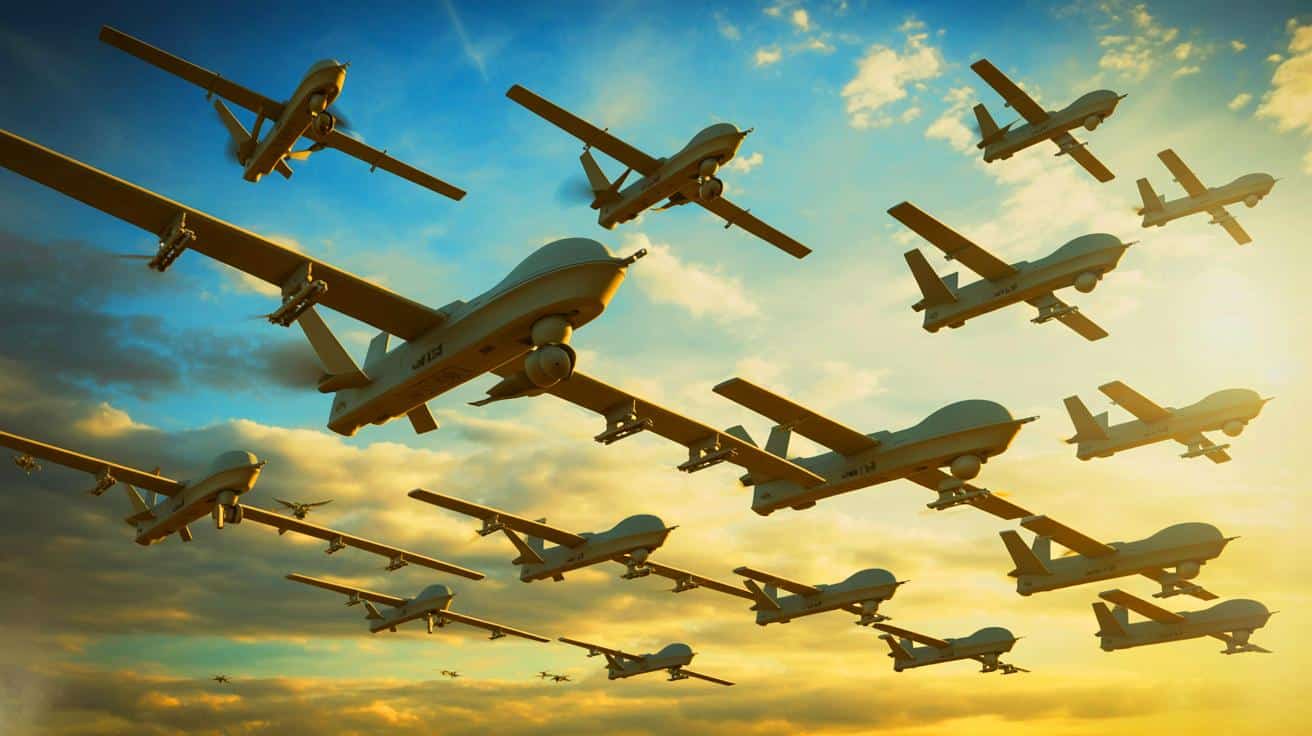
The emergence of drone swarm technology has evoked interest and intrigue worldwide, especially in the context of modern warfare. Ukrainian defense company Swarmer recently garnered attention after raising $15 million to advance this technology, which could potentially revolutionize battlefield dynamics. Unlike traditional drones, a swarm operates with remarkable coordination, adapting to changes in the environment and executing complex missions autonomously. This article delves into the intricacies of drone swarms, examining their operational mechanics, the role of artificial intelligence, and the potential implications for future conflicts.
The Intricacies of Drone Swarms
When people hear the term “drone swarm,” they might imagine synchronized aerial displays seen at entertainment events. However, the reality of military drone swarms is far more complex. As Serhiy Kuprienko, co-founder of Swarmer, explained, these swarms consist of multiple drones working in unison, responding to changes in real-time. In contrast to individual drones, a swarm can adapt if one unit is incapacitated, allowing the remaining drones to adjust their strategy autonomously.
Unlike civilian applications, military drone swarms operate under unpredictable conditions. Factors such as electronic warfare and hostile environments necessitate autonomous decision-making capabilities. This adaptability makes drone swarms particularly valuable in combat scenarios, where rapid response and coordination can be the difference between success and failure.
“It’s always the fog of war. When you don’t have GPS, when you don’t have normal communication, it’s always a story with three asterisks,” said Serhiy.
https://www.energy-reporters.com/news/drone-strike-revolution-new-weapon-destroys-targets-in-minutes-as-tensions-soar-to-unprecedented-heights/
Building the Swarm: Technology and Integration
Creating a cohesive swarm requires either specialized software additions or hardware modules for each drone. Swarmer’s approach involves developing an autonomous system capable of coordinated robot operations. This system allows drones to learn new tasks rapidly, unlike humans who require extensive retraining. As a result, drones can perform a variety of tasks, from reconnaissance to combat, adapting their roles as needed.
Swarmer’s initial focus was on flying drones, given their relatively straightforward navigation requirements. By testing their system on these drones, they aimed to refine the technology before deploying it in more complex scenarios. The goal is to have a system where drones operate as autonomous combat units, making strategic decisions based on real-time data without direct human intervention.
The Role of Artificial Intelligence
Artificial intelligence plays a crucial role in the functionality of drone swarms. Swarmer’s system leverages AI to process data from diverse sources, including simulators that mimic battlefield conditions. This training allows the AI to control drone operations effectively, choosing optimal strategies for tasks like reconnaissance or target elimination.
Despite the advanced capabilities of AI, human oversight remains integral to the decision-making process. Kuprienko emphasizes that trust between the operator and the system is essential, avoiding the pitfalls of unpredictable "black box" systems. The integration of third-party software also accelerates development, enhancing the swarm's overall functionality.
"The first person to bring ChatGPT to the battlefield, I’ll shoot him myself," jokes Serhiy, highlighting the importance of human oversight in AI deployment.
Challenges and Future Prospects
One of the significant challenges in deploying drone swarms is automatic target recognition. Currently, this capability is not fully realized, as distinguishing between friend and foe is a complex issue beyond the scope of AI alone. Human judgment remains crucial in making ethical and strategic decisions during combat.
Nonetheless, the potential of drone swarms is undeniable. Their ability to operate without direct communication with a command center provides a strategic advantage. Autonomous coordination allows for rapid, efficient responses to dynamic battlefield conditions, reducing the need for human operators on the front lines. This shift could redefine military tactics, with drone swarms taking on increasingly significant roles in future conflicts.
The Future of Warfare: Drone Swarms Leading the Way
Drone swarms represent a transformative shift in modern warfare, offering unprecedented capabilities in terms of coordination and adaptability. As the conflict between Ukraine and Russia evolves, the use of drones is becoming more prevalent, with the potential to determine the outcome of battles. However, success is not solely dependent on the number of drones but also on their effective use and control.
The integration of AI systems like Swarmer could significantly enhance the effectiveness of drone operations, increasing the likelihood of achieving strategic objectives. As military technology continues to advance, the role of drone swarms will undoubtedly expand, raising important questions about the future of warfare and the ethical considerations surrounding autonomous combat systems.
As we stand on the brink of this technological evolution, one question remains: How will the integration of drone swarms and AI reshape the landscape of global conflict and defense strategies in the years to come?




Wow, this is like something out of a sci-fi movie! 😮 How soon until we see these swarms in action?
Wow, $15 million? That’s a lot of dough! What are they going to spend it on exactly? 💸
Is it just me, or does this sound like something out of a sci-fi movie? 🤔
Fifteen million dollars… Is that really enough to change warfare? 🤔
Impressive tech! But how do they ensure these drones make ethical decisions in combat?
Honestly, this is kind of terrifying. Autonomous drones making decisions sounds like a recipe for disaster.
Thanks for the info! This is both exciting and a bit terrifying. 😅
I love the idea of bringing AI to the battlefield, but how do we ensure ethical use? 🚀
This could change warfare forever. But should we be relying on AI for such critical tasks?
Thanks for the insightful article! This tech could be a game-changer for military strategy.
Does anyone else think we’re getting too close to Terminator territory? 😬